BARODA
Protected Area
Mersey Narrows
Why dive here
With 118+ marine species recorded in the area - including dolphins, dwarf minke whales, humpback whales, ocean sunfish (mola mola) and orcas - BARODA offers some of Northumberland & Northeast's richest wreck diving.
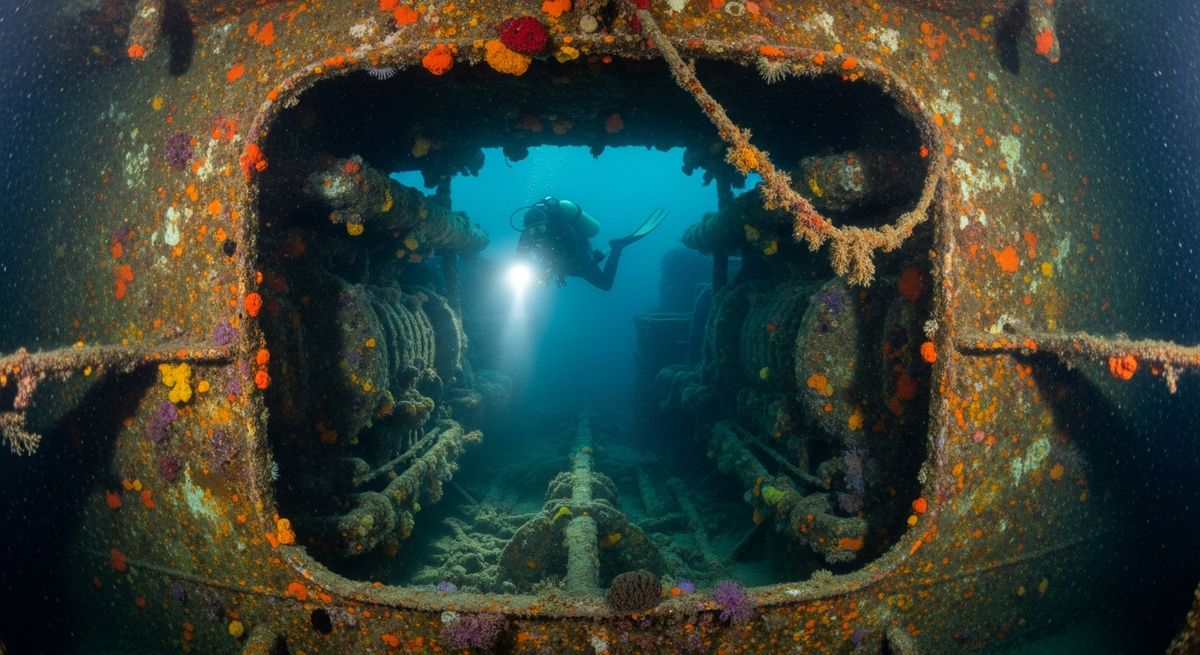
The Baroda is one of our favourite Northumberland wrecks, especially when the light’s good. She’s not deep, just 13 metres, which means decent bottom time and often some surprising ambient light filtering through. We love exploring the bow section, which is still quite intact, with the anchor chains draped across it like old jewellery. It’s got that classic wreck feel, the steel plates draped in dead man’s fingers, creating little ledges and overhangs for lobsters and crabs. Visibility can be a mixed bag, as it often is around here, but when it’s good, you can really appreciate the scale. You’ll find cod sheltering in the deeper recesses, and ling often lurk in the gloomier parts of the holds. We’ve even seen the odd wolf fish poking its grumpy face out from under a plate. Our tip? Try to time your dive for slack water on a neap tide. It makes a big difference to how much you can really take in. It’s a great site for newer wreck divers or photographers wanting to practice their wide-angle shots without battling depth.
Typical BARODA Dive Profile
Illustrative profile based on site depth and type. Actual dive profiles vary - always follow your dive computer and training.
Safety Notes
Wreck site - avoid penetration without wreck diving certification. Watch for sharp metal and entanglement hazards.
Always perform a 3-minute safety stop at 5m before surfacing.
BARODA Wreck History
Year Sunk
1887
Vessel Type
cargo ship
Cause
collision
The Baroda was a 68-meter steamship from the Victorian era whose career was cut short by a sudden and catastrophic event. On a November night in 1887, while navigating the busy shipping lanes off the Northumberland coast, the Baroda was involved in a serious collision with another vessel. The impact was devastating, and the ship quickly foundered, sinking to its final resting place on the seabed.
Resting at a shallow depth of 13 meters, the Baroda is an easily accessible dive but one that requires caution. It is officially classified as a 'dangerous wreck,' which can indicate the presence of sharp, unstable metal, potential for entanglement in old nets, or its location in an area with strong currents or poor visibility. For the prepared diver, the wreck offers a fascinating exploration of a 19th-century steamer. The scattered remains provide a habitat for a wealth of marine life, turning a maritime tragedy into a thriving underwater ecosystem.
Nearest Dive Centres to BARODA
Dive shops near BARODA
Aquaventurers
Blue Planet Aquarium
Shipmates
Delph Watersports Centre
Bolton Area Divers
Diving & Marine Services
Reviews for BARODA
Conditions
Ocean conditions, forecast and tides for BARODA
Plan & book
Ways to dive Northumberland & Northeast, from day trips to liveaboards.
Day trips & courses
via GetYourGuideGuided dives, courses and snorkel trips with instant booking.
Find dive trips in Northumberland & NortheastPlaces to stay
via Booking.comHotels and dive resorts near Northumberland & Northeast.
Search stays in Northumberland & NortheastDive insurance
Most travel insurance excludes or limits scuba. Check what you need before you go.
Dive insurance explainedPartner links: we may earn a commission if you book, at no extra cost to you. How we make money
Where to Stay near BARODA
Prices from Booking.com. We may earn a commission at no extra cost to you.