BARON GLAMIS (PROBABLY)
Protected Area
Corsewall Point to Milleur Point
Why dive here
With 118+ marine species recorded in the area - including dolphins, dwarf minke whales, humpback whales, ocean sunfish (mola mola) and orcas - BARON GLAMIS (PROBABLY) offers some of Northumberland & Northeast's richest wreck diving.
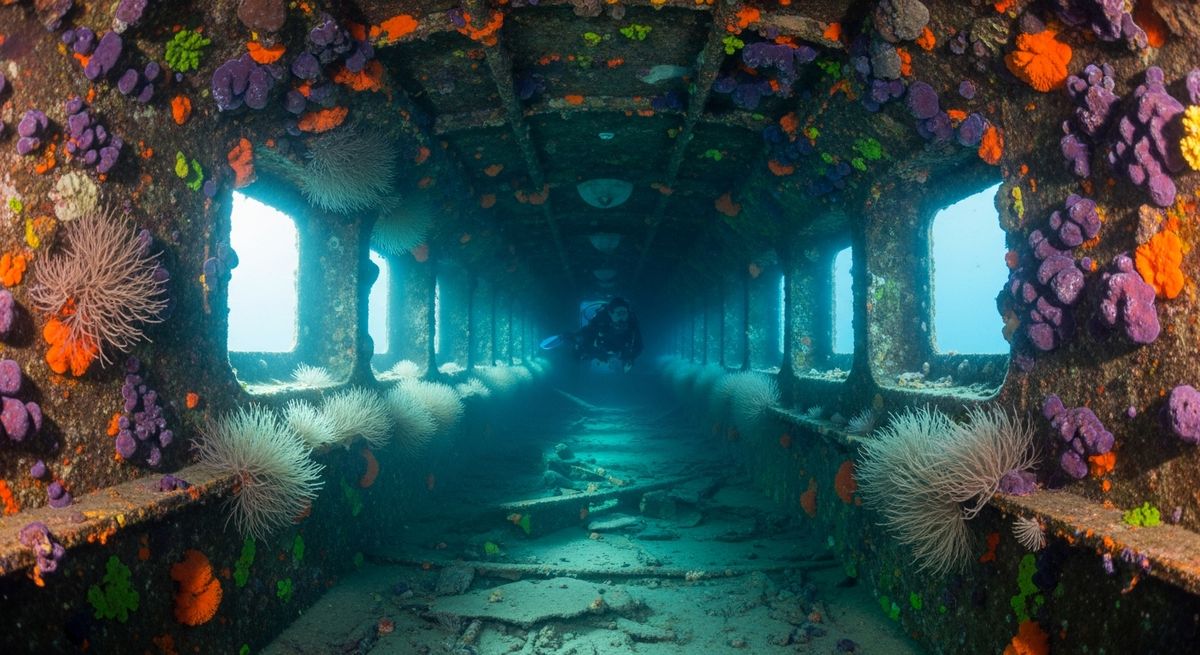
The BARON GLAMIS (PROBABLY) is one of those frustratingly brilliant sites where the "probably" only adds to its North Sea charm. We love diving this wreck, knowing it might be her, or maybe another steamship, but either way, it’s a proper dive. At a shallow 9 metres, it’s fantastic for newer wreck divers or anyone looking for a longer bottom time without deco worries. What you get is a solid, broken-up steamship, probably lying on its side. The triple-expansion engines are usually the giveaway if you can get a good look, and they’re our favourite part to poke around. You’ll find walls of plumose anemones, often swaying gently in the slight surge, and dead man’s fingers clinging to every rivet. Look for the lobsters tucked into crevices; they’re pretty bold here. The visibility can be hit or miss, typical for the Northeast, but when it’s good, the light penetrates beautifully, illuminating the anemones in an almost ethereal glow. It’s a site that rewards multiple visits – each time, you notice a new detail, another piece of history peeking through the kelp.
Typical BARON GLAMIS (PROBABLY) Dive Profile
Illustrative profile based on site depth and type. Actual dive profiles vary - always follow your dive computer and training.
Safety Notes
Wreck site - avoid penetration without wreck diving certification. Watch for sharp metal and entanglement hazards.
BARON GLAMIS (PROBABLY) Wreck History
Year Sunk
1903
Vessel Type
cargo ship
Cause
grounding
The SS Baron Glamis was a classic turn-of-the-century steamship, built in 1894 with powerful triple-expansion engines for the well-known Hogarth Shipping Co. In January 1903, she embarked on a long and ambitious voyage, leaving the River Clyde in Scotland with a destination of Buenos Aires, Argentina. For ships of her era, this was a significant undertaking, traversing the treacherous waters of the North Atlantic before heading south.
Her journey was cut tragically short. On January 21, 1903, the Baron Glamis ran aground on the Northumberland coast, a victim of the navigational challenges that claimed so many vessels. Today, the wreck, which is widely believed to be the Baron Glamis, rests in just 9 metres of water. This shallow depth makes it an excellent and accessible dive for all levels. Divers can explore the scattered remains of this Victorian steamer, likely broken up by over a century of storms, with the prominent engine block and boilers often providing the most substantial features to investigate.
Reviews for BARON GLAMIS (PROBABLY)
Conditions
Ocean conditions, forecast and tides for BARON GLAMIS (PROBABLY)
Plan & book
Ways to dive Northumberland & Northeast, from day trips to liveaboards.
Day trips & courses
via GetYourGuideGuided dives, courses and snorkel trips with instant booking.
Find dive trips in Northumberland & NortheastPlaces to stay
via Booking.comHotels and dive resorts near Northumberland & Northeast.
Search stays in Northumberland & NortheastDive insurance
Most travel insurance excludes or limits scuba. Check what you need before you go.
Dive insurance explainedPartner links: we may earn a commission if you book, at no extra cost to you. How we make money
Where to Stay near BARON GLAMIS (PROBABLY)
Prices from Booking.com. We may earn a commission at no extra cost to you.