BEECHGROVE
Protected Area
Mournes Coast
Why dive here
With 118+ marine species recorded in the area - including dolphins, dwarf minke whales, humpback whales, ocean sunfish (mola mola) and orcas - BEECHGROVE offers some of Northumberland & Northeast's richest wreck diving.
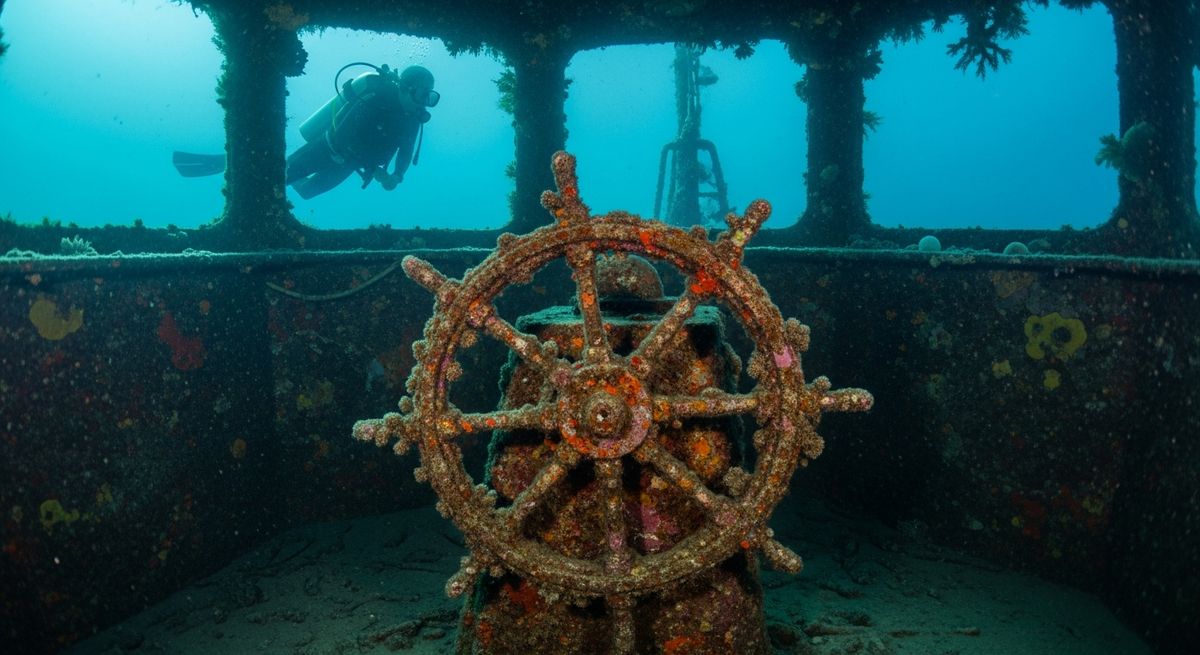
The *Beechgrove* is a lovely wreck, accessible even on days when the North Sea is feeling a bit grumpy. She’s shallow, only 14 metres, making her perfect for longer bottom times, and brilliant for newer wreck divers to get a feel for things. We love her intact bow section, it’s really quite dramatic, still standing proud and often swarming with pollack. You can spend a good chunk of a dive here, poking around the frames, imagining the ship as she once was. The stern is a bit more broken up, but that’s where we find the big boiler, a real magnet for life. Crabs wedge themselves into every nook, and occasionally we’ve spotted a wolf fish peering out from a dark corner. Visibility can vary, of course, it's the North Sea, but on a good day, with a bit of sunlight filtering down, the light plays beautifully off the metalwork. Our favourite time to dive her is on a slack tide, gives you plenty of time to explore the full 76 metres of her length without fighting the current. She’s a great introduction to the region's wreck diving, a proper piece of history brought to life.
Typical BEECHGROVE Dive Profile
Illustrative profile based on site depth and type. Actual dive profiles vary - always follow your dive computer and training.
Safety Notes
Wreck site - avoid penetration without wreck diving certification. Watch for sharp metal and entanglement hazards.
Always perform a 3-minute safety stop at 5m before surfacing.
BEECHGROVE Wreck History
Year Sunk
1905
Vessel Type
cargo ship
Cause
collision
Tonnage
1,328 GRT
The SS Beechgrove had a well-travelled career under several names before settling on the Northumberland seabed. Launched in 1880 by the renowned J. Readhead & Sons shipyard in South Shields, she was originally christened the Joseph Viney. Over the next two and a half decades, she would be renamed Lixuri, then back to Joseph Viney, before being sold to Alexander & Muir and given her final name, the Beechgrove. As a typical steam collier of her era, she was a workhorse of the British coastal trade.
Her end came abruptly on January 16, 1905. While navigating in thick fog off Newbiggin Point, the Beechgrove was involved in a catastrophic collision with the larger steamship, the SS Othello. The impact was severe, and the Beechgrove began to take on water rapidly. Fortunately, the crew had time to abandon ship and were all safely rescued before their vessel slipped beneath the waves.
Resting at a very manageable depth of 14 meters, the Beechgrove is a fantastic introduction to wreck diving in the UK. The wreck is well broken up, scattered across a sandy bottom, but her boiler stands proud and acts as a key landmark. The site is a haven for marine life, particularly crustaceans; divers should bring a torch to peer into crevices for lobsters and crabs. The wreckage provides shelter for bib, pollack, and colourful wrasse, making for a lively and interesting dive.
Nearest Dive Centres to BEECHGROVE
Dive shops near BEECHGROVE
View all dive centres in Northumberland & NortheastReviews for BEECHGROVE
Conditions
Ocean conditions, forecast and tides for BEECHGROVE
Plan & book
Ways to dive Northumberland & Northeast, from day trips to liveaboards.
Day trips & courses
via GetYourGuideGuided dives, courses and snorkel trips with instant booking.
Find dive trips in Northumberland & NortheastPlaces to stay
via Booking.comHotels and dive resorts near Northumberland & Northeast.
Search stays in Northumberland & NortheastDive insurance
Most travel insurance excludes or limits scuba. Check what you need before you go.
Dive insurance explainedPartner links: we may earn a commission if you book, at no extra cost to you. How we make money
Where to Stay near BEECHGROVE
Prices from Booking.com. We may earn a commission at no extra cost to you.