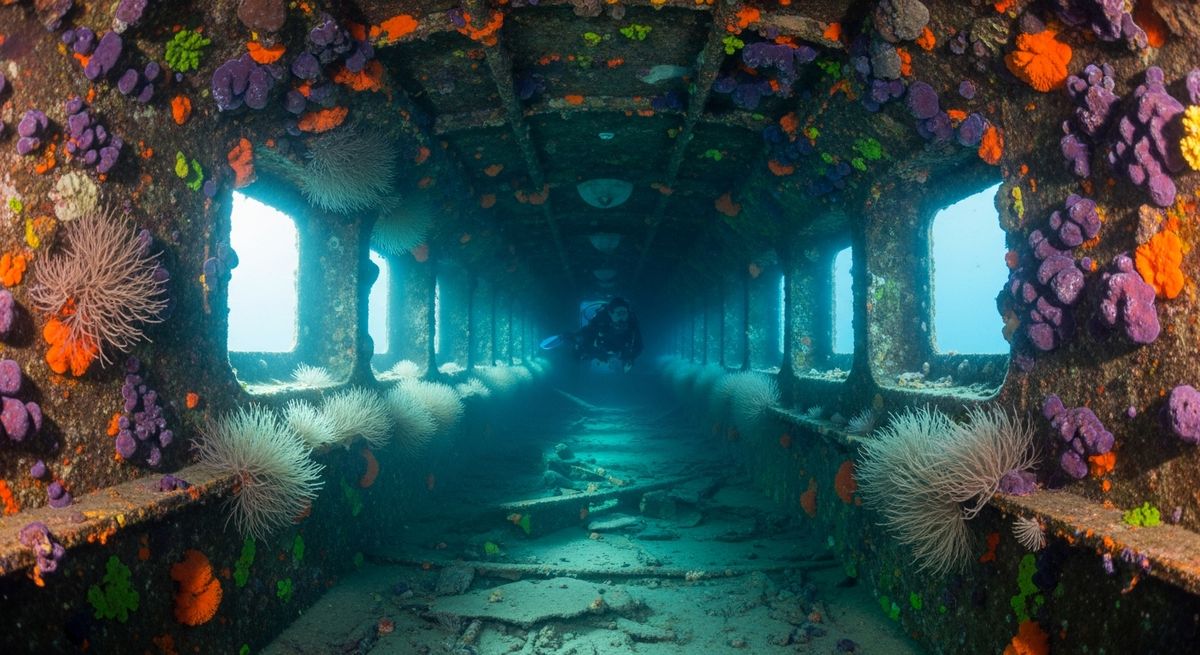
BLANCHE
Protected Area
Hilbre Islands
Why dive here
With 118+ marine species recorded in the area - including dolphins, dwarf minke whales, humpback whales, ocean sunfish (mola mola) and orcas - BLANCHE offers some of Northumberland & Northeast's richest wreck diving.
The Blanche, while a short dive, offers a surprising amount for those willing to get wet in the shallows. At a maximum depth of 1m, it's really more of a snorkel or a crawl, but don't let that deter you. We love exploring the scattered remains of this 1873-built sailing vessel, which met its end in a brutal force 10 gale back in 1890. You’ll find ribs and planks poking up from the sand, draped in green algae that sways with the gentle surge. It's a real lesson in how the sea reclaims things. Our favourite time to visit is on a calm, sunny day at low tide, when the water clarity is at its best. You might spend a good hour just finning (or walking, really) around the wreckage, observing the tiny crabs scuttling amongst the timbers and the small fish darting for cover. It's perfect for photographers looking for interesting close-ups without the need for heavy gear, or for anyone wanting a relaxed, accessible encounter with a piece of maritime history. It’s also an ideal spot for new divers to practice buoyancy in truly shallow water, getting a feel for moving over delicate structures. The Blanche is a proper slice of history, well worth the effort of getting in.
Typical BLANCHE Dive Profile
Illustrative profile based on site depth and type. Actual dive profiles vary - always follow your dive computer and training.
Safety Notes
Wreck site - avoid penetration without wreck diving certification. Watch for sharp metal and entanglement hazards.
BLANCHE Wreck History
Year Sunk
1890
Vessel Type
cargo ship
Cause
storm
The Blanche was a sturdy sailing vessel built in 1873 by Banks of Plymouth, a common sight along the British coast during the late Victorian era. Owned by J. Westcott, also of Plymouth, she spent her career transporting goods between the burgeoning industrial ports of the United Kingdom.
Her final voyage began in Runcorn, from where she set sail for her home port of Plymouth. On November 7, 1890, she was caught in a ferocious gale, with winds reaching Force 10. The powerful storm overwhelmed the vessel, driving her helplessly ashore onto the East Hoyle Bank. The Blanche was battered apart by the waves and lost to the sea.
Lying at a depth of just one meter, the remains of the Blanche are now scattered and heavily broken up, subject to the constant movement of tides and sands. While not a traditional wreck dive, the site offers a glimpse into a 19th-century maritime tragedy for those exploring the intertidal zone, a stark reminder of the power of the sea.
Nearest Dive Centres to BLANCHE
Dive shops near BLANCHE
Aquaventurers
Blue Planet Aquarium
Delph Watersports Centre
Shipmates
Southsea Scuba
Reviews for BLANCHE
Conditions
Ocean conditions, forecast and tides for BLANCHE
Plan & book
Ways to dive Northumberland & Northeast, from day trips to liveaboards.
Day trips & courses
via GetYourGuideGuided dives, courses and snorkel trips with instant booking.
Find dive trips in Northumberland & NortheastPlaces to stay
via Booking.comHotels and dive resorts near Northumberland & Northeast.
Search stays in Northumberland & NortheastDive insurance
Most travel insurance excludes or limits scuba. Check what you need before you go.
Dive insurance explainedPartner links: we may earn a commission if you book, at no extra cost to you. How we make money
Where to Stay near BLANCHE
Prices from Booking.com. We may earn a commission at no extra cost to you.