BROWNING
Protected Area
Ballyquintin Point
Why dive here
With 118+ marine species recorded in the area - including dolphins, dwarf minke whales, humpback whales, ocean sunfish (mola mola) and orcas - BROWNING offers some of Northumberland & Northeast's richest wreck diving.
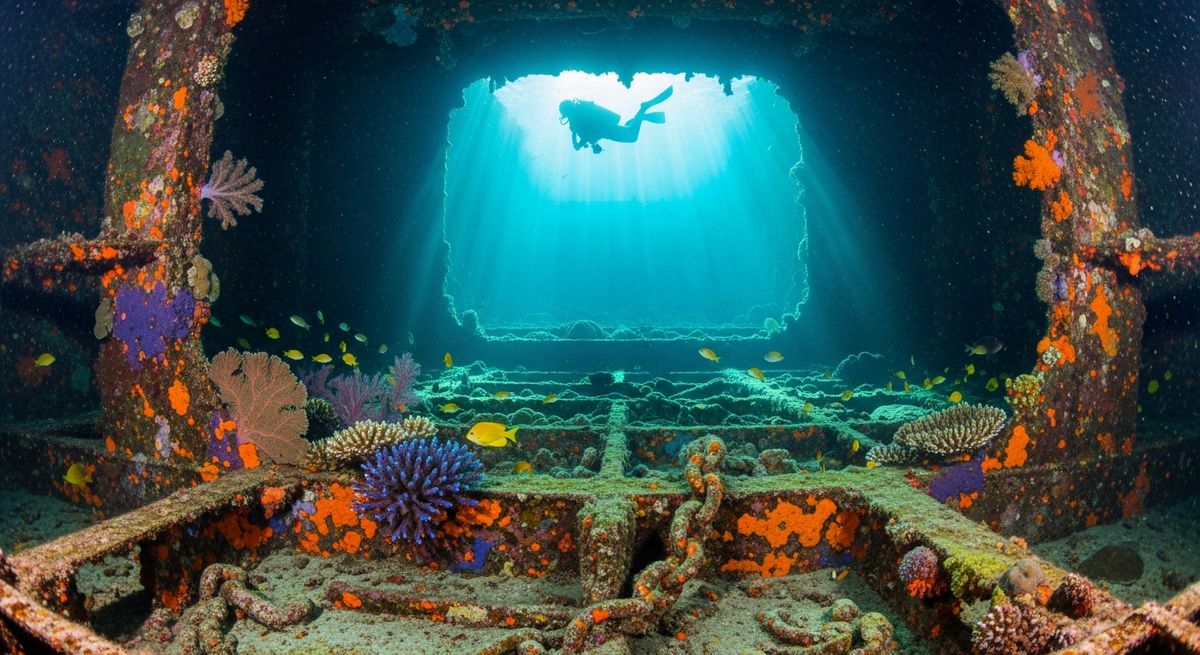
The Browning is a proper North Sea wreck, not some tropical bathtub easy dive. We’re talking about a steamship, 125 metres long, sitting in just six metres of water. It went down in 1942, part of a convoy, and the sheer scale of it for such a shallow wreck is what gets us every time. You’re not going deep here, but you are navigating a substantial piece of history. What we love about the Browning is how it feels like a genuine archaeological site. You can swim the length of the hull, spotting the huge plates and rivets, the dark cavernous holds where cargo once sat. It’s well broken up in places, but the structure is still very much there, a proper steel skeleton. This one is great for newer wreck divers who want to get a feel for a large vessel without the added challenge of depth or heavy current. Visibility can be a bit hit-and-miss, typical for the North Sea, but when it’s good, you’ll see plenty of wrasse and pollock darting through the superstructure. Keep an eye out for the odd crab sheltering in a dark corner. We’d suggest timing your dive for slack water, always, to make exploring the sheer size of it much more enjoyable.
Typical BROWNING Dive Profile
Illustrative profile based on site depth and type. Actual dive profiles vary - always follow your dive computer and training.
Safety Notes
Wreck site - avoid penetration without wreck diving certification. Watch for sharp metal and entanglement hazards.
BROWNING Wreck History
Year Sunk
1942
Vessel Type
cargo ship
Cause
grounding
Tonnage
5,332 GRT
The SS Browning was a 5,332-ton steamship belonging to the well-known Lamport & Holt line. During the Second World War, she was put into service supporting the Allied effort, often sailing in convoys to protect against enemy attack. In January 1942, she was part of one such convoy, navigating the often-difficult waters around the British Isles.
On January 21, 1942, the Browning's fate was sealed not by a torpedo, but by the treacherous coastline. In poor conditions, the ship ran hard aground on a reef between Kearney Point and Ballyquintin Point in County Down, Northern Ireland. The vessel was lost to the sea, but fortunately, the entire crew of 39 was successfully rescued by the Cloughy lifeboat, a testament to the bravery of the local rescuers.
Lying in just 6 metres of water, the Browning is now a fantastic and highly accessible wreck dive. Suitable for divers of all levels, and even snorkelers on a calm day, the site offers a relaxed and enjoyable exploration. Due to the shallow depth and exposure to storms, the wreck is heavily broken up, with steel plates, ribs, and sections of machinery scattered across the seabed. This wreckage has created a thriving shallow-water ecosystem, providing a home for crabs, lobsters, and a variety of fish, making it an excellent location for underwater photography and a long, leisurely dive.
Reviews for BROWNING
Conditions
Ocean conditions, forecast and tides for BROWNING
Plan & book
Ways to dive Northumberland & Northeast, from day trips to liveaboards.
Day trips & courses
via GetYourGuideGuided dives, courses and snorkel trips with instant booking.
Find dive trips in Northumberland & NortheastPlaces to stay
via Booking.comHotels and dive resorts near Northumberland & Northeast.
Search stays in Northumberland & NortheastDive insurance
Most travel insurance excludes or limits scuba. Check what you need before you go.
Dive insurance explainedPartner links: we may earn a commission if you book, at no extra cost to you. How we make money
Where to Stay near BROWNING
Prices from Booking.com. We may earn a commission at no extra cost to you.