BUENOS AYRES
Protected Area
New Ferry
Why dive here
With 118+ marine species recorded in the area - including dolphins, dwarf minke whales, humpback whales, ocean sunfish (mola mola) and orcas - BUENOS AYRES offers some of Northumberland & Northeast's richest wreck diving.
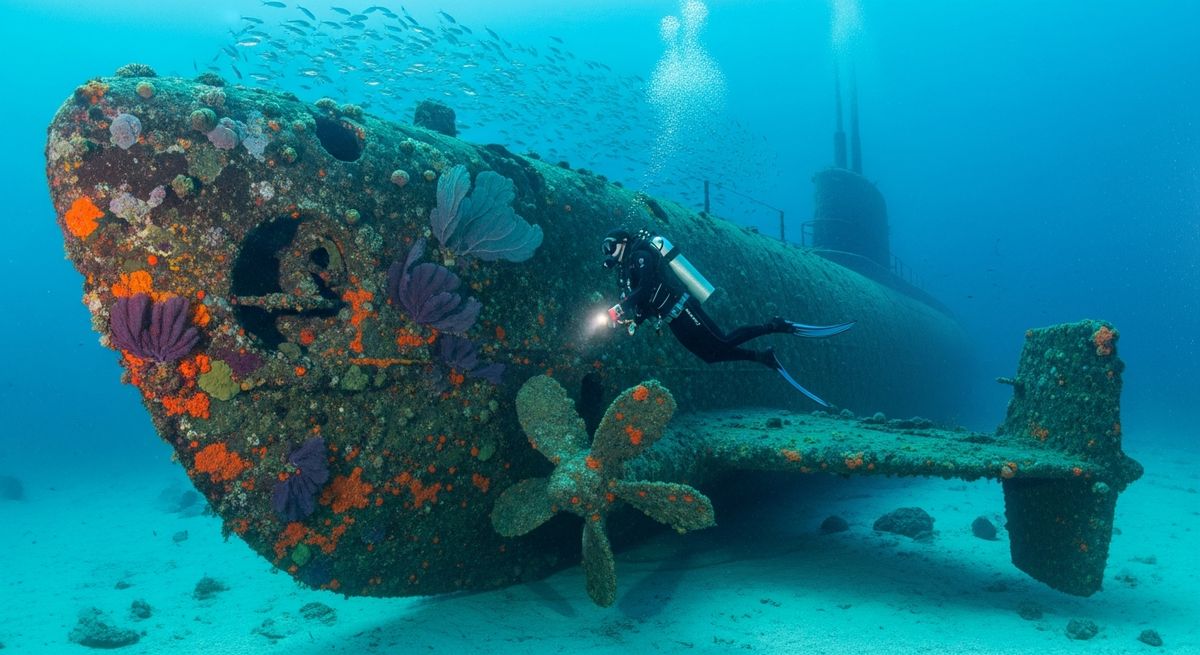
The *Buenos Ayres* is one of those wrecks we’ve found ourselves returning to again and again. Not because it’s a big, dramatic site, but because it feels like a genuine piece of history frozen in time. She was a sailing vessel, sunk in 1875 after a collision, and what’s left of her sits on a relatively flat seabed at 17 metres. You won't find towering structures here. Instead, it’s a debris field, scattered but fascinating, with twisted metal plates, sections of hull, and timbers that give you a real sense of her wooden construction. It’s perfect for a long, relaxed dive, allowing you to sift through the smaller details. We love running our hands over the encrusted metal, feeling the rough texture of centuries of growth. Look closely, and you’ll spot all sorts of small crabs scuttling amongst the plates and some surprisingly bold blennies peering out from crevices. It’s a gentle exploration, ideal for divers who appreciate history and the quieter side of wreck diving, rather than those chasing big swim-throughs. Go on a calm day; the visibility can drop quickly after a spell of bad weather.
Typical BUENOS AYRES Dive Profile
Illustrative profile based on site depth and type. Actual dive profiles vary - always follow your dive computer and training.
Safety Notes
Wreck site - avoid penetration without wreck diving certification. Watch for sharp metal and entanglement hazards.
Always perform a 3-minute safety stop at 5m before surfacing.
BUENOS AYRES Wreck History
Year Sunk
1875
Vessel Type
sailing vessel
Cause
collision
The Buenos Ayres was a 19th-century sailing vessel, a relic from the great age of sail that was rapidly being eclipsed by the power of steam. On July 6, 1875, this transition became tragically real for the ship and her crew. While navigating the busy shipping lanes off the northeast coast of England, the Buenos Ayres was struck by the steamship SS Marathon. In a contest between wind and steam, the wooden-hulled sailing ship stood little chance against the iron of the modern steamer. The collision proved fatal, and the Buenos Ayres sank quickly, settling on the seabed not far from shore.
Today, the wreck of the Buenos Ayres lies at a depth of 17 meters. After nearly 150 years underwater, the sea has taken its toll, and the vessel is well broken up. Divers exploring the site will find a scattered field of debris, with the ship's timbers and any remaining metal components heavily encrusted with marine life. It is a dive into a bygone era, offering a chance to connect with the maritime history of the region. The wreckage provides an excellent habitat for crabs, lobsters, and various species of fish that call the Northumberland coast home.
Nearest Dive Centres to BUENOS AYRES
Dive shops near BUENOS AYRES
Aquaventurers
Blue Planet Aquarium
Shipmates
Delph Watersports Centre
Southsea Scuba
Diving & Marine Services
Reviews for BUENOS AYRES
Conditions
Ocean conditions, forecast and tides for BUENOS AYRES
Plan & book
Ways to dive Northumberland & Northeast, from day trips to liveaboards.
Day trips & courses
via GetYourGuideGuided dives, courses and snorkel trips with instant booking.
Find dive trips in Northumberland & NortheastPlaces to stay
via Booking.comHotels and dive resorts near Northumberland & Northeast.
Search stays in Northumberland & NortheastDive insurance
Most travel insurance excludes or limits scuba. Check what you need before you go.
Dive insurance explainedPartner links: we may earn a commission if you book, at no extra cost to you. How we make money
Where to Stay near BUENOS AYRES
Prices from Booking.com. We may earn a commission at no extra cost to you.