BURNHOPE (PART OF)
Protected Area
Teesmouth and Cleveland Coast
Why dive here
With 118+ marine species recorded in the area - including dolphins, dwarf minke whales, humpback whales, ocean sunfish (mola mola) and orcas - BURNHOPE (PART OF) offers some of Northumberland & Northeast's richest wreck diving.
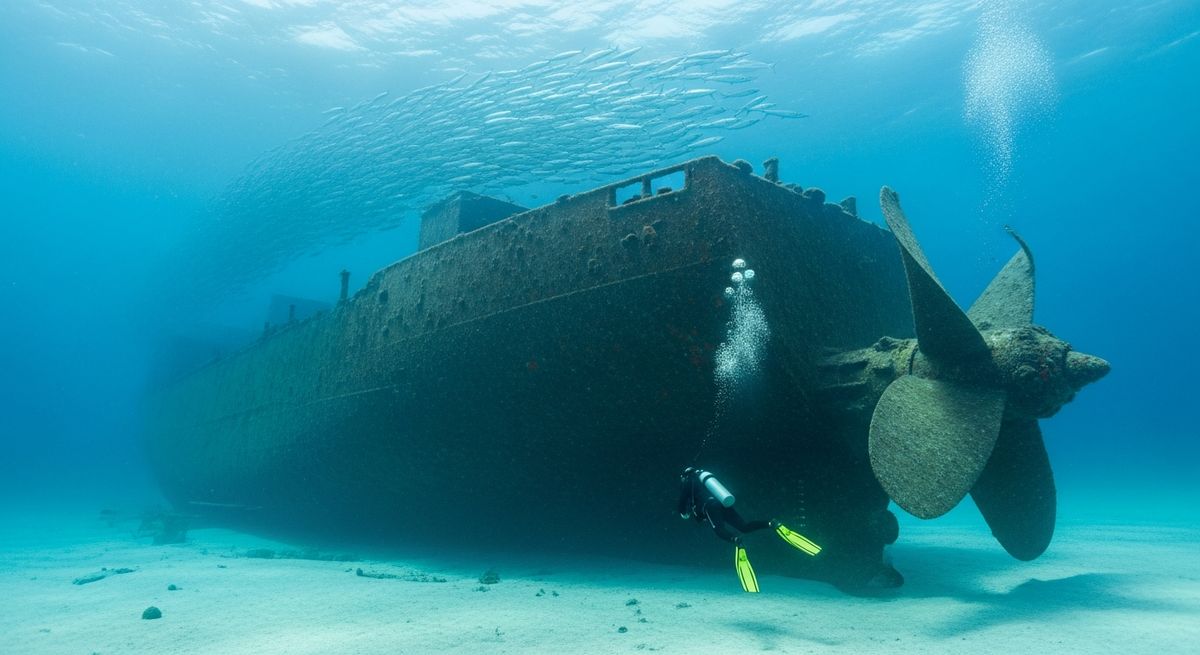
The Burnhope sits in a relatively shallow 11 meters, making it accessible for most divers who can handle UK conditions. We love how much of the steamship is still recognisable, despite being down since 1916. You can trace the outlines of her hull, feel the texture of metal long colonised by anenomes, and nose around the two substantial boilers that stand proud from the seabed. It’s a proper piece of history, just a short swim from the shore. Our favourite time to dive Burnhope is on a slack tide, ideally after a few days of calm weather; the visibility can really open up then, giving you a chance to appreciate the sheer scale of her. Look out for the resident crabs scuttling amongst the plates and the schools of small fish that dart through the structure – a real sign of how the wreck has become part of the local ecosystem. It's a fantastic site for newer wreck divers or those looking for a relaxed bimble with plenty to see.
Typical BURNHOPE (PART OF) Dive Profile
Illustrative profile based on site depth and type. Actual dive profiles vary - always follow your dive computer and training.
Safety Notes
Wreck site - avoid penetration without wreck diving certification. Watch for sharp metal and entanglement hazards.
Always perform a 3-minute safety stop at 5m before surfacing.
BURNHOPE (PART OF) Wreck History
Year Sunk
1916
Vessel Type
cargo ship
Cause
torpedo
Tonnage
1,189 GRT
The SS Burnhope was a classic steam collier built in 1907 in Newcastle-upon-Tyne, a workhorse of the British merchant fleet. For nearly a decade, she faithfully plied the coastal routes, transporting vital cargoes of coal to power the nation's industries and homes. Her story is typical of the thousands of civilian vessels pressed into service during the First World War, maintaining the crucial supply lines that were the lifeblood of the country.
Her final voyage came on December 14, 1916. While steaming from Blyth to London with a full load of coal, she was spotted by the German submarine UB-38. Without warning, a torpedo struck the Burnhope, and the resulting explosion tore the ship in two. The vessel sank quickly, becoming another casualty of the relentless U-boat campaign that sought to starve Britain into submission.
Today, a section of the SS Burnhope rests in just 11 meters of water off the Northumberland coast, making it a fantastic and highly accessible dive for all levels. The shallow depth allows for long, relaxed bottom times and provides excellent light for underwater photography. The wreckage is broken up but provides a fascinating habitat for a variety of marine life, including crabs, lobsters, and schools of fish that have made the old steamer their home.
Nearest Dive Centres to BURNHOPE (PART OF)
Dive shops near BURNHOPE (PART OF)
Denney Diving
Durham University Sub Aqua Society
Scuba Diver Training Ltd
Reviews for BURNHOPE (PART OF)
Conditions
Ocean conditions, forecast and tides for BURNHOPE (PART OF)
Plan & book
Ways to dive Northumberland & Northeast, from day trips to liveaboards.
Day trips & courses
via GetYourGuideGuided dives, courses and snorkel trips with instant booking.
Find dive trips in Northumberland & NortheastPlaces to stay
via Booking.comHotels and dive resorts near Northumberland & Northeast.
Search stays in Northumberland & NortheastDive insurance
Most travel insurance excludes or limits scuba. Check what you need before you go.
Dive insurance explainedPartner links: we may earn a commission if you book, at no extra cost to you. How we make money
Where to Stay near BURNHOPE (PART OF)
Prices from Booking.com. We may earn a commission at no extra cost to you.