CAIRNROSS
Protected Area
Liverpool Bay / Bae Lerpwl
Why dive here
With 118+ marine species recorded in the area - including dolphins, dwarf minke whales, humpback whales, ocean sunfish (mola mola) and orcas - CAIRNROSS offers some of Northumberland & Northeast's richest wreck diving.
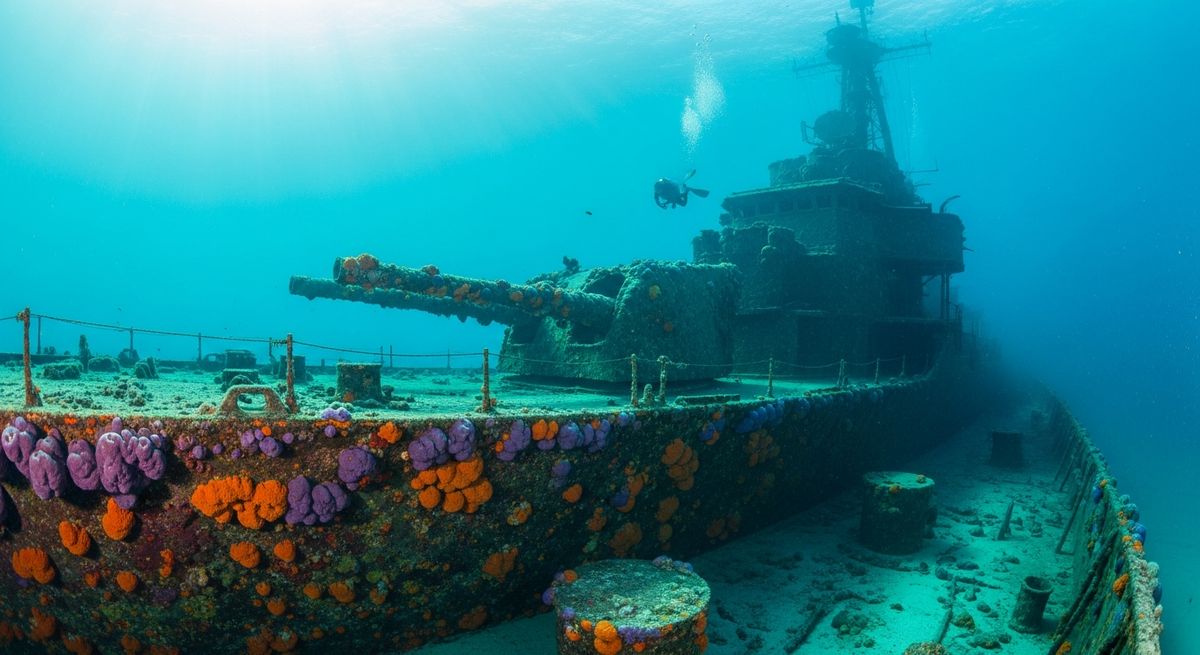
Cairnross, for us, is a proper North Sea wreck dive. Not for the faint-hearted or those who crave a gentle drift, but if you’re up for a bit of a challenge, she delivers. This 129-metre steamship, sunk in 1940, lies broken but still immense at 28 metres. We love dropping onto the stern, where the triple expansion engines are exposed and completely covered in plumose anemones, waving in the current. The sheer scale is what gets you; you can swim through cavernous cargo holds, imagining the goods she once carried. Visibility here can be a lottery, sometimes a murky 5 metres, other days a surprisingly clear 15. The trick is to pick your slack tide window carefully, as currents can be fierce. Despite the cold and the often-dark conditions, the marine life holds its own. Lobsters peer from cracks in the plating, huge conger eels lurk in the machinery, and we've seen wolf fish hiding among the collapsed superstructure. It's a deep, dark dive, but the history and the sheer amount of wreck to explore make it a truly rewarding day out. Just remember your drysuit, and maybe a heated vest.
Typical CAIRNROSS Dive Profile
Illustrative profile based on site depth and type. Actual dive profiles vary - always follow your dive computer and training.
Safety Notes
Depth of 28m - Advanced Open Water certification recommended.
Wreck site - avoid penetration without wreck diving certification. Watch for sharp metal and entanglement hazards.
Always perform a 3-minute safety stop at 5m before surfacing.
CAIRNROSS Wreck History
Year Sunk
1940
Vessel Type
cargo ship
Cause
torpedo
Launched in 1921 by the famous Doxford shipyard in Sunderland, the SS Cairnross was a modern vessel for her time. As part of the Cairn Line fleet, she was a proud product of Northeast England's shipbuilding prowess, fitted with powerful triple steam turbines built by Parsons in Newcastle. For nearly two decades, she faithfully served on commercial trade routes, a workhorse of the British merchant navy.
Her peaceful service came to a violent end on January 17, 1940. While sailing off the Northumberland coast, she was intercepted by the German U-boat U-48, one of the most successful submarines of the war. A torpedo attack was swift and devastating, and the Cairnross sank beneath the waves, becoming another statistic in the relentless campaign against Allied shipping in the North Sea.
The wreck of the Cairnross now lies at a manageable depth of 28 meters, making her an excellent and popular dive for experienced recreational divers. Although the ship is broken, she offers a fascinating underwater exploration. Divers can easily identify her three large boilers and the remnants of her powerful engines, all now encrusted with marine life. It is a classic WWII wreck dive that serves as a silent monument to the merchant sailors who risked everything.
Nearest Dive Centres to CAIRNROSS
Dive shops near CAIRNROSS
View all dive centres in Northumberland & NortheastReviews for CAIRNROSS
Conditions
Ocean conditions, forecast and tides for CAIRNROSS
Plan & book
Ways to dive Northumberland & Northeast, from day trips to liveaboards.
Day trips & courses
via GetYourGuideGuided dives, courses and snorkel trips with instant booking.
Find dive trips in Northumberland & NortheastPlaces to stay
via Booking.comHotels and dive resorts near Northumberland & Northeast.
Search stays in Northumberland & NortheastDive insurance
Most travel insurance excludes or limits scuba. Check what you need before you go.
Dive insurance explainedPartner links: we may earn a commission if you book, at no extra cost to you. How we make money
Where to Stay near CAIRNROSS
Prices from Booking.com. We may earn a commission at no extra cost to you.