CALCIUM (POSSIBLY)
Protected Area
Great Orme
Why dive here
With 118+ marine species recorded in the area - including dolphins, dwarf minke whales, humpback whales, ocean sunfish (mola mola) and orcas - CALCIUM (POSSIBLY) offers some of Northumberland & Northeast's richest wreck diving.
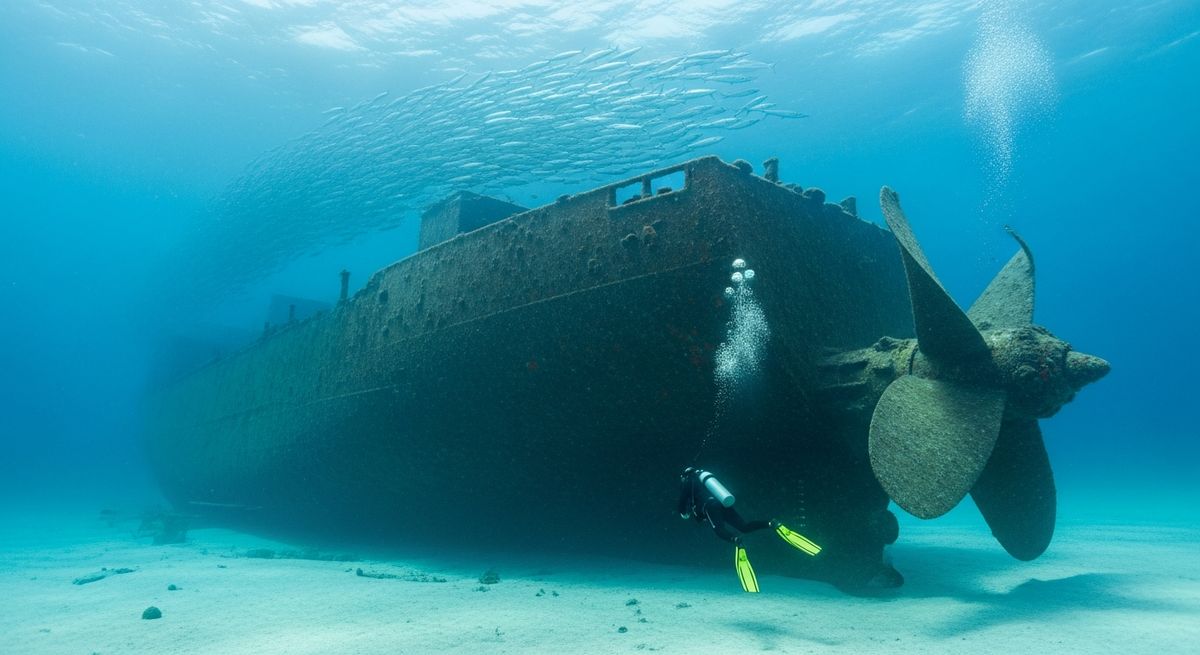
The *Calcium*, a steamship sunk by a mine in 1940, sits upright at 22 metres. It’s a proper wreck dive, not just a pile of rubble, and that’s why we love it. The bow section is still largely intact, the plates peeling away in places like old wallpaper, revealing the skeletal ribs underneath. You can swim into the cargo hold, a dark maw where light filters through gaps in the decking, and it's here we find the site's real magic. We’ve seen some huge lobsters tucked into the corners, their antennae twitching in the gloom, and the sheer volume of dead man’s fingers that blanket the steel is impressive. They glow a brilliant orange under the torch beam, transforming the grim metal into something almost organic. Current can be a factor here, so we always plan our dives for slack water. It makes exploring the superstructure, particularly the stern where the propeller shaft is still visible, much more enjoyable. This is a dive for those who appreciate history and the way the sea reclaims what's lost, with the bonus of some classic North Sea marine life making it home.
Typical CALCIUM (POSSIBLY) Dive Profile
Illustrative profile based on site depth and type. Actual dive profiles vary - always follow your dive computer and training.
Safety Notes
Depth of 22m - Advanced Open Water certification recommended.
Wreck site - avoid penetration without wreck diving certification. Watch for sharp metal and entanglement hazards.
Always perform a 3-minute safety stop at 5m before surfacing.
CALCIUM (POSSIBLY) Wreck History
Year Sunk
1940
Vessel Type
cargo ship
Cause
mined
Shrouded in some uncertainty, the wreck known as the 'Calcium (Possibly)' is a casualty of the Second World War. This steamship met its end on December 30, 1940, after striking a German mine laid off the strategically important Northumberland coast. During the war, these waters were heavily contested and mined, claiming many merchant vessels that were vital to the British war effort.
Lying at a depth of 22 meters, this wreck offers a compelling dive for those with Advanced Open Water certification or equivalent experience. The North Sea has claimed the vessel over the decades, and it is now a broken but intriguing structure, colonized by a rich tapestry of marine life, including anemones, dead man's fingers, and schooling fish. Its classification as a 'Dangerous Wreck' suggests a collapsed and scattered site, which provides numerous nooks and crannies for divers to peer into, searching for artifacts and aquatic residents. The mystery of its definitive identity only adds to the allure of the dive.
Nearest Dive Centres to CALCIUM (POSSIBLY)
Dive shops near CALCIUM (POSSIBLY)
BUSAC at Bangor University
Scuba Scape Ltd
Aquaventurers
Reviews for CALCIUM (POSSIBLY)
Conditions
Ocean conditions, forecast and tides for CALCIUM (POSSIBLY)
Plan & book
Ways to dive Northumberland & Northeast, from day trips to liveaboards.
Day trips & courses
via GetYourGuideGuided dives, courses and snorkel trips with instant booking.
Find dive trips in Northumberland & NortheastPlaces to stay
via Booking.comHotels and dive resorts near Northumberland & Northeast.
Search stays in Northumberland & NortheastDive insurance
Most travel insurance excludes or limits scuba. Check what you need before you go.
Dive insurance explainedPartner links: we may earn a commission if you book, at no extra cost to you. How we make money
Where to Stay near CALCIUM (POSSIBLY)
Prices from Booking.com. We may earn a commission at no extra cost to you.