CALCIUM (PROBABLY)
Protected Area
Liverpool Bay / Bae Lerpwl
Why dive here
With 118+ marine species recorded in the area - including dolphins, dwarf minke whales, humpback whales, ocean sunfish (mola mola) and orcas - CALCIUM (PROBABLY) offers some of Northumberland & Northeast's richest wreck diving.
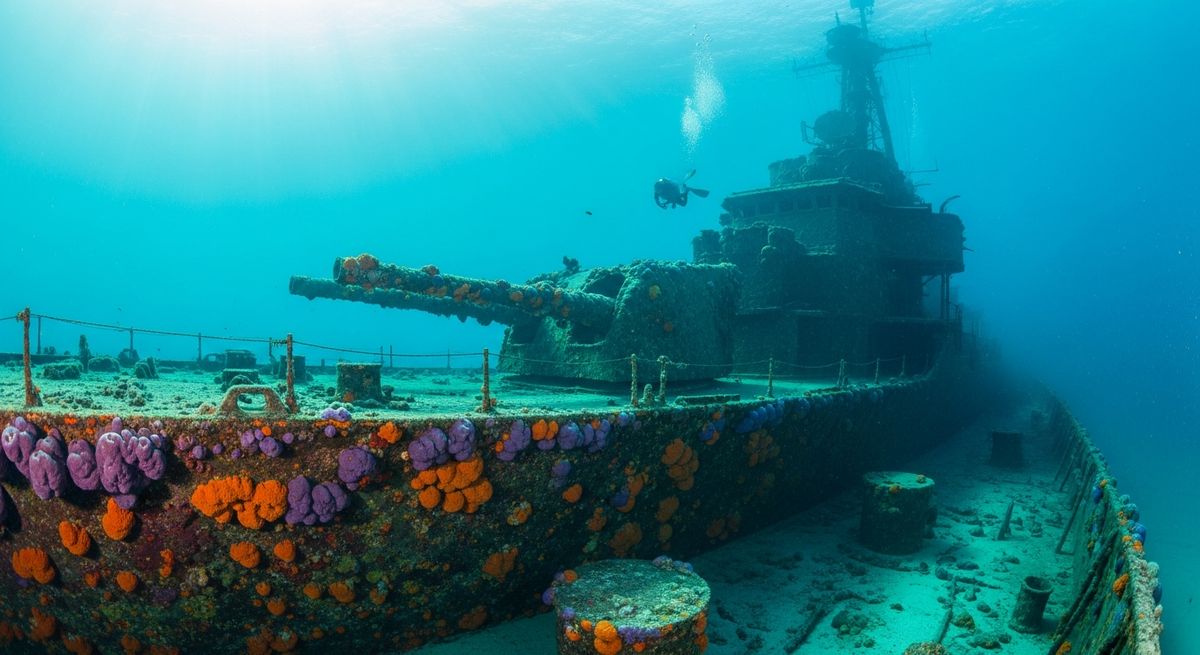
We’ve spent some chilly hours on the Calcium (Probably), and it’s a site that really gets its hooks in you. This isn’t a pristine, intact wreck you’ll swim through room by room. Instead, it’s an impressive debris field, scattered across the seabed at a consistent 11 metres. We think it’s best approached as a treasure hunt. You’ll find plates, the remains of the boiler, and twisted metal that gives away its 1940 sinking. Our favourite parts are the sections where the ship's structure creates small overhangs and hidey-holes. That’s where you’ll usually spot wrasse, some sizeable pollack, and sometimes even a lobster or two tucked away. Visibility here can be a bit of a lottery, as with much of the Northumberland coast, so we always check the tides – slack water is key for the best experience. If you’re into exploring history and don’t mind a bit of a rummage, this wreck is a solid choice. It’s accessible for most diver levels, making it a great dive to get familiar with North Sea wreck diving.
Typical CALCIUM (PROBABLY) Dive Profile
Illustrative profile based on site depth and type. Actual dive profiles vary - always follow your dive computer and training.
Safety Notes
Wreck site - avoid penetration without wreck diving certification. Watch for sharp metal and entanglement hazards.
Always perform a 3-minute safety stop at 5m before surfacing.
CALCIUM (PROBABLY) Wreck History
Year Sunk
1940
Vessel Type
cargo ship
Cause
mined
Tonnage
965 GRT
The SS Calcium was a classic steamship built in 1918 by G. Brown & Co. in Greenock, Scotland. Powered by a triple-expansion engine, the vessel was owned by the United Alkali Co Ltd, a subsidiary of the industrial giant ICI. As her name suggests, she was likely involved in transporting chemical products, a vital role for industry both in peacetime and during the war.
Her service came to a tragic end during the Second World War. On December 13, 1940, while navigating the perilous waters off the Northeast coast of England, the SS Calcium struck a mine. The explosion was catastrophic, and the ship sank quickly, becoming another victim of the intense naval warfare that characterized the period in the North Sea.
Today, the wreck of the Calcium rests in just 11 meters of water, making it a fantastic and accessible site for divers of all levels. Its shallow depth allows for long bottom times and excellent light penetration on clear days. The wreck is well broken up but key features, such as its single boiler and the remains of its engine, are still identifiable. It has transformed into a vibrant artificial reef, bustling with the marine life typical of the Northumberland coast.
Nearest Dive Centres to CALCIUM (PROBABLY)
Dive shops near CALCIUM (PROBABLY)
Aquaventurers
Blue Planet Aquarium
BUSAC at Bangor University
Reviews for CALCIUM (PROBABLY)
Conditions
Ocean conditions, forecast and tides for CALCIUM (PROBABLY)
Plan & book
Ways to dive Northumberland & Northeast, from day trips to liveaboards.
Day trips & courses
via GetYourGuideGuided dives, courses and snorkel trips with instant booking.
Find dive trips in Northumberland & NortheastPlaces to stay
via Booking.comHotels and dive resorts near Northumberland & Northeast.
Search stays in Northumberland & NortheastDive insurance
Most travel insurance excludes or limits scuba. Check what you need before you go.
Dive insurance explainedPartner links: we may earn a commission if you book, at no extra cost to you. How we make money
Where to Stay near CALCIUM (PROBABLY)
Prices from Booking.com. We may earn a commission at no extra cost to you.