CALDERON
Protected Area
Ravenmeols Hills
Why dive here
With 118+ marine species recorded in the area - including dolphins, dwarf minke whales, humpback whales, ocean sunfish (mola mola) and orcas - CALDERON offers some of Northumberland & Northeast's richest wreck diving.
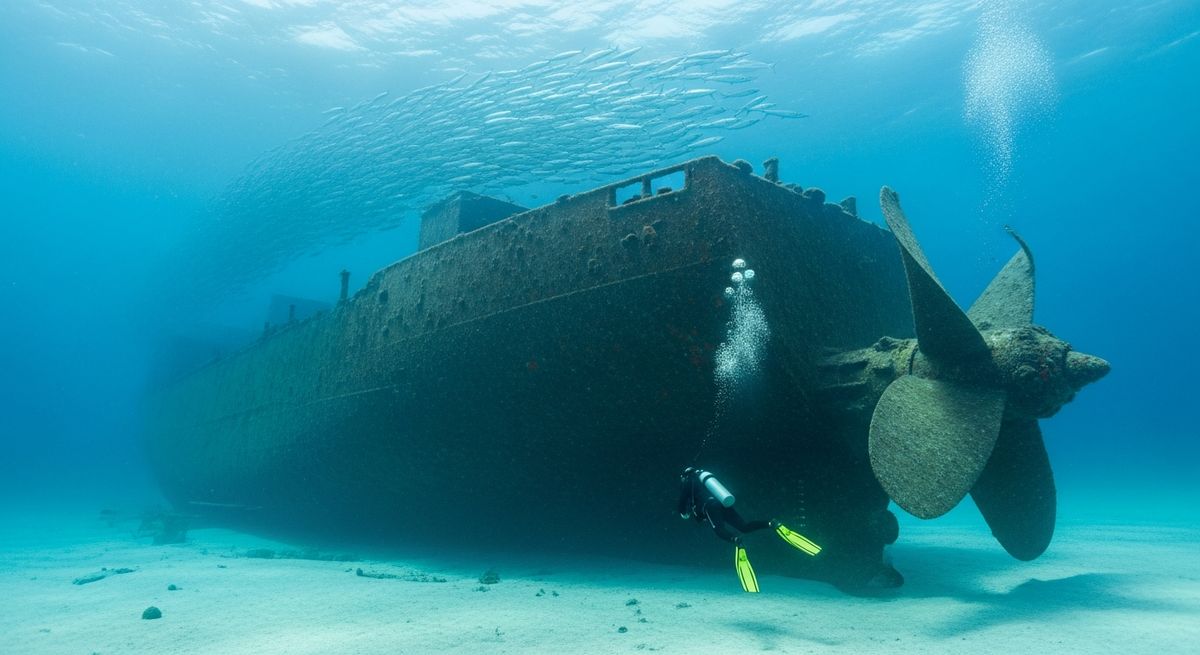
Northumberland wreck diving often means a fair amount of current and reduced visibility, but the Calderon is worth the effort, especially if you catch it on a good day. This isn't a massive, intact behemoth, but rather a sprawling debris field from a steamship that went down over a century ago. You’ll find the two huge boilers standing upright, our favourite feature, absolutely smothered in plumose anemones – the fluffy white kind that wave like tiny feather dusters. We’ve spent hours here, tracing the outline of the hull plates, now just ribs on the seabed at a shallow 12 metres. The sheer quantity of dead man's fingers and soft corals is impressive; the whole site feels alive. Look closely and you’ll spot wrasse darting in and out, and often a grumpy-looking conger eel peering from under a collapsed plate. It’s a site that rewards slow exploration rather than a quick swim-through. We’d suggest diving this one on a slack tide, an hour either side of high water is usually best for clearer views of the scattered structure. Just remember, it can get silty if stirred up, so good buoyancy is a must.
Typical CALDERON Dive Profile
Illustrative profile based on site depth and type. Actual dive profiles vary - always follow your dive computer and training.
Safety Notes
Wreck site - avoid penetration without wreck diving certification. Watch for sharp metal and entanglement hazards.
Always perform a 3-minute safety stop at 5m before surfacing.
CALDERON Wreck History
Year Sunk
1912
Vessel Type
cargo ship
Cause
grounding
Tonnage
4,905 GRT
The SS Calderon was a substantial steamship, built in 1900 by the famous Workman, Clark & Co. shipyard in Belfast for the prestigious Lamport & Holt Line of Liverpool. A product of the golden age of steam, she was a large cargo vessel powered by a mighty 534 NHP triple-expansion engine, serving the vital trade routes of the British Empire before the outbreak of the First World War.
The Calderon's career was cut short on January 23, 1912. While steaming along the Northumberland coast, the ship was enveloped by a sudden and ferocious blizzard. Blinded by the snow and battered by the storm, she ran hard aground on the unforgiving rocks near Beadnell. The wreck became a local spectacle, but the powerful North Sea swells soon broke the ship apart, and she slipped beneath the waves.
Lying in just 12 meters of water, the Calderon is now a classic shore or boat dive for enthusiasts exploring the Northumberland coast. The wreck is extensively broken up, a testament to the power of the sea over the last century. Divers can easily identify her two large boilers, which stand proud of the seabed, as well as the impressive remains of her engine block. The scattered steel plates and girders have created a perfect habitat for a profusion of marine life, including crabs, lobsters, and colorful anemones, making it a scenic and historic dive.
Nearest Dive Centres to CALDERON
Dive shops near CALDERON
Aquaventurers
Delph Watersports Centre
Shipmates
Blue Planet Aquarium
Blackpool Area Diving Centre
Fins Scuba
Reviews for CALDERON
Conditions
Ocean conditions, forecast and tides for CALDERON
Plan & book
Ways to dive Northumberland & Northeast, from day trips to liveaboards.
Day trips & courses
via GetYourGuideGuided dives, courses and snorkel trips with instant booking.
Find dive trips in Northumberland & NortheastPlaces to stay
via Booking.comHotels and dive resorts near Northumberland & Northeast.
Search stays in Northumberland & NortheastDive insurance
Most travel insurance excludes or limits scuba. Check what you need before you go.
Dive insurance explainedPartner links: we may earn a commission if you book, at no extra cost to you. How we make money
Where to Stay near CALDERON
Prices from Booking.com. We may earn a commission at no extra cost to you.