CARL AUGUST
Protected Area
New Ferry
Why dive here
With 118+ marine species recorded in the area - including dolphins, dwarf minke whales, humpback whales, ocean sunfish (mola mola) and orcas - CARL AUGUST offers some of Northumberland & Northeast's richest wreck diving.
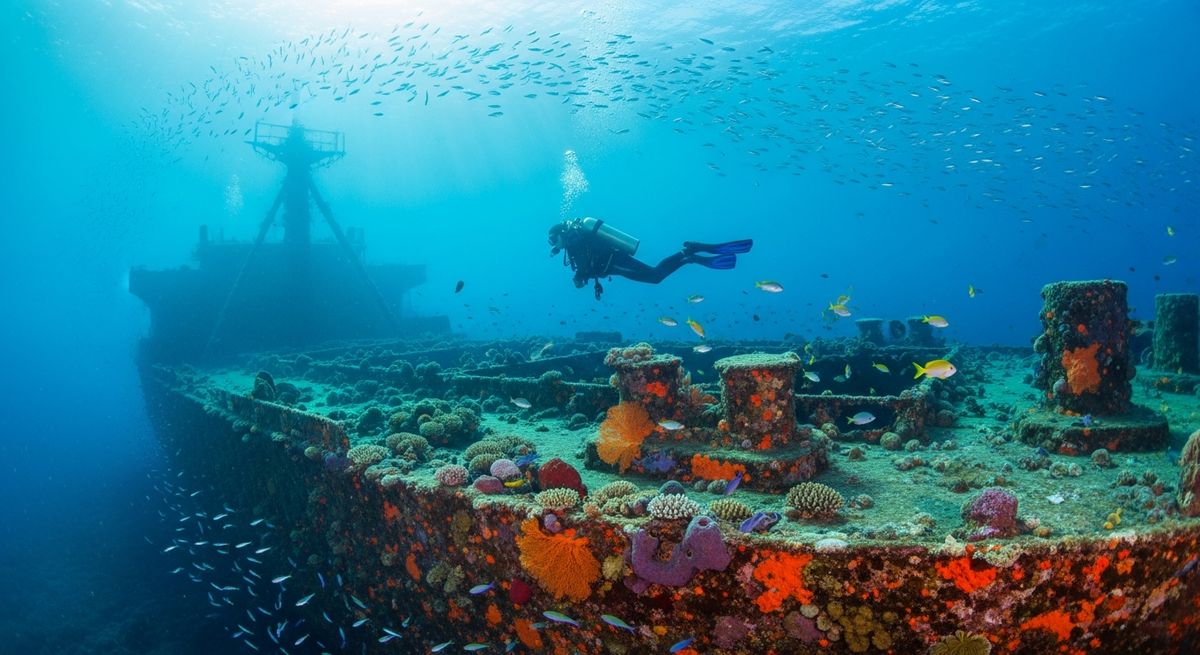
Okay, let's talk about the Carl August. We've spent a few hours on this one, and it’s a site that really comes alive when you hit it right. This isn’t a deep dive, barely tickling the surface at 10 metres, but don’t let that fool you. What we love about the Carl August is the sheer sense of history. She’s a wooden sailing vessel, built in 1874, that came to grief in 1891. You’re not just seeing a wreck; you’re seeing the skeleton of a ship that sailed the world. When the visibility plays ball, which is often surprisingly good here, you can trace her lines quite clearly. The wooden timbers are well broken now, but you can still make out sections of her hull, ribs, and deck structures. We’ve found some great penetration opportunities into the old cargo holds, if you’re appropriately trained and confident in overhead environments. Look for the way light filters through the gaps in the planking – it creates some really moody scenes. The wreck has become a home for a surprising amount of life: plenty of plump cod tucking themselves into the nooks, blennies darting between the timbers, and we’ve even seen the occasional inquisitive seal pop by. It’s a dive that rewards slow exploration and an appreciation for maritime history.
Typical CARL AUGUST Dive Profile
Illustrative profile based on site depth and type. Actual dive profiles vary - always follow your dive computer and training.
Safety Notes
Wreck site - avoid penetration without wreck diving certification. Watch for sharp metal and entanglement hazards.
CARL AUGUST Wreck History
Year Sunk
1891
Vessel Type
cargo ship
Cause
grounding
The Carl August tells a tale from the great age of sail. This wooden sailing vessel was built in 1874 in Stralsund, Germany, and spent nearly two decades plying the world's oceans. Her final voyage was an ambitious one, carrying cargo from Montevideo in South America all the way to Ellesmere Port in the United Kingdom. On December 21, 1891, after a long transatlantic crossing, her journey came to an abrupt end when she stranded and was lost on the coast of Northumberland.
Lying in just one meter of water, the wreck has been exposed to over a century of relentless coastal weather. As a wooden vessel, its hull structure has long since disintegrated. For divers and beachcombers, the site is an archaeological exploration rather than a wreck dive. The primary remains consist of scattered timbers, ballast stones that once kept the ship stable, and perhaps some corroded iron fittings. It's a dive into history, imagining the power of the storm that brought this sturdy vessel to its final resting place.
Nearest Dive Centres to CARL AUGUST
Dive shops near CARL AUGUST
Aquaventurers
Blue Planet Aquarium
Shipmates
Delph Watersports Centre
Southsea Scuba
Diving & Marine Services
Reviews for CARL AUGUST
Conditions
Ocean conditions, forecast and tides for CARL AUGUST
Plan & book
Ways to dive Northumberland & Northeast, from day trips to liveaboards.
Day trips & courses
via GetYourGuideGuided dives, courses and snorkel trips with instant booking.
Find dive trips in Northumberland & NortheastPlaces to stay
via Booking.comHotels and dive resorts near Northumberland & Northeast.
Search stays in Northumberland & NortheastDive insurance
Most travel insurance excludes or limits scuba. Check what you need before you go.
Dive insurance explainedPartner links: we may earn a commission if you book, at no extra cost to you. How we make money
Where to Stay near CARL AUGUST
Prices from Booking.com. We may earn a commission at no extra cost to you.