CASTLE ISLAND
Protected Area
Ballymacormick Point
Why dive here
With 118+ marine species recorded in the area - including dolphins, dwarf minke whales, humpback whales, ocean sunfish (mola mola) and orcas - CASTLE ISLAND offers some of Northumberland & Northeast's richest wreck diving.
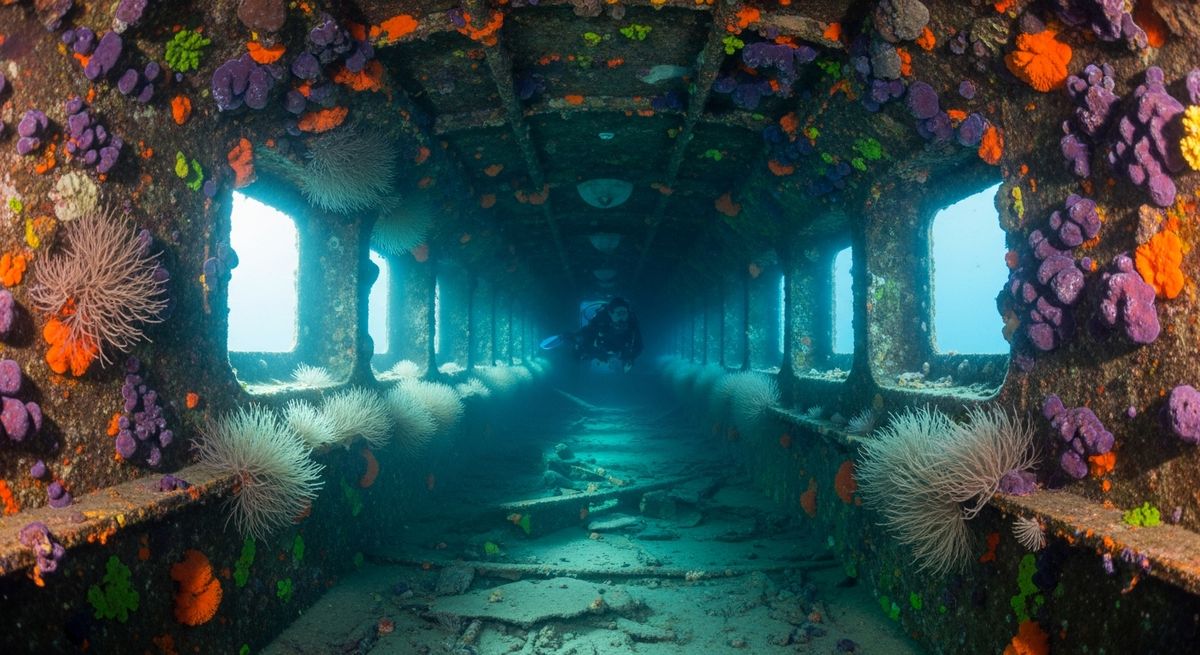
Castle Island isn’t about huge pelagics or endless visibility; it’s a brilliant little wreck dive that punches above its weight. We love it for its intimacy and the way the local marine life has really made it home. This 1922 steamship, the *SS Castle Island*, went down less than a year after launch, striking Brigs Reef. Now, resting in just 5m of water, it’s remarkably intact for such a shallow wreck. You’ll find the bow section relatively complete, with plates and ribs still holding their shape. Our favourite part is exploring the single boiler, a real focal point, now covered in colourful anemones – a fantastic contrast against the dark metal. Shoals of coalfish often swirl around the structure, and if you take your time, you’ll spot blennies peeking from crevices and crabs scuttling over the plates. We’d suggest diving this one at slack tide, especially around high water, to avoid any surge and get the best ambient light. It’s perfect for newer wreck divers or those looking for a relaxed, critter-focused exploration.
Typical CASTLE ISLAND Dive Profile
Illustrative profile based on site depth and type. Actual dive profiles vary - always follow your dive computer and training.
Safety Notes
Wreck site - avoid penetration without wreck diving certification. Watch for sharp metal and entanglement hazards.
Reviews for CASTLE ISLAND
Conditions
Ocean conditions, forecast and tides for CASTLE ISLAND
Plan & book
Ways to dive Northumberland & Northeast, from day trips to liveaboards.
Day trips & courses
via GetYourGuideGuided dives, courses and snorkel trips with instant booking.
Find dive trips in Northumberland & NortheastPlaces to stay
via Booking.comHotels and dive resorts near Northumberland & Northeast.
Search stays in Northumberland & NortheastDive insurance
Most travel insurance excludes or limits scuba. Check what you need before you go.
Dive insurance explainedPartner links: we may earn a commission if you book, at no extra cost to you. How we make money
Where to Stay near CASTLE ISLAND
Prices from Booking.com. We may earn a commission at no extra cost to you.