CLWYD (PROBABLY)
Protected Area
Llanbadrig - Dinas Gynfor
Why dive here
With 118+ marine species recorded in the area - including dolphins, dwarf minke whales, humpback whales, ocean sunfish (mola mola) and orcas - CLWYD (PROBABLY) offers some of Northumberland & Northeast's richest wreck diving.
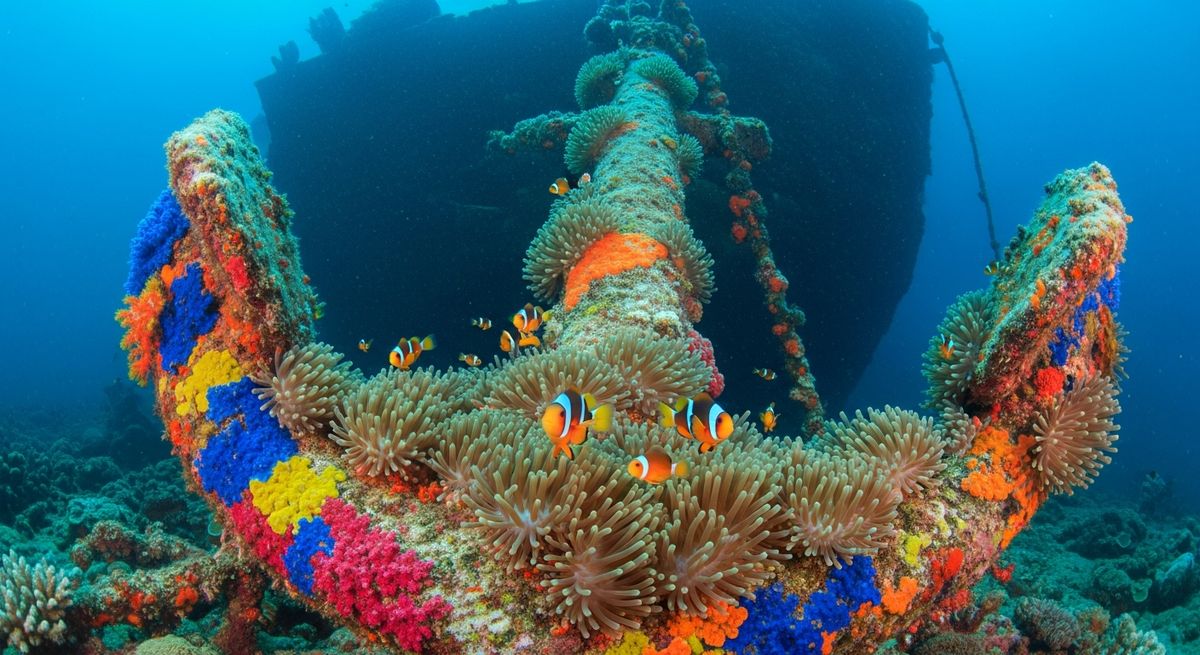
The Clwyd, or what we’re fairly sure is the Clwyd, sits deep, a proper expedition dive at 58 metres off the Northumberland coast. It’s a steamship, 38 metres long, built in South Shields and sunk in 1917. We love its intact nature, the way the bow still points purposefully into the gloom. You’ll often find decent visibility here, maybe 15 metres on a good day, which for a wreck this deep in the North Sea feels like a gift. Dropping down, the first thing you notice is the sheer scale. The superstructure is still there, largely upright, with the funnels long gone but the outline clear. We’ve spent dives tracing the deck, peering into cargo holds now home to wolf fish and conger eels. Look closely and you’ll find nudibranchs crawling over the encrusting corals, and the occasional anglerfish lurking in the shadows. This is a dive for experienced technical teams, a real piece of history waiting to be explored. Bring good lights and plenty of bottom time; you’ll need it to properly appreciate this grand old lady.
Typical CLWYD (PROBABLY) Dive Profile
Illustrative profile based on site depth and type. Actual dive profiles vary - always follow your dive computer and training.
Safety Notes
Maximum depth 58m exceeds recreational limits (40m). Technical diving certification and equipment required.
Wreck site - avoid penetration without wreck diving certification. Watch for sharp metal and entanglement hazards.
Always perform a 3-minute safety stop at 5m before surfacing.
Nearest Dive Centres to CLWYD (PROBABLY)
Dive shops near CLWYD (PROBABLY)
View all dive centres in Northumberland & NortheastReviews for CLWYD (PROBABLY)
Conditions
Ocean conditions, forecast and tides for CLWYD (PROBABLY)
Plan & book
Ways to dive Northumberland & Northeast, from day trips to liveaboards.
Day trips & courses
via GetYourGuideGuided dives, courses and snorkel trips with instant booking.
Find dive trips in Northumberland & NortheastPlaces to stay
via Booking.comHotels and dive resorts near Northumberland & Northeast.
Search stays in Northumberland & NortheastDive insurance
Most travel insurance excludes or limits scuba. Check what you need before you go.
Dive insurance explainedPartner links: we may earn a commission if you book, at no extra cost to you. How we make money
Where to Stay near CLWYD (PROBABLY)
Prices from Booking.com. We may earn a commission at no extra cost to you.