Clytie
Protected Area
Great Orme
Why dive here
With 118+ marine species recorded in the area - including dolphins, dwarf minke whales, humpback whales, ocean sunfish (mola mola) and orcas - Clytie offers some of Northumberland & Northeast's richest wreck diving.
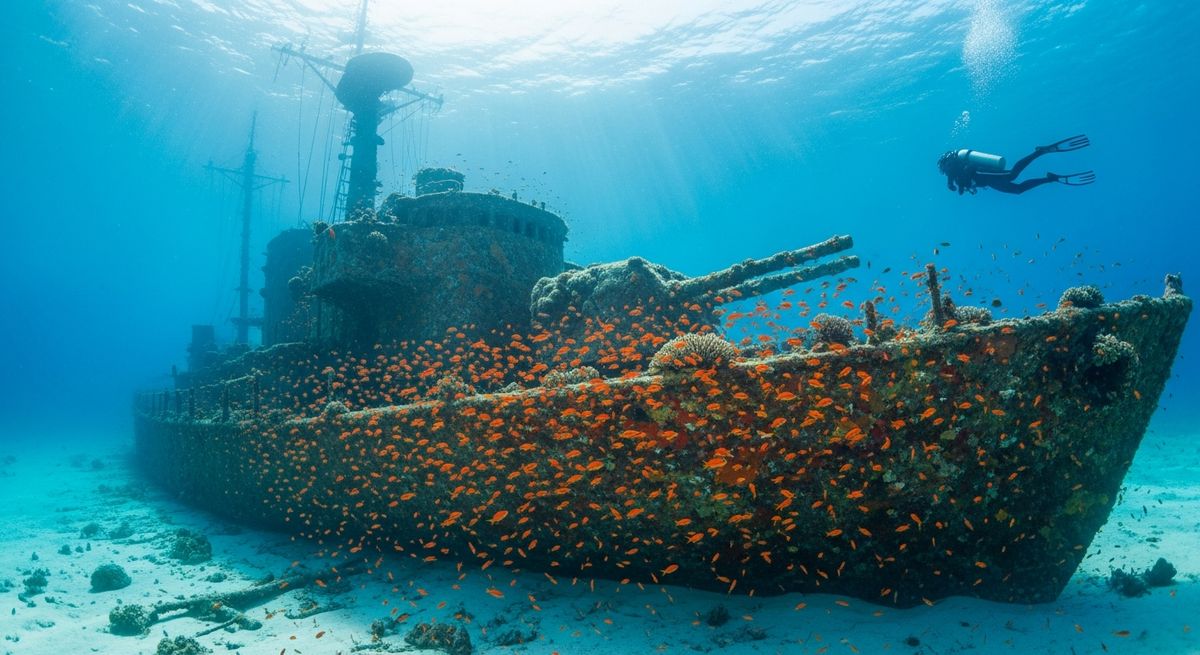
The Clytie, for us, is one of those deeper North Sea wrecks that just keeps on giving. She’s a decent drop to 47 metres, so we’re talking experienced divers here, but the reward is a remarkably intact steamship. You can really get a sense of her shape, sitting upright on the seabed. We love picking out the details – the bow still points purposefully, and the stern section often holds a few surprises. Visibility can be a proper North Sea lottery, so picking your day is key. But when it’s good, say 10 metres, the way the light filters down onto the deck is quite something. Conger eels are often lurking in the darker recesses of the engine room, and the holds are now home to feisty edible crabs. Dead man’s fingers coral grows in thick, white clumps along the rails, swaying gently with the surge. Our favourite bit is exploring the superstructure, seeing where the deck plates have peeled back like old tin cans, revealing the skeletal ribs underneath. It’s a proper historical dive, a chance to connect with that maritime past.
Typical Clytie Dive Profile
Illustrative profile based on site depth and type. Actual dive profiles vary - always follow your dive computer and training.
Safety Notes
Maximum depth 47m exceeds recreational limits (40m). Technical diving certification and equipment required.
Wreck site - avoid penetration without wreck diving certification. Watch for sharp metal and entanglement hazards.
Always perform a 3-minute safety stop at 5m before surfacing.
Nearest Dive Centres to Clytie
Dive shops near Clytie
View all dive centres in Northumberland & NortheastReviews for Clytie
Conditions
Ocean conditions, forecast and tides for Clytie
Plan & book
Ways to dive Northumberland & Northeast, from day trips to liveaboards.
Day trips & courses
via GetYourGuideGuided dives, courses and snorkel trips with instant booking.
Find dive trips in Northumberland & NortheastPlaces to stay
via Booking.comHotels and dive resorts near Northumberland & Northeast.
Search stays in Northumberland & NortheastDive insurance
Most travel insurance excludes or limits scuba. Check what you need before you go.
Dive insurance explainedPartner links: we may earn a commission if you book, at no extra cost to you. How we make money
Where to Stay near Clytie
Prices from Booking.com. We may earn a commission at no extra cost to you.