EXPRESS (POSSIBLY)
Protected Area
Drigg Dunes and Gullery, Ravenglass
Why dive here
With 118+ marine species recorded in the area - including dolphins, dwarf minke whales, humpback whales, ocean sunfish (mola mola) and orcas - EXPRESS (POSSIBLY) offers some of Northumberland & Northeast's richest wreck diving.
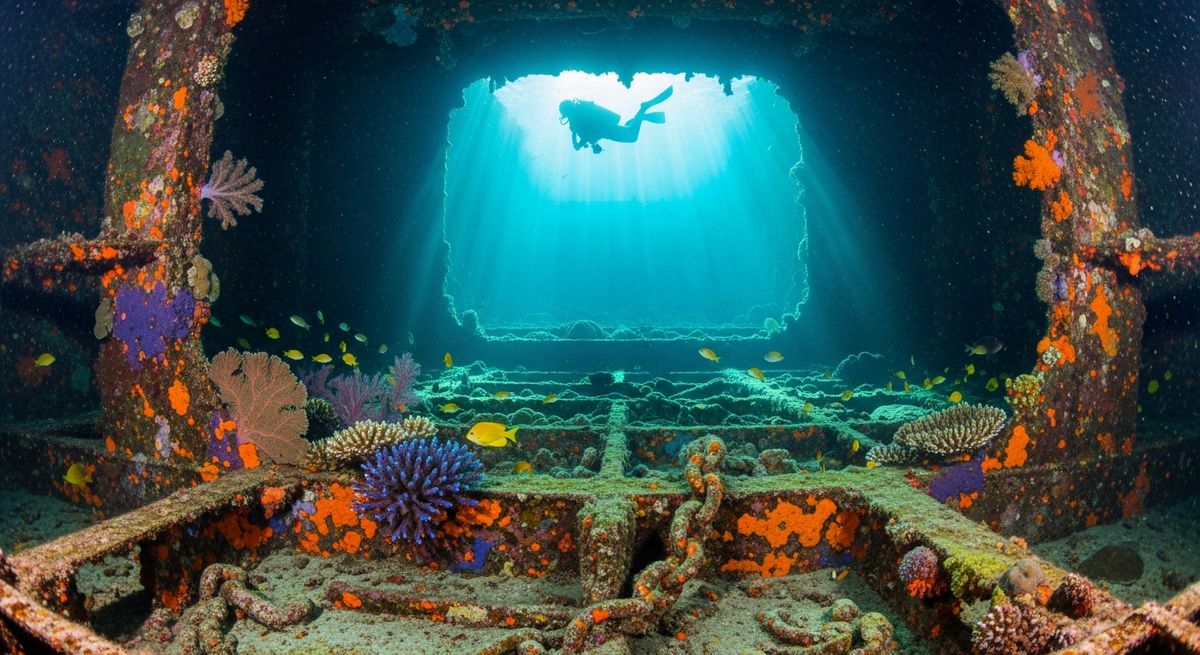
Diving the Express, if you can find her, feels like stepping back into a maritime mystery. We've always been drawn to these historical wrecks, especially when they’re so scattered, leaving you to piece together the story. You won’t find towering superstructures here. Instead, it’s a debris field of iron plates and ribs, the ghost of an 1857 steamship, spread across the seabed at a forgiving 14 metres. Visibility in the Northeast can be hit or miss, but on a good day, with a bit of sunlight filtering through, the wreck material takes on a muted, rusty glow. We love drifting over the twisted metal, imagining the steam engine that once powered her, now just an outline. It’s the perfect dive for those who enjoy a slower pace, poking around the nooks and crannies. Look closely and you’ll spot plenty of blennies tucked into crevices, some impressive edible crabs scuttling under plates, and often, a curious conger eel peering out from a darker void. It’s a gentle exploration, ideal for divers who appreciate the subtle beauty of a wreck reclaimed by the sea.
Typical EXPRESS (POSSIBLY) Dive Profile
Illustrative profile based on site depth and type. Actual dive profiles vary - always follow your dive computer and training.
Safety Notes
Wreck site - avoid penetration without wreck diving certification. Watch for sharp metal and entanglement hazards.
Always perform a 3-minute safety stop at 5m before surfacing.
Reviews for EXPRESS (POSSIBLY)
Conditions
Ocean conditions, forecast and tides for EXPRESS (POSSIBLY)
Plan & book
Ways to dive Northumberland & Northeast, from day trips to liveaboards.
Day trips & courses
via GetYourGuideGuided dives, courses and snorkel trips with instant booking.
Find dive trips in Northumberland & NortheastPlaces to stay
via Booking.comHotels and dive resorts near Northumberland & Northeast.
Search stays in Northumberland & NortheastDive insurance
Most travel insurance excludes or limits scuba. Check what you need before you go.
Dive insurance explainedPartner links: we may earn a commission if you book, at no extra cost to you. How we make money
Where to Stay near EXPRESS (POSSIBLY)
Prices from Booking.com. We may earn a commission at no extra cost to you.