FIRE KING II
Protected Area
Ramsey, Isle of Man
Why dive here
With 118+ marine species recorded in the area - including dolphins, dwarf minke whales, humpback whales, ocean sunfish (mola mola) and orcas - FIRE KING II offers some of Northumberland & Northeast's richest wreck diving.
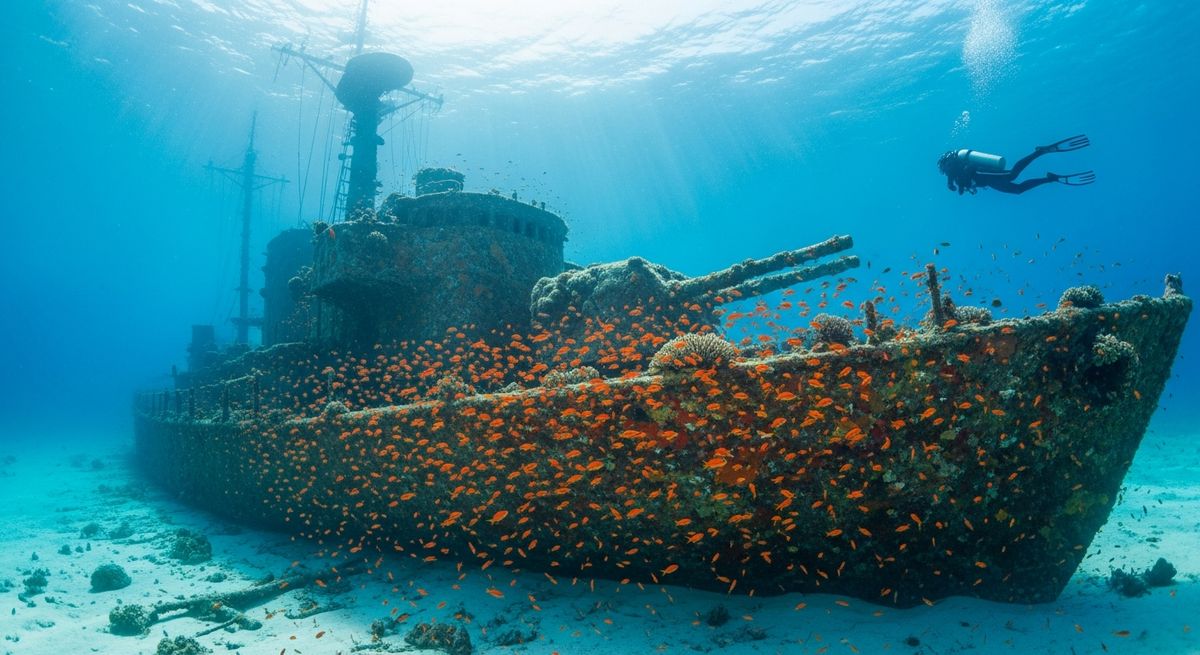
The Fire King II, a steamship that went down in 1939, sits upright on the seabed at 22 metres. We love an intact wreck, and this one really delivers. You drop onto the stern, often with decent visibility here, and the first thing you notice is the sheer scale. The twin boilers are massive, looming out of the murk, and the triple expansion engine is still very much recognisable. It’s a proper engineering marvel to swim around. The bow section is probably our favourite, much more broken up, offering some fantastic penetration opportunities if you’re experienced and properly trained. Inside, the light plays through gaps in the hull, illuminating thick walls of plumose anemones – they really thrive in the dark, still conditions. Outside, you'll often find a resident wolf fish or two tucked into crevices, their broad heads peeking out. Conger eels are also common, coiled up in pipes or under plates. For any wreck lover, this site is a true standout. Aim for slack water; the currents here can be a real beast.
Typical FIRE KING II Dive Profile
Illustrative profile based on site depth and type. Actual dive profiles vary - always follow your dive computer and training.
Safety Notes
Depth of 22m - Advanced Open Water certification recommended.
Wreck site - avoid penetration without wreck diving certification. Watch for sharp metal and entanglement hazards.
Always perform a 3-minute safety stop at 5m before surfacing.
Nearest Dive Centres to FIRE KING II
Dive shops near FIRE KING II
View all dive centres in Northumberland & NortheastReviews for FIRE KING II
Conditions
Ocean conditions, forecast and tides for FIRE KING II
Plan & book
Ways to dive Northumberland & Northeast, from day trips to liveaboards.
Day trips & courses
via GetYourGuideGuided dives, courses and snorkel trips with instant booking.
Find dive trips in Northumberland & NortheastPlaces to stay
via Booking.comHotels and dive resorts near Northumberland & Northeast.
Search stays in Northumberland & NortheastDive insurance
Most travel insurance excludes or limits scuba. Check what you need before you go.
Dive insurance explainedPartner links: we may earn a commission if you book, at no extra cost to you. How we make money
Where to Stay near FIRE KING II
Prices from Booking.com. We may earn a commission at no extra cost to you.