HAROLD
Protected Area
Holyhead Mountain
Why dive here
With 118+ marine species recorded in the area - including dolphins, dwarf minke whales, humpback whales, ocean sunfish (mola mola) and orcas - HAROLD offers some of Northumberland & Northeast's richest wreck diving.
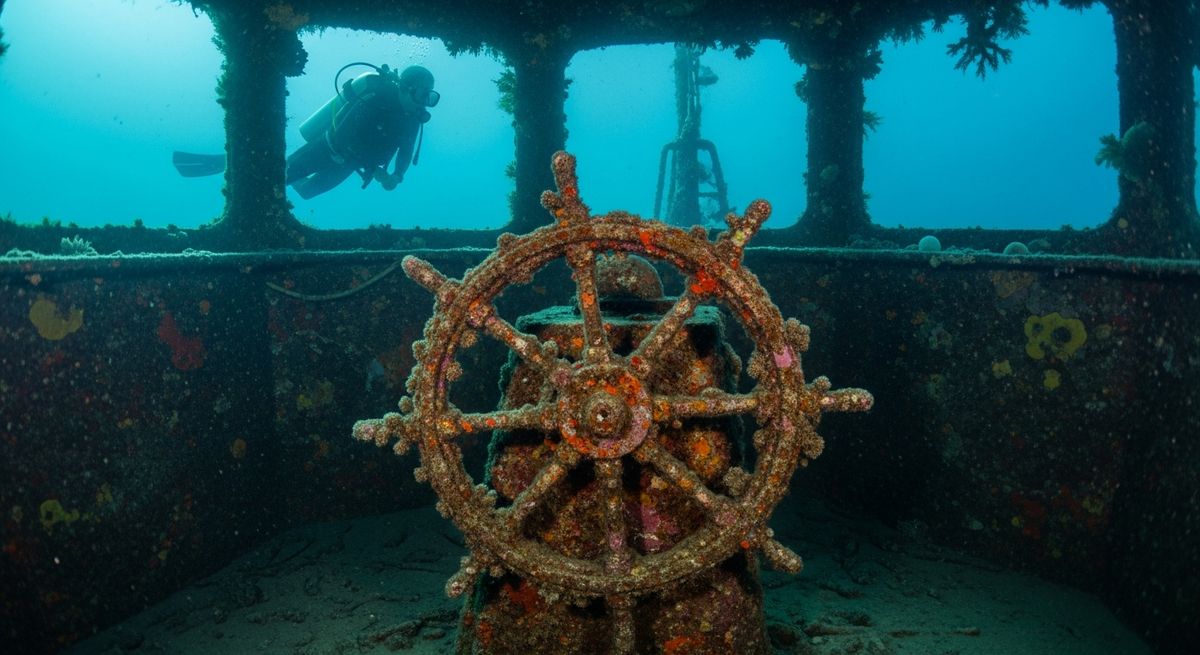
The *Harold* isn't a deep dive, sitting at just 14 metres, which makes it remarkably accessible for a wreck of its age. Sunk back in 1908, this steamship has had over a century for the North Sea to reclaim it, and it really shows. What we love about the *Harold* is the way the wreck has become a true artificial reef, completely carpeted in plumose anemones – they really bloom when there’s a bit of current running through. You'll find the wreck fairly broken up now, but the stern section and engine room are still quite distinct. We often spot conger eels tucked into the darker crevices, and the schools of saithe that hang around are usually pretty bold. Visibility here can be a bit variable, as it often is off the Northumberland coast, so we always suggest picking a day with settled weather and slack tide for the best experience. It's an excellent dive for those who enjoy exploring the history beneath the waves without needing advanced qualifications.
Typical HAROLD Dive Profile
Illustrative profile based on site depth and type. Actual dive profiles vary - always follow your dive computer and training.
Safety Notes
Wreck site - avoid penetration without wreck diving certification. Watch for sharp metal and entanglement hazards.
Always perform a 3-minute safety stop at 5m before surfacing.
Nearest Dive Centres to HAROLD
Dive shops near HAROLD
View all dive centres in Northumberland & NortheastReviews for HAROLD
Conditions
Ocean conditions, forecast and tides for HAROLD
Plan & book
Ways to dive Northumberland & Northeast, from day trips to liveaboards.
Day trips & courses
via GetYourGuideGuided dives, courses and snorkel trips with instant booking.
Find dive trips in Northumberland & NortheastPlaces to stay
via Booking.comHotels and dive resorts near Northumberland & Northeast.
Search stays in Northumberland & NortheastDive insurance
Most travel insurance excludes or limits scuba. Check what you need before you go.
Dive insurance explainedPartner links: we may earn a commission if you book, at no extra cost to you. How we make money
Where to Stay near HAROLD
Prices from Booking.com. We may earn a commission at no extra cost to you.