HERMINE
Protected Area
Beddmanarch-Cymyran
Why dive here
With 118+ marine species recorded in the area - including dolphins, dwarf minke whales, humpback whales, ocean sunfish (mola mola) and orcas - HERMINE offers some of Northumberland & Northeast's richest wreck diving.
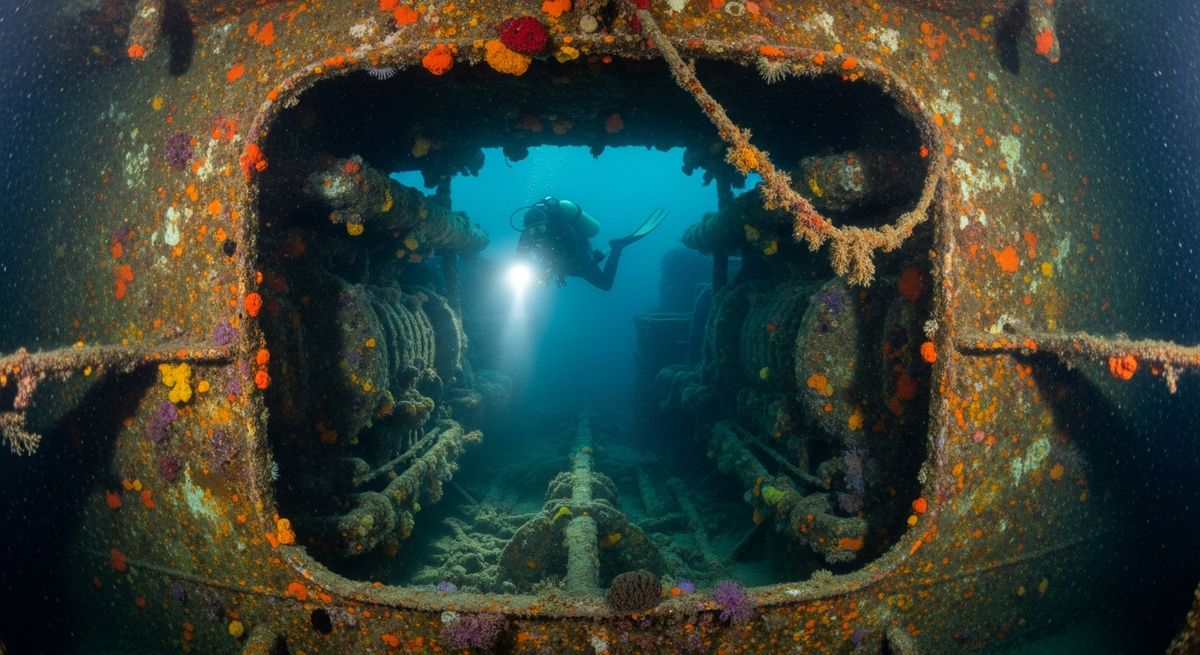
The Hermine, a 19th-century sailing vessel, went down in 1890 after striking rocks. What's left of her lies broken up, scattered across the seabed, but that’s precisely what we find so captivating. You’re not getting a pristine, intact wreck here, and that’s fine by us. Instead, it’s a site to really explore, where the sea has had over a century to reclaim its own. We love nosing around the exposed ribs and plates. The hull is largely gone, but the jumble of wreckage provides fantastic shelter, drawing in a surprising amount of life. Crabs scuttle between the broken timbers, and we often spot decent-sized conger eels tucked into the dark recesses. Visibility can be a bit of a lottery, as it often is in the Northeast, but on a good day, with a bit of sunlight filtering down, the ironwork takes on a moody, atmospheric glow. It’s a dive that rewards patience and a keen eye, perfect for those who enjoy the history as much as the marine life.
Safety Notes
Wreck site - avoid penetration without wreck diving certification. Watch for sharp metal and entanglement hazards.
Nearest Dive Centres to HERMINE
Dive shops near HERMINE
View all dive centres in Northumberland & NortheastReviews for HERMINE
Conditions
Ocean conditions, forecast and tides for HERMINE
Plan & book
Ways to dive Northumberland & Northeast, from day trips to liveaboards.
Day trips & courses
via GetYourGuideGuided dives, courses and snorkel trips with instant booking.
Find dive trips in Northumberland & NortheastPlaces to stay
via Booking.comHotels and dive resorts near Northumberland & Northeast.
Search stays in Northumberland & NortheastDive insurance
Most travel insurance excludes or limits scuba. Check what you need before you go.
Dive insurance explainedPartner links: we may earn a commission if you book, at no extra cost to you. How we make money
Where to Stay near HERMINE
Prices from Booking.com. We may earn a commission at no extra cost to you.