HMS GUIDE ME II
Why dive here
With 118+ marine species recorded in the area - including dolphins, dwarf minke whales, humpback whales, ocean sunfish (mola mola) and orcas - HMS GUIDE ME II offers some of Northumberland & Northeast's richest wreck diving.
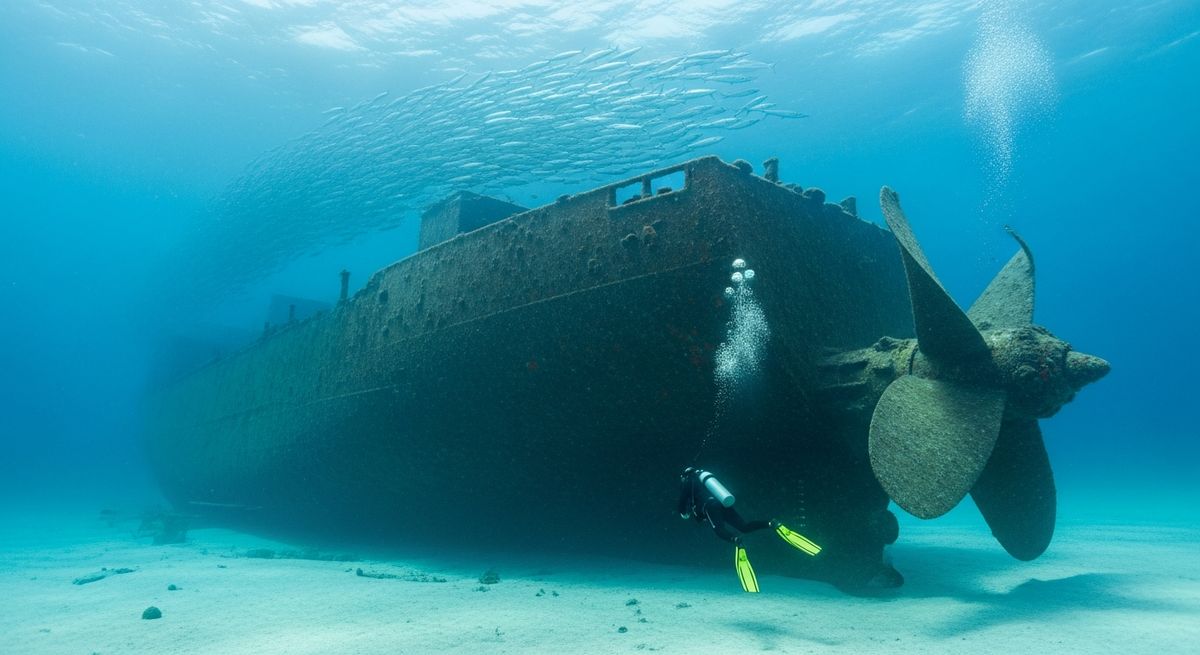
The HMS Guide Me II sits upright at 32 metres, a very respectable dive for the UK’s northeast coast. We love a wreck with a story, and this former fishing vessel, converted to an armed patrol boat before sinking in 1918, certainly has one. The bow section is our favourite part, still largely intact and pointing into the current. You can often see conger eels tucked into the deeper crevices here. Midships, the single boiler is prominent, a real focal point, and the nearby compound expansion engine gives you a great sense of its working life. Visibility here can be surprisingly good, especially on a neap tide, allowing you to appreciate the wreck's 26-meter length. Keep an eye out for dogfish resting on the sand nearby, and the occasional anglerfish camouflaged against the seabed. This wreck feels like proper historical diving; it's a site for those who appreciate maritime history and enjoy exploring a structure that has truly become part of the seabed. It suits experienced divers comfortable with deeper wrecks and potential currents.
Typical HMS GUIDE ME II Dive Profile
Illustrative profile based on site depth and type. Actual dive profiles vary - always follow your dive computer and training.
Safety Notes
Deep dive (32m) - monitor air consumption closely. Advanced certification recommended.
Wreck site - avoid penetration without wreck diving certification. Watch for sharp metal and entanglement hazards.
Always perform a 3-minute safety stop at 5m before surfacing.
Nearest Dive Centres to HMS GUIDE ME II
Dive shops near HMS GUIDE ME II
Oceandivers Training Ltd
Irish Scuba Academy
Emerald Diving Ireland Limited
Reviews for HMS GUIDE ME II
Conditions
Ocean conditions, forecast and tides for HMS GUIDE ME II
Plan & book
Ways to dive Northumberland & Northeast, from day trips to liveaboards.
Day trips & courses
via GetYourGuideGuided dives, courses and snorkel trips with instant booking.
Find dive trips in Northumberland & NortheastPlaces to stay
via Booking.comHotels and dive resorts near Northumberland & Northeast.
Search stays in Northumberland & NortheastDive insurance
Most travel insurance excludes or limits scuba. Check what you need before you go.
Dive insurance explainedPartner links: we may earn a commission if you book, at no extra cost to you. How we make money
Where to Stay near HMS GUIDE ME II
Prices from Booking.com. We may earn a commission at no extra cost to you.