INKOSI
Protected Area
Isle of Whithorn Bay
Why dive here
With 118+ marine species recorded in the area - including dolphins, dwarf minke whales, humpback whales, ocean sunfish (mola mola) and orcas - INKOSI offers some of Northumberland & Northeast's richest wreck diving.
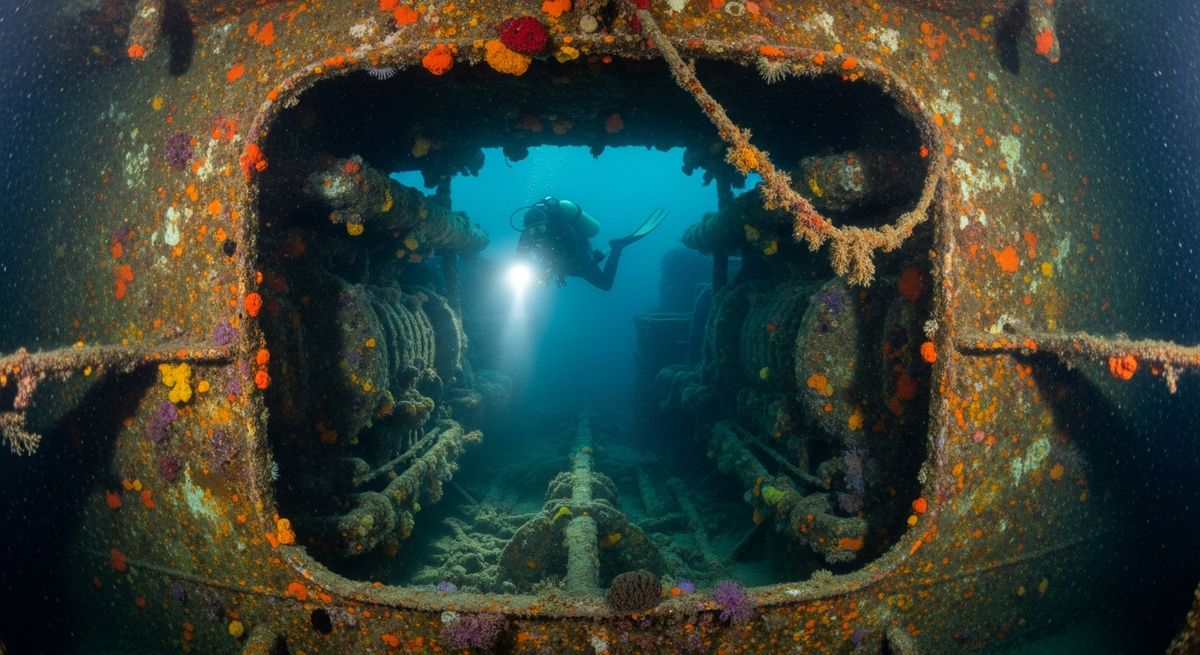
The Inkosi is a proper wreck dive, sitting upright and largely intact at 48 metres. We love how the sheer scale of it hits you as you descend; 106 metres of history draped in kelp and cold water. Built in 1902, she went down in 1918, and time has given her a real character. You’ll find yourself navigating past massive boilers, peering into gaping holds, and imagining the busy life she once led. Visibility here can swing wildly, but on a good day, the light filters down, revealing schools of coalfish darting through the superstructure. Lobsters tuck themselves into crevices, and we’ve seen some seriously chunky crabs making homes in the deeper sections. This isn't a dive for the faint of heart or the inexperienced; the depth and potential for current mean you need your wits about you. But for those with the training, it's a genuinely rewarding plunge into maritime history. Our favourite part is exploring the stern, where the triple-expansion engine still stands as a testament to early 20th-century engineering. It’s a bit of a journey to get to, but well worth the effort for a truly substantial wreck experience.
Typical INKOSI Dive Profile
Illustrative profile based on site depth and type. Actual dive profiles vary - always follow your dive computer and training.
Safety Notes
Maximum depth 48m exceeds recreational limits (40m). Technical diving certification and equipment required.
Wreck site - avoid penetration without wreck diving certification. Watch for sharp metal and entanglement hazards.
Always perform a 3-minute safety stop at 5m before surfacing.
Reviews for INKOSI
Conditions
Ocean conditions, forecast and tides for INKOSI
Plan & book
Ways to dive Northumberland & Northeast, from day trips to liveaboards.
Day trips & courses
via GetYourGuideGuided dives, courses and snorkel trips with instant booking.
Find dive trips in Northumberland & NortheastPlaces to stay
via Booking.comHotels and dive resorts near Northumberland & Northeast.
Search stays in Northumberland & NortheastDive insurance
Most travel insurance excludes or limits scuba. Check what you need before you go.
Dive insurance explainedPartner links: we may earn a commission if you book, at no extra cost to you. How we make money
Where to Stay near INKOSI
Prices from Booking.com. We may earn a commission at no extra cost to you.