KELVINDALE
Protected Area
Ravenmeols Hills
Why dive here
With 118+ marine species recorded in the area - including dolphins, dwarf minke whales, humpback whales, ocean sunfish (mola mola) and orcas - KELVINDALE offers some of Northumberland & Northeast's richest wreck diving.
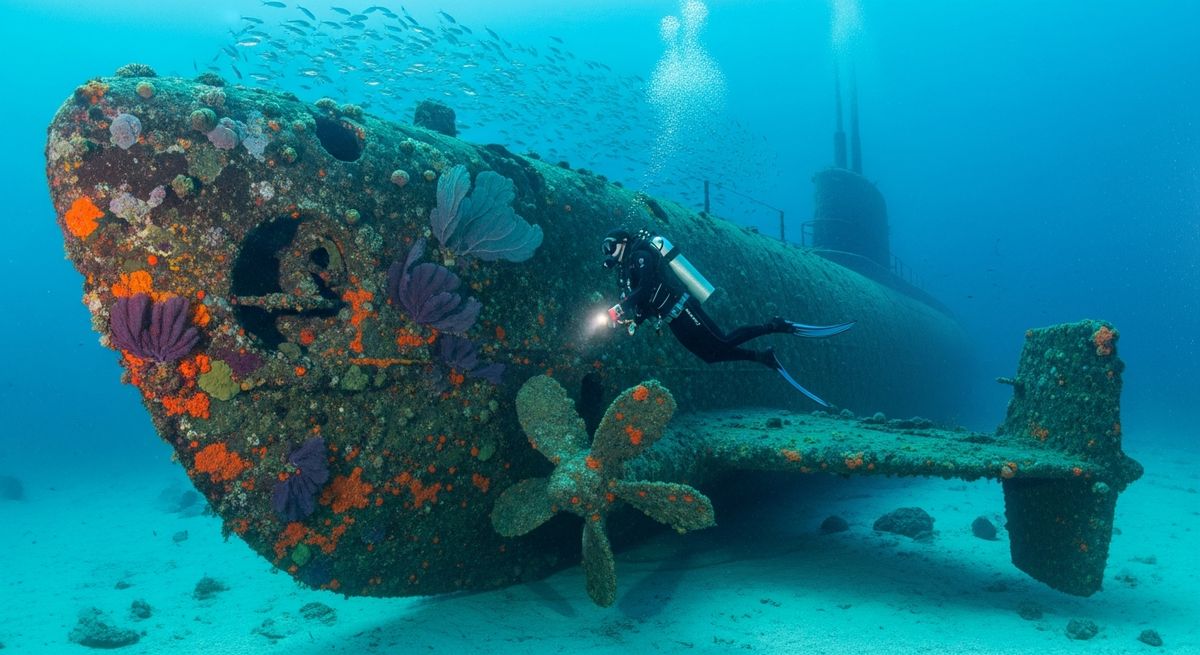
The Kelvindale, a substantial steamship resting at 14 metres, offers a genuinely moody North Sea dive. We love the history here, feeling that connection to 1917 as you descend onto a wreck that truly tells a story. The sheer scale is impressive, her 100-metre length means you’ll want to pick a section and really explore it, rather than try to cover it all in one dive. Visibility can swing wildly, but on a good day, the low light filtering through the green water gives the whole site a wonderfully atmospheric glow. Look for the two boilers, they’re still very prominent, and the triple expansion engine machinery is a fantastic tangle of metal to navigate around. Shoals of coalfish often hang in the gloom, and we’ve seen some surprisingly large lobsters tucked into crevices. This isn't a site for delicate corals, obviously, but the hard corals and anemones that have colonised the superstructure are vibrant and full of character. It’s a site that rewards multiple visits, giving up more details each time.
Typical KELVINDALE Dive Profile
Illustrative profile based on site depth and type. Actual dive profiles vary - always follow your dive computer and training.
Safety Notes
Wreck site - avoid penetration without wreck diving certification. Watch for sharp metal and entanglement hazards.
Always perform a 3-minute safety stop at 5m before surfacing.
Nearest Dive Centres to KELVINDALE
Dive shops near KELVINDALE
Aquaventurers
Delph Watersports Centre
Shipmates
Blue Planet Aquarium
Blackpool Area Diving Centre
Fins Scuba
Reviews for KELVINDALE
Conditions
Ocean conditions, forecast and tides for KELVINDALE
Plan & book
Ways to dive Northumberland & Northeast, from day trips to liveaboards.
Day trips & courses
via GetYourGuideGuided dives, courses and snorkel trips with instant booking.
Find dive trips in Northumberland & NortheastPlaces to stay
via Booking.comHotels and dive resorts near Northumberland & Northeast.
Search stays in Northumberland & NortheastDive insurance
Most travel insurance excludes or limits scuba. Check what you need before you go.
Dive insurance explainedPartner links: we may earn a commission if you book, at no extra cost to you. How we make money
Where to Stay near KELVINDALE
Prices from Booking.com. We may earn a commission at no extra cost to you.