KYLE FIRTH
Protected Area
Holyhead Mountain
Why dive here
With 118+ marine species recorded in the area - including dolphins, dwarf minke whales, humpback whales, ocean sunfish (mola mola) and orcas - KYLE FIRTH offers some of Northumberland & Northeast's richest wreck diving.
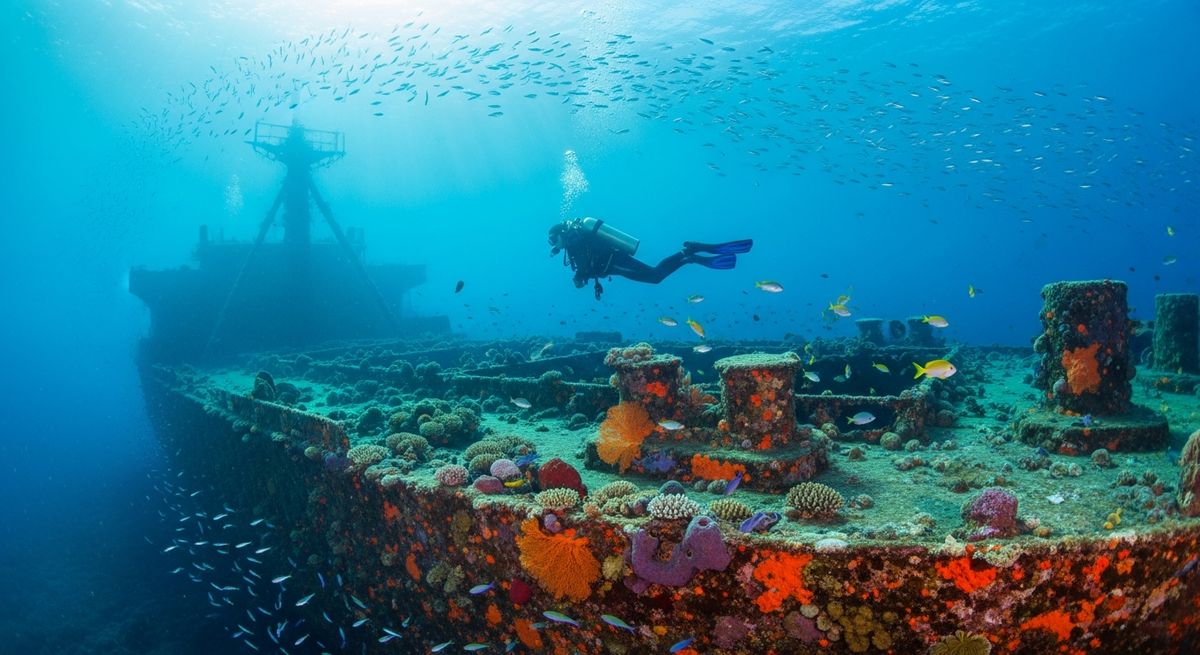
The Kyle Firth, for us, is one of those frustratingly brilliant Northumberland dives. She’s a coaster, sank in 1940, and now sits in truly shallow water, sometimes barely breaking the surface at low tide. We’re talking a maximum depth of one metre here, often less, so it’s less a dive and more a snorkel or a crawl, but don't let that put you off. Visibility can be a real challenge – it’s the North Sea, after all, and that much sediment in such shallow water means you’ll often be feeling your way along the hull plating. But when it clears, even just a little, the rewards are immense. We’ve spent hours here, nose-to-bow with some of the biggest lobsters and crabs we’ve ever seen, sheltering in crevices, their antennae waving through the gloom. The wreck itself is quite broken up, but you can still make out the ribs of the hull, and the boiler is a prominent feature, a dark mass against the shifting sand. It’s an intimate encounter, almost archaeological, as you trace the remains of a working ship now completely given over to the sea. Our best advice? Pick a calm day with minimal swell, and go on a slack tide for any chance of seeing more than your own mask.
Typical KYLE FIRTH Dive Profile
Illustrative profile based on site depth and type. Actual dive profiles vary - always follow your dive computer and training.
Safety Notes
Wreck site - avoid penetration without wreck diving certification. Watch for sharp metal and entanglement hazards.
Nearest Dive Centres to KYLE FIRTH
Dive shops near KYLE FIRTH
View all dive centres in Northumberland & NortheastReviews for KYLE FIRTH
Conditions
Ocean conditions, forecast and tides for KYLE FIRTH
Plan & book
Ways to dive Northumberland & Northeast, from day trips to liveaboards.
Day trips & courses
via GetYourGuideGuided dives, courses and snorkel trips with instant booking.
Find dive trips in Northumberland & NortheastPlaces to stay
via Booking.comHotels and dive resorts near Northumberland & Northeast.
Search stays in Northumberland & NortheastDive insurance
Most travel insurance excludes or limits scuba. Check what you need before you go.
Dive insurance explainedPartner links: we may earn a commission if you book, at no extra cost to you. How we make money
Where to Stay near KYLE FIRTH
Prices from Booking.com. We may earn a commission at no extra cost to you.