LEEDS (PROBABLY)
Protected Area
Fylde
Why dive here
With 118+ marine species recorded in the area - including dolphins, dwarf minke whales, humpback whales, ocean sunfish (mola mola) and orcas - LEEDS (PROBABLY) offers some of Northumberland & Northeast's richest wreck diving.
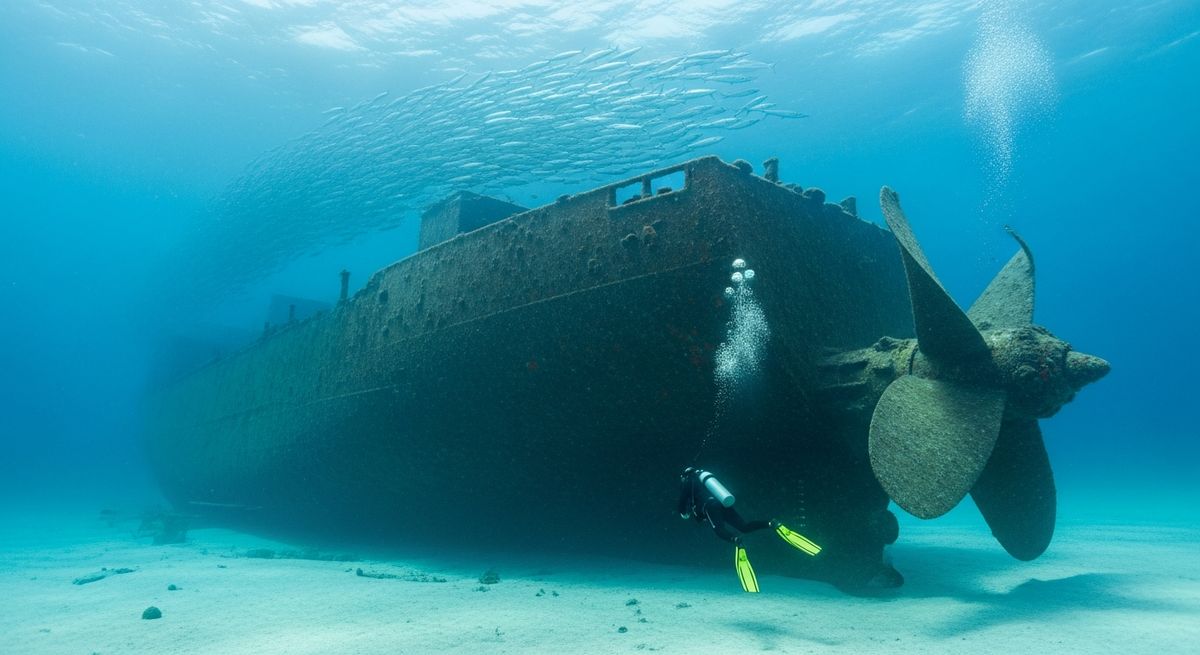
The LEEDS (PROBABLY) wreck out of Northumberland isn't about tropical colours, it’s about history and atmosphere. Dropping onto it, you can almost hear the paddles churning, even though it's now just a shadow of its former self at 19 metres. What we love about this site is the way the wreck emerges from the gloom, its wooden bones softened by time and encrusting growth. You’ll find its machinery a jumble of twisted metal, a stark reminder of the forces that sank it back in 1852. Our favourite moment is exploring the paddle wheel housings – they’re surprisingly intact and great for spotting conger eels tucked away in the shadows. Look closely in the crevices and you'll often find squat lobsters waving their claws, and wrasse darting between the timbers. The visibility can be a bit hit-or-miss here, as with many North Sea wrecks, but when it clears, the scale of the 43-metre hull really hits you. It suits divers who appreciate historical wrecks and don't mind a bit of current; it’s a dive where you feel the weight of time.
Typical LEEDS (PROBABLY) Dive Profile
Illustrative profile based on site depth and type. Actual dive profiles vary - always follow your dive computer and training.
Safety Notes
Depth of 19m - Advanced Open Water certification recommended.
Wreck site - avoid penetration without wreck diving certification. Watch for sharp metal and entanglement hazards.
Always perform a 3-minute safety stop at 5m before surfacing.
Nearest Dive Centres to LEEDS (PROBABLY)
Dive shops near LEEDS (PROBABLY)
Blackpool Area Diving Centre
Fins Scuba
MAD Dive School Ltd
Reviews for LEEDS (PROBABLY)
Conditions
Ocean conditions, forecast and tides for LEEDS (PROBABLY)
Plan & book
Ways to dive Northumberland & Northeast, from day trips to liveaboards.
Day trips & courses
via GetYourGuideGuided dives, courses and snorkel trips with instant booking.
Find dive trips in Northumberland & NortheastPlaces to stay
via Booking.comHotels and dive resorts near Northumberland & Northeast.
Search stays in Northumberland & NortheastDive insurance
Most travel insurance excludes or limits scuba. Check what you need before you go.
Dive insurance explainedPartner links: we may earn a commission if you book, at no extra cost to you. How we make money
Where to Stay near LEEDS (PROBABLY)
Prices from Booking.com. We may earn a commission at no extra cost to you.