OSWALD
Protected Area
Grennan Bay
Why dive here
With 118+ marine species recorded in the area - including dolphins, dwarf minke whales, humpback whales, ocean sunfish (mola mola) and orcas - OSWALD offers some of Northumberland & Northeast's richest wreck diving.
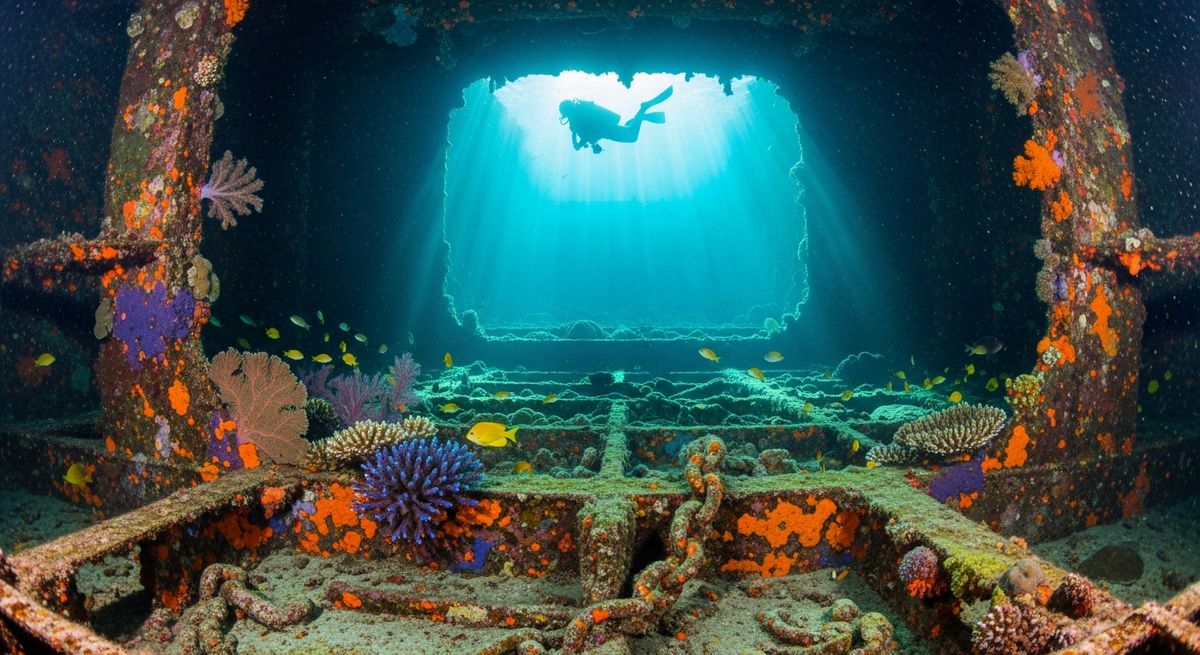
The Oswald is one of those wrecks that really grabs you, even from the moment you hit the water. She went down fast in 1894, a steamship loaded with coal, and took her entire crew with her. Today, she lies broken but largely intact, a testament to a wild North Sea storm. We love the way the bows still stand proud, almost defiant, even after all these years. Dropping down, the first thing you notice is the sheer scale. At 78 metres long, there's a lot to explore. You can still make out the triple-expansion engine, a real marvel of Victorian engineering, now encrusted with dead man's fingers and anemones. Schools of coalfish often swirl around the superstructure, flashing silver in the gloom, and if you take your time, you’ll spot colourful nudibranchs clinging to the metal. We'd suggest checking the slack water times carefully; currents here can be a proper workout, and exploring the holds is much more enjoyable when you're not fighting a flow. It’s a site for experienced wreck divers who appreciate history and the silent power of the ocean claiming its own.
Safety Notes
Wreck site - avoid penetration without wreck diving certification. Watch for sharp metal and entanglement hazards.
Reviews for OSWALD
Conditions
Ocean conditions, forecast and tides for OSWALD
Plan & book
Ways to dive Northumberland & Northeast, from day trips to liveaboards.
Day trips & courses
via GetYourGuideGuided dives, courses and snorkel trips with instant booking.
Find dive trips in Northumberland & NortheastPlaces to stay
via Booking.comHotels and dive resorts near Northumberland & Northeast.
Search stays in Northumberland & NortheastDive insurance
Most travel insurance excludes or limits scuba. Check what you need before you go.
Dive insurance explainedPartner links: we may earn a commission if you book, at no extra cost to you. How we make money
Where to Stay near OSWALD
Prices from Booking.com. We may earn a commission at no extra cost to you.