TUSKAR
Protected Area
Calf and Wart Bank
Why dive here
With 118+ marine species recorded in the area - including dolphins, dwarf minke whales, humpback whales, ocean sunfish (mola mola) and orcas - TUSKAR offers some of Northumberland & Northeast's richest wreck diving.
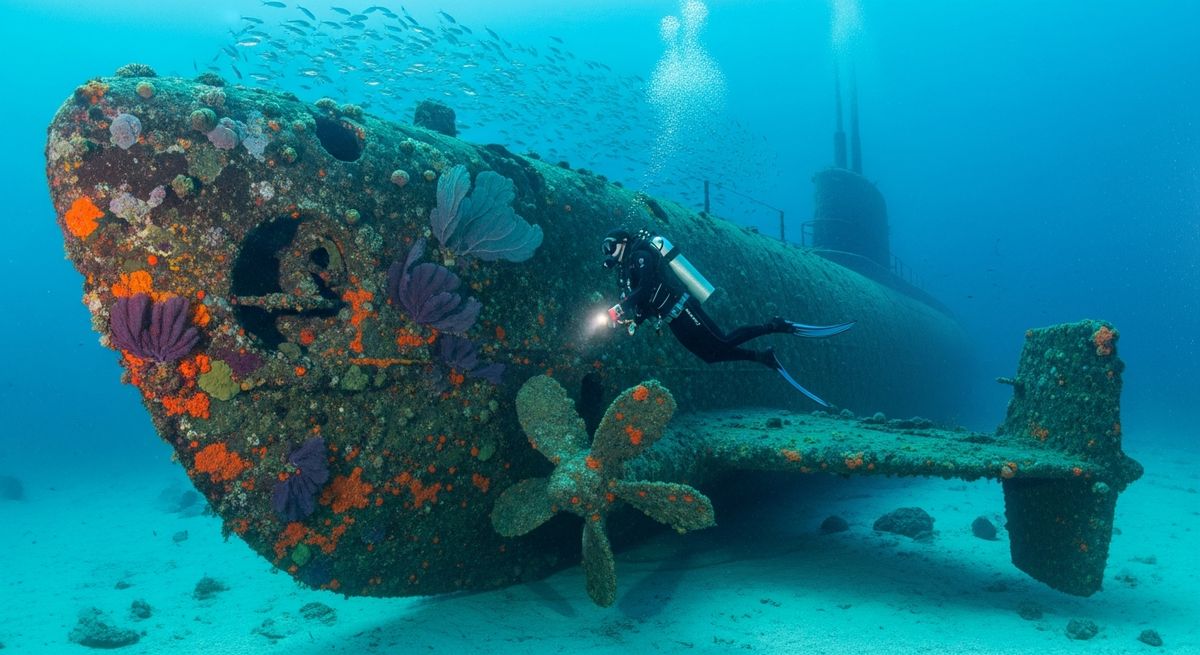
The Tuskar, a carrier vessel that met its end on a rock back in 1961, is a proper North Sea wreck dive. We love this one for its accessibility and just how much character remains on a relatively intact ship. Sitting upright at 50 metres, it’s a deep dive, making it one for experienced cold water wreck enthusiasts. Dropping down, the ship really begins to resolve itself from the murk, a ghostly silhouette against the dim light. You can see the bows and stern clearly, giving you a real sense of its former life. We always head for the engine room; it’s a tight squeeze in parts, but the exposed machinery is fascinating, heavily encrusted now with anemones and dead man’s fingers. Look closely in the darker corners and you’ll often spot ling or conger eels lurking. The decks are home to decent-sized crabs and lobsters, scuttling away as your lights sweep over them. Visibility can be a challenge here, particularly after a good blow, so pick your day carefully for the best experience. Early morning slacks are usually our pick. It’s a rewarding dive, offering a tangible link to maritime history and a thriving artificial reef.
Typical TUSKAR Dive Profile
Illustrative profile based on site depth and type. Actual dive profiles vary - always follow your dive computer and training.
Safety Notes
Maximum depth 50m exceeds recreational limits (40m). Technical diving certification and equipment required.
Wreck site - avoid penetration without wreck diving certification. Watch for sharp metal and entanglement hazards.
Always perform a 3-minute safety stop at 5m before surfacing.
Nearest Dive Centres to TUSKAR
Dive shops near TUSKAR
View all dive centres in Northumberland & NortheastReviews for TUSKAR
Conditions
Ocean conditions, forecast and tides for TUSKAR
Plan & book
Ways to dive Northumberland & Northeast, from day trips to liveaboards.
Day trips & courses
via GetYourGuideGuided dives, courses and snorkel trips with instant booking.
Find dive trips in Northumberland & NortheastPlaces to stay
via Booking.comHotels and dive resorts near Northumberland & Northeast.
Search stays in Northumberland & NortheastDive insurance
Most travel insurance excludes or limits scuba. Check what you need before you go.
Dive insurance explainedPartner links: we may earn a commission if you book, at no extra cost to you. How we make money
Where to Stay near TUSKAR
Prices from Booking.com. We may earn a commission at no extra cost to you.