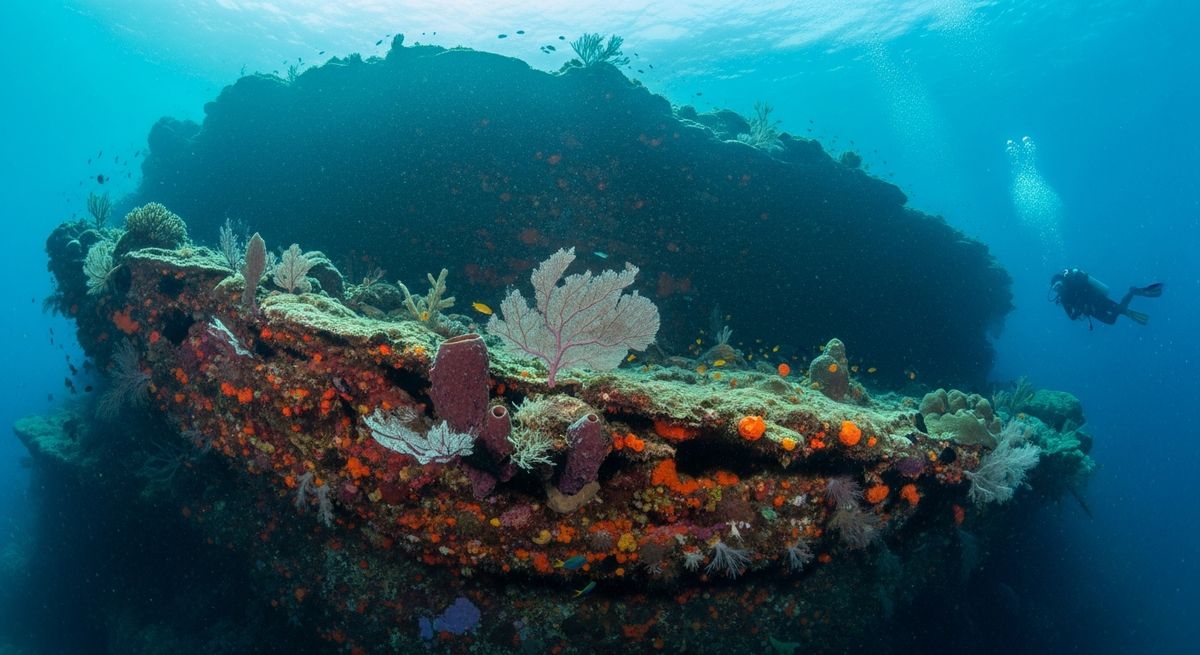
Flying Sea Cliffs
Protected Area
Offshore Island, Molokini Seabird Sanctuary, Light
Why dive here
Flying Sea Cliffs is a wall dive where divers can encounter blue sharks, sea turtles and sperm whales. Water ranges 25-28°C, warmest August, September, October.
Flying Sea Cliffs, for us, is one of those sites that just feels… big. It’s hard to put your finger on it, but the scale of the place is impressive. We usually descend into a pretty good current, which we don’t mind; it means you’re essentially flying along a dramatic wall. Think sheer drops and overhangs, carved out of volcanic rock. The water here always has a kind of deep blue intensity that makes the fish colours pop. We love seeing the Big Long-nosed Butterflyfish, they’re just so elegant, drifting past the Pavona coral formations. And the Ambon Pufferfish always raises a smile, often just hanging out, unbothered. Keep an eye out for whitetip reef sharks too, they’re usually patrolling the deeper sections. We’ve found the best visibility tends to be in the mornings before the wind picks up, so an early start is always our pick here. It’s definitely a drift dive, so you need to be comfortable with a bit of current and have good buoyancy control, but the reward is a genuinely exhilarating dive that feels wild and untamed.
Nearest Dive Centres to Flying Sea Cliffs
Dive shops near Flying Sea Cliffs
Maui Under Sea Adventures
Scuba Luv Maui
Maui Dreams Dive Co.
Maui Dive Shop
Snorkel Bob's
Maui Pacific Divers
Reviews for Flying Sea Cliffs
Conditions
Ocean conditions, forecast and tides for Flying Sea Cliffs
Flying Sea Cliffs Ocean Conditions
Monthly averages for Flying Sea Cliffs, sourced from Open-Meteo marine data + Copernicus Marine (EU) - nearest station: Open-Meteo marine grid (20.73, -156.95) (9km away)
October Averages
Sea Temperature
27°C
81°F · Range: 26.7–28.4°C
Current Speed
11.31 cm/s
Direction: NW (315°)
Chlorophyll-a
0.035 mg/m³
Very clear (oligotrophic)
Salinity
35.58 PSU
Based on 4 years of monitoring data · Data sources: Open-Meteo marine data + Copernicus Marine (EU)
Plan & book
Ways to dive Hawaii, from day trips to liveaboards.
Day trips & courses
via GetYourGuideGuided dives, courses and snorkel trips with instant booking.
Find dive trips in HawaiiPlaces to stay
via Booking.comHotels and dive resorts near Hawaii.
Search stays in HawaiiDive insurance
Most travel insurance excludes or limits scuba. Check what you need before you go.
Dive insurance explainedPartner links: we may earn a commission if you book, at no extra cost to you. How we make money
Where to Stay near Flying Sea Cliffs
Prices from Booking.com. We may earn a commission at no extra cost to you.