Diving in Hawaii
Why dive here
Hawaii is a diving destination where divers can encounter blue sharks, sea turtles and sperm whales. Water ranges 26-29°C, warmest August, September, October.
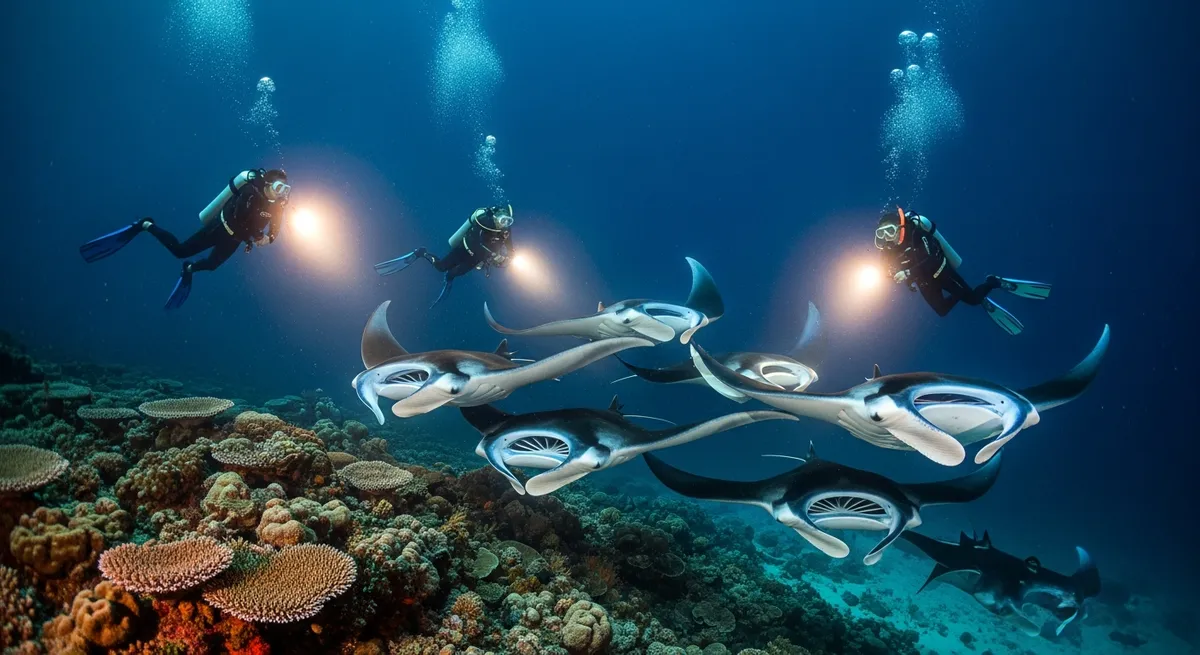
Diving Hawaii often means one thing to us: Big Island. The Kona coast, in particular, delivers that unique blend of volcanic drama above and below the surface. We love the manta ray night dives here. Drifting in the inky blackness, surrounded by these gentle giants as they barrel roll through the dive lights, scooping up plankton - it's pure magic. Beyond the mantas, you'll find incredible lava tube caves, some so vast you can surface inside them, the light filtering down from cracks above. We’ve had some memorable encounters with Hawaiian monk seals; watching them glide effortlessly past, curious but always keeping their distance, is a real treat. Green sea turtles are a constant, munching on algae or resting on ledges. While the coral isn't always the most colourful compared to other Pacific spots, the topography, with its arches, swim-throughs, and dramatic drop-offs, more than makes up for it. Visibility is usually excellent, especially on the leeward side. If you're looking for bigger pelagics, try some of the deeper pinnacles or venture further offshore; we've heard whispers of blue sharks and even shortfin makos, though we haven't personally been lucky enough to spot them on scuba.
Hawaii Dive Site Map
Dive sites and dive centres in Hawaii
Hawaii Dive Sites
91 dive sites in Hawaii
Airplane Canyon
Airplane Canyon in Hawaii is a surprisingly easy dive for a cavern, making it a good choice if you're keen to explore overhead environments without the stress. We drop down to about 27 meters, where you’ll find the entrance to a large, open-ended tube. Light streams in from both sides, so it never feels truly dark inside, which is reassuring. Look for the resident white-tip reef sharks often napping on the sandy bottom, and keep an eye on the ceiling for schooling squirrelfish. It’s a pretty mellow dive, great for beginners wanting to get a feel for cavern diving.
Airport Beach
Airport Beach, or Kahekili Beach Park as the locals call it, is a sleeper hit if you’re looking for a relaxed shore dive in West Maui. We love it because it’s just so easy – park, stroll a couple of minutes across the grass, and wade right in. There’s no big surge, just a gentle slope over sand that tops out at about 12 metres, perfect for longer bottom times. This isn’t a vibrant coral dive; the draw here is the residents. We’ve had some fantastic turtle encounters, with green sea turtles just cruising by, completely unbothered. Keep an eye on the sand for things like dragonfish or a reticulated venus shell, and if you hover quietly, the smaller wrasses and surgeonfish zip around your mask. Our favourite time to dive it is early morning, before the beach gets busy, when the light catches the sandy bottom and visibility can really stretch out to 20 metres. It’s a low-key spot, ideal for a peaceful morning float or getting comfortable with your buoyancy, and you might just spot a rare hawksbill if you’re lucky.
Airport Beach
Airport Beach, or Kahekili Beach Park as the locals call it, is a sleeper hit if you’re looking for a relaxed shore dive in West Maui. We love it because it’s just so easy – park, stroll a couple of minutes across the grass, and wade right in. There’s no big surge, just a gentle slope over sand that tops out at about 12 metres, perfect for longer bottom times. This isn’t a vibrant coral dive; the draw here is the residents. We’ve had some fantastic turtle encounters, with green sea turtles just cruising by, completely unbothered. Keep an eye on the sand for things like dragonfish or a reticulated venus shell, and if you hover quietly, the smaller wrasses and surgeonfish zip around your mask. Our favourite time to dive it is early morning, before the beach gets busy, when the light catches the sandy bottom and visibility can really stretch out to 20 metres. It’s a low-key spot, ideal for a peaceful morning float or getting comfortable with your buoyancy, and you might just spot a rare hawksbill if you’re lucky.
Anahola Beach Park
Anahola Beach Park on Kauai offers an easy shore dive, best for beginners or a relaxed second tank. You'll find a sandy bottom sloping gently, with scattered coral heads providing shelter for small reef fish like butterflyfish and wrasse. It's a shallow spot, meaning good bottom time and a chance to really scour the nooks. We often see green sea turtles here, grazing on algae.
Aquarium - Hawaii
Alright, the Aquarium – Hawaii. This place isn't just a catchy name, it really does feel like someone’s emptied a giant fish tank into the ocean. We love the sheer density of fish here, especially the parrotfish, those big green guys, munching away at the coral. It’s a riot of colour and movement. Visibility averages a very comfortable 25 metres, and the maximum depth of 18 metres keeps things nice and easy, making it a stellar spot for new divers or anyone wanting a relaxed, fish-filled cruise. Expect to drift along, often with a gentle push, past swarms of surgeonfish and tangs. Our favourite moments are when a green sea turtle glides by, completely unfazed, or when we spot a tricky-to-find Epaulette Soldierfish tucked into a crevice. Look out for the Belted Wrasse, too, always busy. It's a great spot for an afternoon dive, when the sun angle really brings out the colours of the coral and the fish seem to be at their most active. Just be prepared for other boats, it’s a popular spot for a reason.
Aquarium - Hawaii
Alright, the Aquarium – Hawaii. This place isn't just a catchy name, it really does feel like someone’s emptied a giant fish tank into the ocean. We love the sheer density of fish here, especially the parrotfish, those big green guys, munching away at the coral. It’s a riot of colour and movement. Visibility averages a very comfortable 25 metres, and the maximum depth of 18 metres keeps things nice and easy, making it a stellar spot for new divers or anyone wanting a relaxed, fish-filled cruise. Expect to drift along, often with a gentle push, past swarms of surgeonfish and tangs. Our favourite moments are when a green sea turtle glides by, completely unfazed, or when we spot a tricky-to-find Epaulette Soldierfish tucked into a crevice. Look out for the Belted Wrasse, too, always busy. It's a great spot for an afternoon dive, when the sun angle really brings out the colours of the coral and the fish seem to be at their most active. Just be prepared for other boats, it’s a popular spot for a reason.
Black Rock - Hawaii
Black Rock, right in front of the Sheraton on Ka'anapali Beach, is our go-to spot when we just want to float with some turtles. Don't expect dramatic drop-offs; the maximum depth is a gentle 11 meters, making it incredibly relaxed. It's essentially a lava rock formation poking out from the sand, and the corals here, like the Starry petaloid, add some nice texture to the submerged rocks. What makes Black Rock a standout is the sheer number of green sea turtles. We consistently see five to ten resident turtles gliding around, munching on algae. They're pretty used to divers, so you can often get a close, respectful look as they cruise past. We’ve also spotted Four-lined wrasse zipping through the coral and the occasional Giant moray peeking out from a crevice. Visibility averages a comfortable 19 meters, making it easy to spot everything. It’s a perfect, easy afternoon dive, especially good for newer divers or when you just want a guaranteed turtle fix without a boat trip. We love doing it as a late afternoon shore dive, watching the sun dip as we dry off.
Black Rock - Hawaii
Black Rock, right in front of the Sheraton on Ka'anapali Beach, is our go-to spot when we just want to float with some turtles. Don't expect dramatic drop-offs; the maximum depth is a gentle 11 meters, making it incredibly relaxed. It's essentially a lava rock formation poking out from the sand, and the corals here, like the Starry petaloid, add some nice texture to the submerged rocks. What makes Black Rock a standout is the sheer number of green sea turtles. We consistently see five to ten resident turtles gliding around, munching on algae. They're pretty used to divers, so you can often get a close, respectful look as they cruise past. We’ve also spotted Four-lined wrasse zipping through the coral and the occasional Giant moray peeking out from a crevice. Visibility averages a comfortable 19 meters, making it easy to spot everything. It’s a perfect, easy afternoon dive, especially good for newer divers or when you just want a guaranteed turtle fix without a boat trip. We love doing it as a late afternoon shore dive, watching the sun dip as we dry off.
Cathedral II
We’ve done a lot of lava tubes and swim-throughs, but Cathedral II on Lanai really stands out. The hour boat ride across the channel from Maui sets the tone, a bit of an adventure before you even splash. Once you drop, you’re looking for the entrance to this massive lava tube system, and it’s pretty humbling inside. You’re definitely going to want a strong dive light here; it gets dark, but that’s part of the appeal. We love the way the light filters in through cracks in the ceiling, creating these natural stained-glass effects – exactly why it’s called a cathedral. Inside, the scale is impressive. We’ve seen good-sized schools of Threadfin and Unicornfish hanging out, and the Black Coral is everywhere, ancient and gnarled. Keep an eye out for the smaller stuff too, like the Ambon Pufferfish tucked into crevices. Exiting the main cathedral into the brighter water, we often spot a Gray Reef Shark patrolling the edge or a Giant Trevally cruising by. Our pick for timing is usually mid-morning, when the sun is high enough to really make those light shafts pop. This is a site for divers who appreciate dramatic topography and a bit of cave-like exploration without any real overhead environment. It’s not a drift dive, but those strong currents in the channel mean you should be comfortable with your buoyancy. Come prepared for an hour-long boat ride and a dive where a good light makes all the difference.
Cathedrals
The Cathedrals in Lanai offer a unique cave diving experience, renowned for its two large lava tubes. Sunlight streams through cracks in the ceiling, creating an almost stained-glass effect. We often find turtles resting inside and schools of fish darting in and out. This site is best for experienced divers comfortable with overhead environments.
Corsair Wreck
The Corsair Wreck off Oahu is one of those dives that just feels right. This old F4U Corsair plane, sitting upright at around 35 metres, is surprisingly intact for something that’s been down there since 1946. We love how it’s settled into the sand, still recognisable with its wings and cockpit, though the engines are long gone. Dropping down, you feel the depth, the slight chill that comes with it, but then the wreck looms into view, its metal fuselage now a dark, craggy home for all sorts of reef fish. You'll see schools of snapper hovering above the wing, and we've spotted white-tip reef sharks cruising the perimeter more than once. The ambient light at that depth, filtering through the water, gives the whole scene a really atmospheric, almost reverent feel. It's a dive that suits experienced divers comfortable with deeper profiles and those who appreciate a bit of history beneath the waves. Go on a calm morning; less current makes for a much more relaxed exploration.
Edge of the World
The Edge of the World, off Hawaii, isn't a deep dive, but it’s a dive that sticks with you. We love the sheer drama of the place. You descend a wall that just drops, seemingly into nothingness. It feels like the ocean floor falls away completely. That open water exposure is what brings in the bigger stuff. We’ve seen schools of giant trevally cruise by, silver flashes against the blue. Keep an eye out for long-beaked dolphins too; they’re regular visitors here, often putting on a show. The wall itself has interesting crevices, home to dragon wrasse and those ridiculously charming sunburst butterflyfish. Our favourite, though, is spotting the rare button crab tucked into a small overhang. It takes a keen eye, but the reward is worth the effort. Visibility here is usually excellent, giving you that proper "edge of the world" feeling as you peer into the deep blue. It’s a site for divers who appreciate dramatic topography and the chance of pelagic encounters, rather than intricate reef exploration. Expect currents; it’s part of what makes the site so dynamic.
Show all 91 dive sites in Hawaii
- Enenue
- Ewa Pinnacles Reef
- Fantasy Reef
- First Cathedral
- Fish Garden
- Five Caves
- Flying Sea Cliffs
- Garden Eel Cove
- Golden Arches
- Haleiwa Trench
- Halona Blow Hole
- Hanakaoo Beach
- Hanauma Bay
- Honu Reef
- Kahala Barge
- Kahekili Beach Park
- Kahe Point Beach Park
- Kailua Bay
- Kaka ako point
- Kapalua Beach
- Keauhou Bay
- Kewalo Pipe
- Koko Craters
- Kona
- Landing Craft and Tank
- Lava Dome
- Makaha Caverns
- Makena Landing
- Mala Wharf
- Manana Island
- Manta Ray Heaven, Garden Eel Cove
- Manta Ray Night Dive Kona
- Maui
- Middle Reef
- Miloli i Bay
- Moku Hooniki
- Molokini Crater
- Molokini Crater
- Molokini Crater
- Monolith
- Nai a
- Napili Bay
- Nashua Navy Tug (Wreck)
- New Barge
- Old Kona Airport
- Olowalu
- Olowalu Reef
- Paaoao Bay
- Palea Point
- Pipe Dreams
- Pray for Sex Beach
- Puako
- Pyramid Pinnacle
- Rabbit Island
- Reef's End
- Rojo Reef
- Seaplane Wreck
- Sea Tiger
- Secrets Reef
- Shark Condos
- Shark s Cove
- Skimin’s Reef
- Spitting Cave
- Split Rock
- St Anthony Wreck
- St. Anthony (Wreck)
- Tako Flats
- The Back Side
- The Mahi (Wreck)
- Three Tables
- Turtle Canyon
- Turtle Canyon (East)
- Turtle Pinnacle
- Turtle Town
- Turtle Town Maui
- Ulua Beach Park
- USS Arizona Memorial
- Wailea
- YO-257
Hawaii Dive Centres
37 dive shops and operators in Hawaii
Aaron's Dive Shop
Affinity Freediving
Aloha Scuba Diving Company
Aquatic Life Divers
Black Rock Scuba
Blue Wilderness Dive Adventures Corp.
Boss Frog's
Boss Frog's Dive & Surf
Show all 37 dive centres in Hawaii
- Breeze Hawaii Diving Adventures
- Dive Oahu - Navy Exchange
- Green Dolphin Dive Shop
- Hawaiian Diving Adventures
- Hawaii Eco Divers
- Honolulu Scuba Company
- Island Divers
- Jack’s Diving Locker
- Kohala Divers, Ltd.
- Kona Honu Divers
- Lanai Ocean Experiences
- Liquid Cosmos Divers
- Living in the Flow Diving
- Maui Dive Shop
- Maui Diving Scuba Center
- Maui Dreams Dive Co.
- Maui Pacific Divers
- Maui Under Sea Adventures
- Molokai Fish and Dive
- Ocean Therapy Scuba
- Pacific Rim Divers Limited
- Reef Pirates Hawaii
- Scuba Luv Maui
- Snorkel Bob's
- Snorkel Bob's Lahaina
- The Hawaiian Dive Company
- Trident Adventures
- Underwater Oahu, LLC
- Waikiki Dive Center
Ocean Wildlife in Hawaii
23 species recorded in Hawaii
Hawaii Daylight & Sunrise/Sunset
Sunrise and sunset times for Hawaii, calculated from coordinates
Today - Sunday 11 October
Sunrise
06:22
Sunset
18:09
Daylight
11h 47m
Golden Hour
17:39
First light (dawn) at 06:00 · Last light (dusk) at 18:31
Monthly Averages
| Month | Sunrise | Sunset | Daylight |
|---|---|---|---|
| Jan | 07:08 | 18:08 | 11h 0m |
| Feb | 06:59 | 18:27 | 11h 27m |
| Mar | 06:38 | 18:38 | 12h 0m |
| Apr | 06:11 | 18:47 | 12h 36m |
| May | 05:52 | 18:59 | 13h 7m |
| JunLongest | 05:48 | 19:11 | 13h 23m |
| Jul | 05:56 | 19:13 | 13h 17m |
| Aug | 06:08 | 18:59 | 12h 52m |
| Sep | 06:16 | 18:33 | 12h 17m |
| OctNow | 06:24 | 18:06 | 11h 42m |
| Nov | 06:38 | 17:48 | 11h 10m |
| DecShortest | 06:57 | 17:50 | 10h 53m |
Times are approximate local times based on longitude. Actual times may vary slightly depending on the exact timezone observed in Hawaii.
Where to Stay near Hawaii
Prices from Booking.com. We may earn a commission at no extra cost to you.
Marine Protected Areas near Hawaii
58 protected areas near Hawaii - please respect local regulations when diving
Hawaiian Islands Humpback Whale National Marine Sanctuary
Kaho'olawe Island Reserve
Kalaupapa National Historical Park
Ahihi-Kinau Natural Area Reserve
He'eia National Estuarine Research Reserve
Kaloko-Honokohau National Historical Park
'Ahihi Kina'u
Kealakekua Bay Marine Life Conservation District
Manele-Hulopoe Marine Life Conservation District
Old Kona Airport Marine Life Conservation D Airport
Pupukea Marine Life Conservation District
Lapakahi Marine Life Conservation District
Showing 12 largest of 58
Getting to Hawaii
Lanai City
Kahului
Honolulu, Oahu
Plan & book
Ways to dive Hawaii, from day trips to liveaboards.
Day trips & courses
via GetYourGuideGuided dives, courses and snorkel trips with instant booking.
Find dive trips in HawaiiPlaces to stay
via Booking.comHotels and dive resorts near Hawaii.
Search stays in HawaiiDive insurance
Most travel insurance excludes or limits scuba. Check what you need before you go.
Dive insurance explainedPartner links: we may earn a commission if you book, at no extra cost to you. How we make money