Golden Arches
Protected Area
Kaloko-Honokohau National Historical Park
Why dive here
Golden Arches is a reef dive where divers can encounter blue sharks, sea turtles and sperm whales. Water ranges 25-28°C, warmest August, September, October.
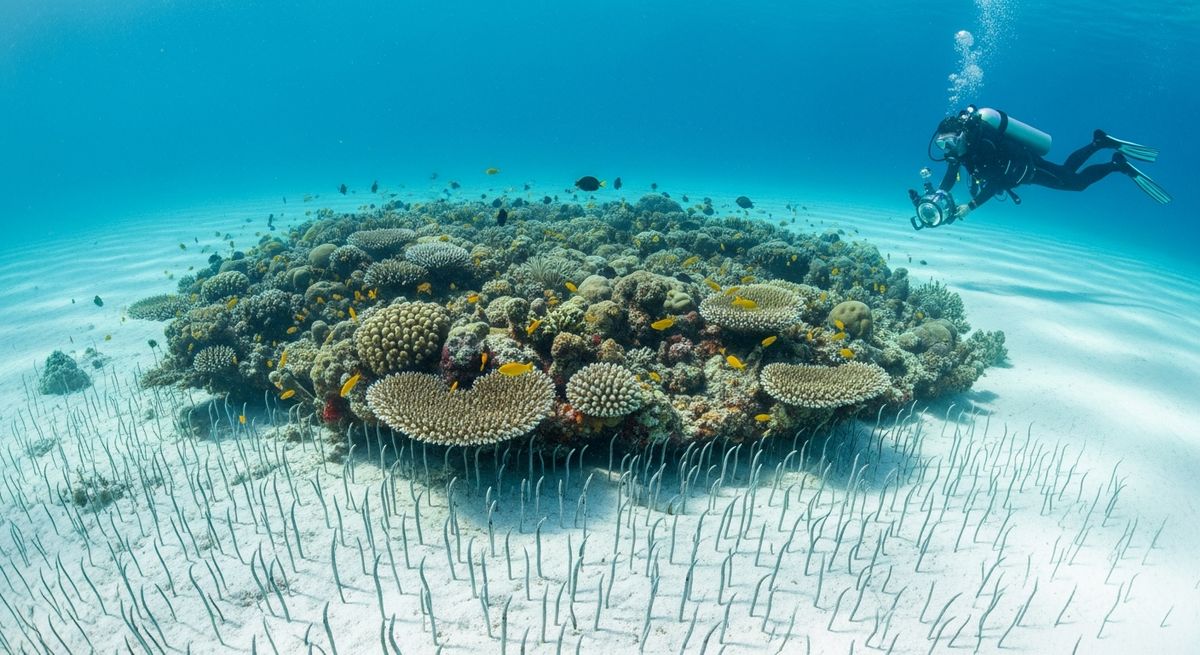
We’re big fans of the Kona coast, and Golden Arches gives you a solid taste of what makes it special. The site itself is pretty straightforward, a sloping reef that starts shallow and goes down to about 19 meters. What we really appreciate here are the arches themselves, volcanic rock formations that you can swim through. Dropping through the biggest one, watching the light filter down from the surface, feels like entering another world. The currents can pick up, so it's wise to check the conditions. We’ve found the visibility to be best once you get a little deeper, away from any surge. Keep an eye out for Oriental flying gurnards shuffling along the sandy patches, they're always a treat. You’ll also see plenty of the usual suspects, like the colourful regal parrotfish munching on coral, and schools of manini darting around. If you're lucky, you might even spot a manta gliding through the blue. It’s a great site for divers who appreciate interesting topography and don’t mind a bit of a current.
Nearest Dive Centres to Golden Arches
Dive shops near Golden Arches
Aquatic Life Divers
Kona Honu Divers
Pacific Rim Divers Limited
Boss Frog's Dive & Surf
Jack’s Diving Locker
Blue Wilderness Dive Adventures Corp.
Reviews for Golden Arches
Conditions
Ocean conditions, forecast and tides for Golden Arches
Golden Arches Ocean Conditions
Monthly averages for Golden Arches, sourced from Open-Meteo marine data + Copernicus Marine (EU) - nearest station: Open-Meteo marine grid (20.73, -156.95) (9km away)
October Averages
Sea Temperature
27°C
81°F · Range: 26.7–28.4°C
Current Speed
11.31 cm/s
Direction: NW (315°)
Chlorophyll-a
0.035 mg/m³
Very clear (oligotrophic)
Salinity
35.58 PSU
Based on 4 years of monitoring data · Data sources: Open-Meteo marine data + Copernicus Marine (EU)
Plan & book
Ways to dive Hawaii, from day trips to liveaboards.
Day trips & courses
via GetYourGuideGuided dives, courses and snorkel trips with instant booking.
Find dive trips in HawaiiPlaces to stay
via Booking.comHotels and dive resorts near Hawaii.
Search stays in HawaiiDive insurance
Most travel insurance excludes or limits scuba. Check what you need before you go.
Dive insurance explainedPartner links: we may earn a commission if you book, at no extra cost to you. How we make money
Where to Stay near Golden Arches
Prices from Booking.com. We may earn a commission at no extra cost to you.