Kona - Hawaii

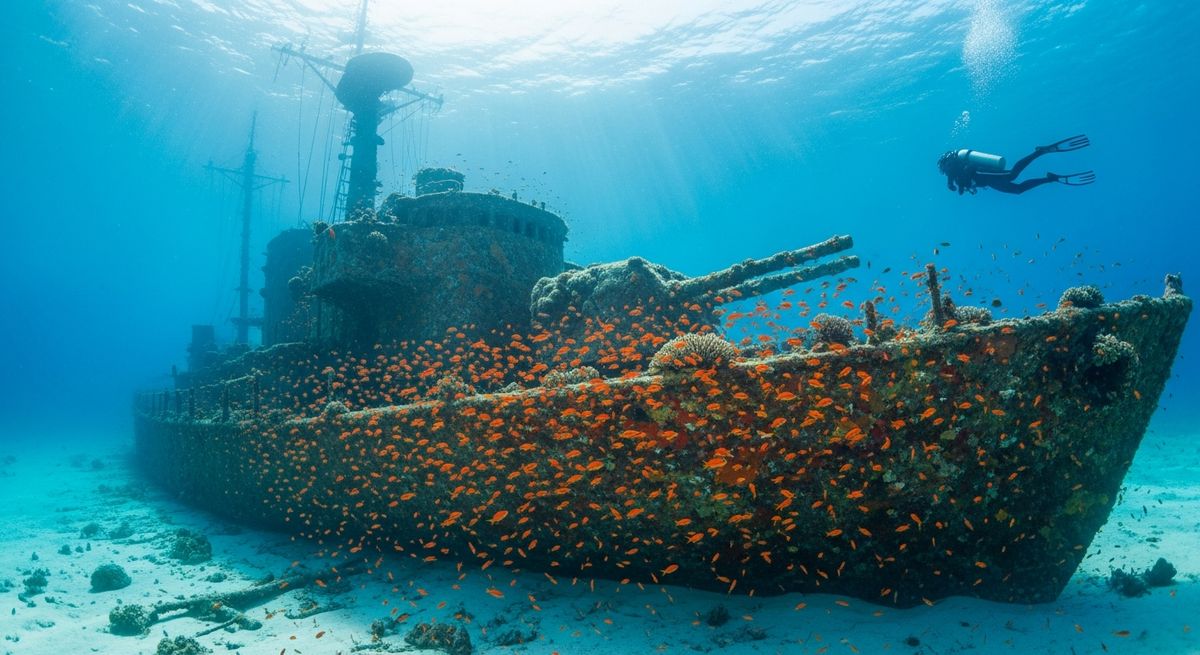
Moon Hole isn't just a sandy patch, it's a calm entry into a really interesting part of Roatán. We often start here for buoyancy work, the 15-meter max depth gives you plenty of room to get comfortable before you even think about the main event. What we really love about Moon Hole is its easy connection to Ron’s Wreck. You cross a short stretch of coral, sometimes spotting a big milk conch or a rusty goby peeking out, and suddenly you’re there. Ron's Wreck itself is more like a scattered collection of historical bits than a full ship. Think old fishing boat, broken apart and now home to all sorts of life. We've seen black and white-spotted morays tucked into crevices, their heads swaying slightly. Keep an eye out for blue parrotfish nibbling at the growth, and if you’re lucky, a turtle might glide past. The wreck is shallow enough that sunlight floods everything, making the coral patches around it glow. It’s a gentle exploration, perfect for divers wanting a relaxed wreck experience without the deep, dark drama.

Location
Hawaii, United States, North America
Coordinates
19.668300, -156.026200
Type
wreck

Marine Protected Area: Kaloko-Honokohau National Historical Park

Best Time to Dive in Hawaii

The warmest water temperatures in Hawaii occur in September, averaging 29.0°C. The coolest conditions are in March at 25.6°C.

Monthly Water Temperatures

  • January: 26.2°C
  • February: 25.7°C
  • March: 25.6°C
  • April: 26.0°C
  • May: 26.8°C
  • June: 27.6°C
  • July: 27.9°C
  • August: 28.5°C
  • September: 29.0°C
  • October: 28.6°C
  • November: 27.9°C
  • December: 27.2°C

Nearby Dive Sites in Hawaii

Nearest Dive Centres to Kona

Marine Life in Hawaii

Home to 23 recorded species including 17 reef fish, 3 other, 2 sharks & rays, 1 whales & dolphins.

Notable Species

Recommended Packing List for Kona

Based on average water temperature of 27.2°C, currents 9 cm/s.

  • Shorty or Rashguard - warm 27°C water needs minimal exposure protection
  • Mask - essential for every dive
  • Fins
  • BCD - buoyancy compensator
  • Regulator - your most safety-critical piece of gear
  • Dive Computer - tracks depth, time, and NDL
  • Surface Marker Buoy (SMB) - essential for boat pickups
  • Dive Torch - useful for crevices and colour at depth
  • Underwater Camera - capture your diving memories

Frequently Asked Questions

What are the typical dive depths for scuba diving in Kona, and are there options for deeper dives?
Scuba diving in Kona typically features a maximum depth of 18 meters, making it accessible for a wide range of divers. This depth allows for excellent exploration of its vibrant reefs and diverse marine life.
What kind of marine life and unique underwater formations, like lava tubes, can I expect to see when diving in Kona?
When diving in Kona, you can expect to encounter truly world-class marine life and unique underwater formations. The area boasts vibrant reefs, impressive cavernous lava tubes, and an abundance of fish and inverts. Divers frequently spot amazing macro life like nudibranchs, crabs, tiny reef fish, and eels, alongside larger wildlife such as green sea turtles, majestic manta rays, eagle rays, dolphins, and even whales.
How challenging is scuba diving in Kona, and are there dive sites suitable for beginners or only advanced divers?
Scuba diving in Kona is designed to suit every level of diver, making it an excellent destination for both beginners and experienced enthusiasts. You'll find a variety of sites that cater to different skill sets, ensuring a rewarding experience regardless of your certification level.
When is the best time of year to go scuba diving in Kona for optimal conditions, visibility, and specific marine life encounters?
The provided data does not specify a "best time of year" for optimal conditions or specific marine life encounters in Kona. However, Kona is located on the drier, western side of the Big Island, which generally offers favorable conditions year-round. For more general information on dive seasons, you might consult our When to Dive guide.
What scuba diving certifications are required to dive in Kona, especially for popular experiences like the Manta Ray Night Dive or Blackwater dives?
The provided data does not specify particular scuba diving certifications required for diving in Kona, nor for popular experiences like Manta Ray Night Dives or Blackwater dives. Generally, an Open Water Diver certification is the minimum requirement for most recreational dives. Specific advanced dives or specialty experiences may require additional certifications, which you can typically find detailed by local dive operators.
What are the typical water conditions, currents, and visibility like for scuba diving off the Kona coast?
Scuba diving off the Kona coast offers excellent water conditions, with an impressive average visibility of 21 meters. While specific current information isn't provided, Kona's location on the drier, western side of the Big Island generally contributes to calm and favorable diving conditions. This superb visibility enhances the experience of exploring its vibrant reefs and diverse marine life.