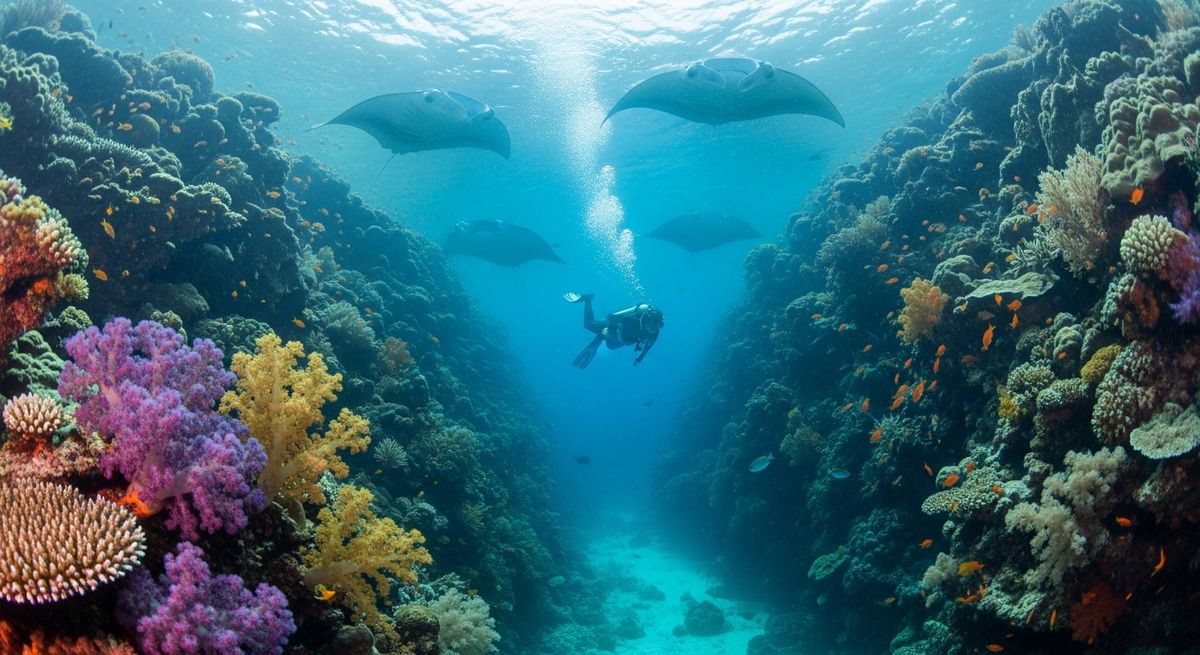
Makena Landing - Hawaii

Paradise Reef, for us, is a perfect antidote to Grand Cayman's deeper, more famous walls. It's a shallower dive, topping out around 16m, but don't let that fool you into thinking it's less interesting. We love it for its unexpected finds and the way the light plays on the coral. You're dropping onto a mix of robust hard corals and the softer, more delicate stuff. Look closely and you'll spot some real characters: we’ve found Mimic Blennies peeking from their holes and Mushroom Scorpionfish blending in perfectly. The highlight for many is the chance to spot a sleeping nurse shark tucked away, or a turtle gliding past. We also often see large schools of French Grunts moving like a silver curtain. The true insider tip here is to time your dive to catch the last hour of afternoon sun; the colours really pop. What makes Paradise Reef truly shine is its proximity to the Oro Verde wreck. It’s a comfortable 10-minute swim between the two, meaning you can easily combine a drift over the reef with a wreck exploration in a single dive. This site suits divers who appreciate a relaxed pace, keen eyes for macro life, and those looking for a bonus wreck without the commitment of a dedicated deep dive.

Location
Hawaii, United States, North America
Coordinates
20.653600, -156.442000
Type
reef

Marine Protected Area: 'Ahihi Kina'u

Best Time to Dive in Hawaii

The warmest water temperatures in Hawaii occur in September, averaging 29.0°C. The coolest conditions are in March at 25.6°C.

Monthly Water Temperatures

  • January: 26.2°C
  • February: 25.7°C
  • March: 25.6°C
  • April: 26.0°C
  • May: 26.8°C
  • June: 27.6°C
  • July: 27.9°C
  • August: 28.5°C
  • September: 29.0°C
  • October: 28.6°C
  • November: 27.9°C
  • December: 27.2°C

Nearby Dive Sites in Hawaii

Nearest Dive Centres to Makena Landing

Marine Life in Hawaii

Home to 23 recorded species including 17 reef fish, 3 other, 2 sharks & rays, 1 whales & dolphins.

Notable Species

Recommended Packing List for Makena Landing

Based on average water temperature of 27.2°C, currents 9 cm/s.

  • Shorty or Rashguard - warm 27°C water needs minimal exposure protection
  • Mask - essential for every dive
  • Fins
  • BCD - buoyancy compensator
  • Regulator - your most safety-critical piece of gear
  • Dive Computer - tracks depth, time, and NDL
  • Surface Marker Buoy (SMB) - essential for boat pickups
  • Dive Torch - useful for crevices and colour at depth
  • Underwater Camera - capture your diving memories

Frequently Asked Questions

What is the typical depth range for scuba diving at Makena Landing?
Scuba diving at Makena Landing offers a maximum depth of 10m, making it an accessible site for various experience levels. This relatively shallow depth allows for extended bottom times and excellent light penetration, enhancing the vibrant reef experience.
What kind of marine life and underwater features can divers expect to see at Makena Landing, especially within the caves and swim-throughs?
Divers at Makena Landing can explore numerous ledges and grottos, including specific sites known as 5 caves/5 graves, Turtle Town, and Turtle Arch. Wildlife encounters are spectacular, ranging from the smallest nudibranchs and crabs to larger species like manta rays, eagle rays, white tip reef sharks, and abundant turtles. You can learn more about these species in our Wildlife Database.
Is Makena Landing considered a difficult dive site, and what level of diving experience or certification is recommended?
Makena Landing is considered an intermediate dive site, suggesting it is suitable for divers with some prior experience beyond entry-level certification. While not overly challenging, an intermediate rating implies conditions or features that benefit from a bit more skill and comfort underwater.
What is the best time of day or year to dive at Makena Landing for optimal conditions and visibility?
The provided data does not specify the best time of day or year to dive at Makena Landing for optimal conditions. However, divers can generally expect an average visibility of 14m, which offers clear views of the vibrant marine life and underwater features. For general guidance on seasonal diving, you might consult our When to Dive resource.
Are there any specific scuba diving certifications required to explore Makena Landing, particularly its caves?
While Makena Landing is rated as an intermediate dive site, the data does not explicitly state specific certifications required for its caves or grottos. Generally, exploring overhead environments like caves requires specialized training, such as a cavern or cave diving certification, to ensure safety and proper technique. We recommend checking with local dive operators for specific requirements regarding these unique features.
What are the typical current and visibility conditions like for scuba diving at Makena Landing?
Divers at Makena Landing can typically expect good underwater visibility, averaging around 14m. The provided data does not specify typical current conditions for this site. It's always advisable to consult with local dive shops or guides for up-to-date information on currents before your dive.