Wailea
Protected Area
Offshore Island
Why dive here
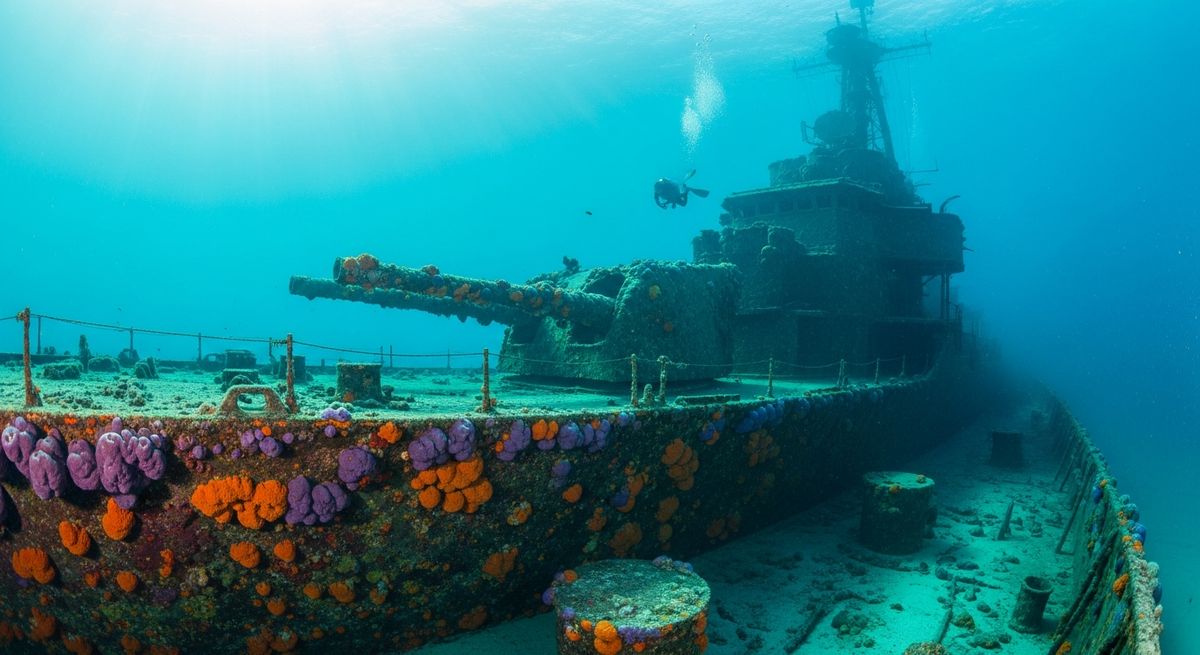
Wailea is a wreck dive where divers can encounter blue sharks, sea turtles and sperm whales. Water ranges 25-28°C, warmest August, September, October.
Wailea is one of those spots where we almost always spot something unusual, even if it feels like a fairly gentle, shallow reef. The main draw for us here is definitely the chance to see Oriental flying gurnards – they’re just so striking when they fan out those fins, like something from another planet. We usually find them shuffling along the sand patches between the coral fingers, often in the late morning. The site itself is a series of shallow coral fingers, averaging around five metres deep. It’s calm, perfect for easing back into things or for newer divers getting their fins wet. Visibility often pushes past 15 metres, giving you a good chance to pick out the smaller stuff like Scarlet wrasse and the vivid Yellow tangs darting around. Go a little further out, towards the deeper edge, and you might catch a glimpse of Giant trevally cruising by or a resident turtle munching on algae. Keep an eye on the sand for Diamond Lizardfish too, they blend in incredibly well. While it’s not a drift dive, we’d suggest a slow pace, really looking into every crevice for dwarf morays or the surprisingly well-camouflaged Blackside hawkfish. It’s a site for relaxed exploration, where the smaller, rarer finds are the real reward.
Safety Notes
Wreck site - avoid penetration without wreck diving certification. Watch for sharp metal and entanglement hazards.
Wailea Wreck History
Year Sunk
1940
Vessel Type
cargo ship
Cause
collision
Tonnage
5,409 GRT
The SS Akka was a Swedish steamship carrying a vital cargo of iron ore from Narvik, Norway, destined for the war effort in Britain. On the night of April 2, 1940, while navigating the often-treacherous Sound of Mull in a convoy, she found herself in the midst of a fierce storm. In the poor visibility and churning seas, she collided with the SS Maple, another vessel in the convoy. The damage was catastrophic. The Akka sank within minutes, taking her entire crew with her, a tragic loss in the early days of the war.
Resting in approximately 40 meters of water, the Akka is now one of the classic deep wreck dives on Scotland's west coast. The wreck is broken into two main sections, the bow and the stern, lying about 100 meters apart. Strong tidal currents sweep through the Sound of Mull, making this a dive for experienced individuals, best dived at slack water. The stern section is the more substantial of the two, where divers can explore the rudder and propeller. The surrounding hull plates are adorned with a beautiful tapestry of plumose anemones, dead man's fingers, and resident conger eels, making it a spectacular sight in the deep, green waters.
Nearest Dive Centres to Wailea
Dive shops near Wailea
Maui Under Sea Adventures
Scuba Luv Maui
Maui Dreams Dive Co.
Maui Dive Shop
Snorkel Bob's
Maui Pacific Divers
Reviews for Wailea
Conditions
Ocean conditions, forecast and tides for Wailea
Wailea Ocean Conditions
Monthly averages for Wailea, sourced from Open-Meteo marine data + Copernicus Marine (EU) - nearest station: Open-Meteo marine grid (20.73, -156.95) (9km away)
October Averages
Sea Temperature
27°C
81°F · Range: 26.7–28.4°C
Current Speed
11.31 cm/s
Direction: NW (315°)
Chlorophyll-a
0.035 mg/m³
Very clear (oligotrophic)
Salinity
35.58 PSU
Based on 4 years of monitoring data · Data sources: Open-Meteo marine data + Copernicus Marine (EU)
Plan & book
Ways to dive Hawaii, from day trips to liveaboards.
Day trips & courses
via GetYourGuideGuided dives, courses and snorkel trips with instant booking.
Find dive trips in HawaiiPlaces to stay
via Booking.comHotels and dive resorts near Hawaii.
Search stays in HawaiiDive insurance
Most travel insurance excludes or limits scuba. Check what you need before you go.
Dive insurance explainedPartner links: we may earn a commission if you book, at no extra cost to you. How we make money
Where to Stay near Wailea
Prices from Booking.com. We may earn a commission at no extra cost to you.