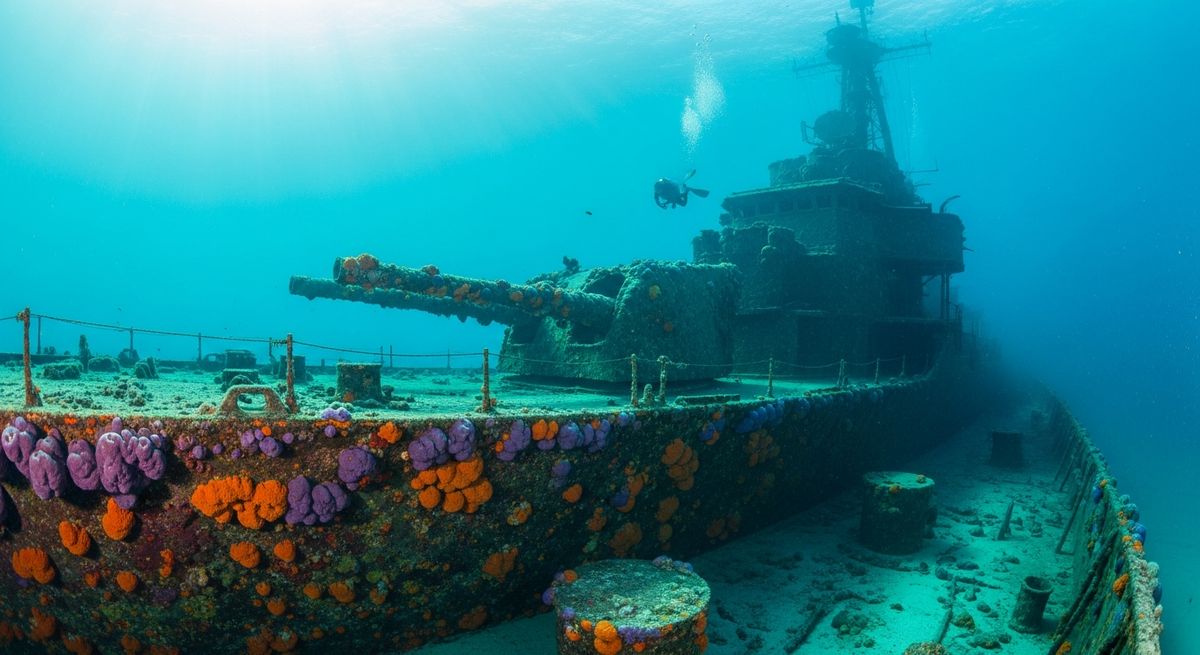
Caribsea Wreck
Protected Area
Cape Lookout National Seashore
Why dive here
With 42+ marine species recorded in the area - including sea turtles - Caribsea Wreck offers some of North Carolina's richest wreck diving. Water ranges 12-28°C, warmest July, August, September.
The Caribsea, off North Carolina, is one of those wrecks that just keeps giving. We love how the strong currents, which can be a real workout, have carved out this incredible habitat. Down at 80 feet, the visibility often hovers around 40-60 feet, but when it clears, you can see the whole bow section appear out of the blue. You’ll spend most of your time exploring the collapsed superstructure, now home to enormous sand tiger sharks – our favourite part. They just hang out, unbothered, giving you plenty of time to watch them patrol the twisted metal. Look for big schools of baitfish shimmering around the deeper parts of the wreck; that’s where the bigger predators tend to lurk. This dive really suits experienced wreck divers who appreciate the raw power of the ocean and the life it brings. Be prepared for a surge, and maybe a bit of a current, but it’s all part of the Caribsea’s rugged charm.
Safety Notes
Wreck site - avoid penetration without wreck diving certification. Watch for sharp metal and entanglement hazards.
Caribsea Wreck Wreck History
Year Sunk
1942
Vessel Type
cargo ship
Cause
torpedo
Tonnage
2,609 GRT
The SS Caribsea was a steam-powered cargo ship with a history stretching back to the First World War. Built in 1919, she was one of many aging merchant vessels pressed into critical service during World War II. In March 1942, while sailing unescorted, the Caribsea was transporting a vital load of manganese ore from Cuba to Virginia. Her journey placed her directly in the crosshairs of Germany's U-boat offensive along the American east coast. Just off the coast of Cape Lookout, North Carolina, she was struck by a single torpedo from U-158. The ship sank in a mere three minutes, taking 21 of her 28 crewmen with her into the Graveyard of the Atlantic.
Today, the Caribsea rests upside down at a depth of 26 meters (85 feet), her hull broken and scattered. While a tragic war grave, the wreck has been completely reclaimed by the sea and transformed into one of North Carolina's most spectacular dive sites. The wreckage acts as a massive artificial reef, providing shelter and structure for an incredible density of marine life. It is most famous for the large numbers of Sand Tiger sharks that congregate here, particularly in the summer months. Divers can witness dozens of these impressive, toothy predators circling the wreck, creating an awe-inspiring and unforgettable underwater spectacle.
Nearest Dive Centres to Caribsea Wreck
Dive shops near Caribsea Wreck
View all dive centres in North CarolinaReviews for Caribsea Wreck
Conditions
Ocean conditions, forecast and tides for Caribsea Wreck
Caribsea Wreck Ocean Conditions
Monthly averages for Caribsea Wreck, sourced from Open-Meteo marine data - nearest station: Open-Meteo marine grid (34.6, -76.6) (0km away)
October Averages
Sea Temperature
23°C
73°F · Range: 19.9–26.4°C
Air Temperature
20°C
67°F
Wind Speed
1.8 m/s
3.5 knots
Atmospheric Pressure
1016.7 hPa
Based on 4 years of monitoring data · Data sources: Open-Meteo marine data
Plan & book
Ways to dive North Carolina, from day trips to liveaboards.
Day trips & courses
via GetYourGuideGuided dives, courses and snorkel trips with instant booking.
Find dive trips in North CarolinaPlaces to stay
via Booking.comHotels and dive resorts near North Carolina.
Search stays in North CarolinaDive insurance
Most travel insurance excludes or limits scuba. Check what you need before you go.
Dive insurance explainedPartner links: we may earn a commission if you book, at no extra cost to you. How we make money
Where to Stay near Caribsea Wreck
Prices from Booking.com. We may earn a commission at no extra cost to you.