St John's Reefs - Marsa Alam

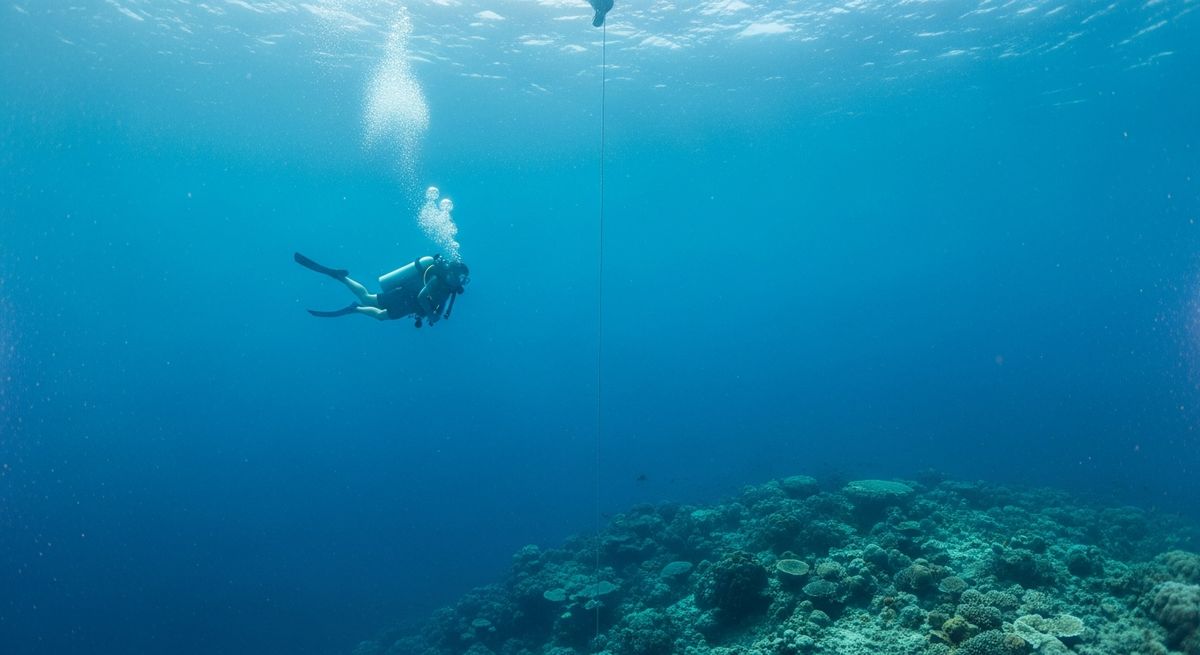
St. John’s has a reputation, and we think it earns it. Down in Egypt’s southern Red Sea, these reefs really pop, feeling healthier than many we’ve seen further north. You’ll find walls draped in soft corals, punctuated by swim-throughs and small caves that make for some dramatic light play, especially when the visibility is good, which it often is here. Keep an eye out for reef sharks patrolling the deeper sections; we’ve had some good luck spotting silvertips and even a hammerhead or two on dawn dives. It's a solid choice for divers who appreciate vibrant coral and don't mind a bit of a journey to get there.

Location
Marsa Alam, Egypt, Red Sea & Middle East
Coordinates
23.700000, 36.100000

Best Time to Dive in Marsa Alam

The warmest water temperatures in Marsa Alam occur in August, averaging 31.1°C. The coolest conditions are in February at 22.7°C.

Monthly Water Temperatures

  • January: 23.6°C
  • February: 22.7°C
  • March: 22.9°C
  • April: 23.8°C
  • May: 26.0°C
  • June: 28.1°C
  • July: 29.9°C
  • August: 31.1°C
  • September: 30.4°C
  • October: 28.8°C
  • November: 27.1°C
  • December: 25.6°C

Nearby Dive Sites in Marsa Alam

Nearest Dive Centres to St John's Reefs

Marine Life in Marsa Alam

Home to 39 recorded species including 10 seagrass & algae, 8 whales & dolphins, 8 reef fish, 7 sea snails & nudibranchs, 3 sharks & rays, 1 clams & mussels.

Notable Species

Recommended Packing List for St John's Reefs

Based on average water temperature of 26.7°C, currents 3 cm/s.

  • Shorty or Rashguard - warm 27°C water needs minimal exposure protection
  • Mask - essential for every dive
  • Fins
  • BCD - buoyancy compensator
  • Regulator - your most safety-critical piece of gear
  • Dive Computer - tracks depth, time, and NDL
  • Surface Marker Buoy (SMB) - essential for boat pickups
  • Dive Torch - useful for crevices and colour at depth
  • Underwater Camera - capture your diving memories

Frequently Asked Questions

What are the typical diving depths at St. John's Reefs?
The specific typical diving depths for St. John's Reefs are not detailed in the provided information. However, as a prominent reef dive site, divers can generally expect a range of depths suitable for exploring its diverse topography.
What kind of marine life and underwater topography can divers expect to see at St. John's Reefs?
Divers at St. John's Reefs can expect to encounter some of the healthiest coral reefs in Egypt, teeming with an abundance of reef fish. The underwater topography is notable for its fascinating tunnels and caves, offering unique exploration opportunities. Additionally, shark encounters, both reef and pelagic species, are common in these waters.
How challenging is diving at St. John's Reefs, especially regarding currents?
Diving at St. John's Reefs is classified as having an intermediate difficulty level. While the specific details regarding currents are not provided, divers should be prepared for conditions typical of an intermediate site. This suggests that some experience and good buoyancy control are beneficial for navigating the reefs and their features.
What is the best time of year to dive at St. John's Reefs for optimal conditions and marine life sightings?
The provided data does not specify the best time of year for optimal diving conditions or marine life sightings at St. John's Reefs. For general guidance on seasonal diving in the region, you might consult our When to Dive section for the Red Sea.
What diving certifications and experience are recommended or required for St. John's Reefs?
Given that St. John's Reefs is rated with an intermediate difficulty, divers should possess at least an Advanced Open Water certification or equivalent experience. This level of certification ensures divers have the necessary skills and confidence to safely explore the site's tunnels, caves, and potentially encounter various marine life, including sharks.
What are the typical water conditions, visibility, and currents like at St. John's Reefs?
Divers at St. John's Reefs can often expect superb visibility, which greatly enhances the experience of exploring its healthy coral reefs and intricate topography. While specific details on water temperature and typical currents are not provided, the site's intermediate difficulty rating suggests that divers should be prepared for varying conditions that may include moderate currents.