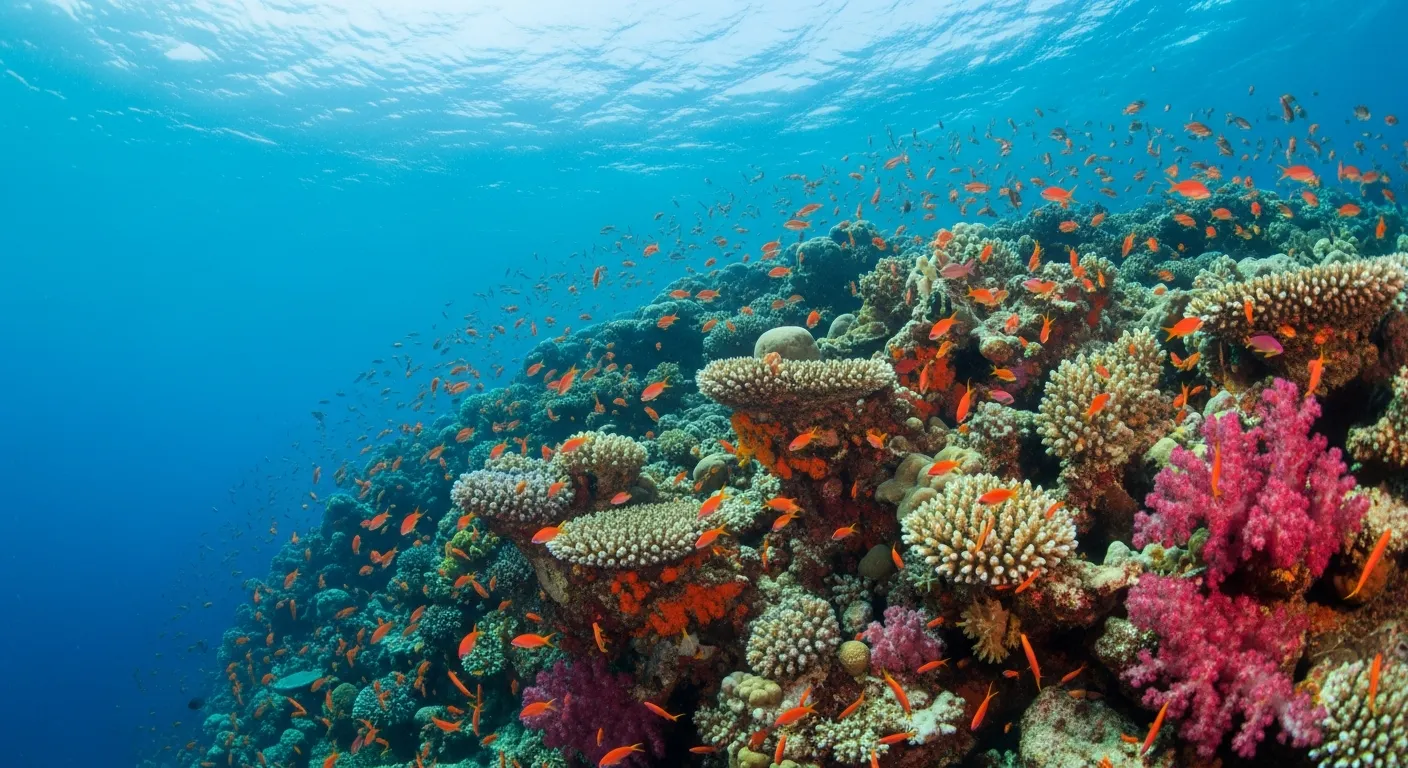
Red Sea & Middle East
The Red Sea is legendary for its warm, crystal-clear waters, spectacular coral formations, and historic wrecks. Egypt's Ras Mohammed, the Brothers Islands, and the SS Thistlegorm wreck attract divers from around the globe seeking unforgettable underwater experiences.
Countries & Territories
Explore diving destinations in Red Sea & Middle East

Djibouti
Djibouti is not for every diver, but for those seeking something genuinely different, it’s a revelation. We go for the young volcanic landscapes underwater, dramatic walls dropping into the deep, and the Red Sea corals that thrive without the crowds you find further north. The real draw, though, is the plankton bloom in the Gulf of Tadjoura from November to February, which brings in juvenile whale sharks - dozens of them, sometimes. It's an incredible experience, swimming with so many young sharks, a world away from the single adult you might spot elsewhere. Beyond the whale sharks, the sheer quiet of the reefs, the big argus groupers, and the intricate honeycomb corals make it a destination we think is worth the extra effort.

Egypt
Egypt, for us, is one of those places you keep coming back to. The Red Sea is reliably warm, visibility is usually excellent, and the reefs are just packed with activity. If you're into wrecks, the SS Thistlegorm is legendary for a reason - diving those holds, seeing the trucks and motorbikes, it’s a proper step back in time. For pelagics, the Brothers Islands deliver, often with Oceanic whitetips making an appearance, but you need to be comfortable with current out there. We’d suggest spring or autumn for the best conditions, dodging the summer heat and winter winds.

Eritrea
Eritrea is for divers who genuinely want to get off the grid. Forget dive centres and shore-side amenities here; we're talking full-on liveaboard adventures into the Dahlak Archipelago. It’s an archipelago of over 200 islands, many of them uninhabited, which means you’ll often have a site entirely to yourselves. Think untouched reefs, big schools of Arabian angelfish and blue-lined surgeonfish, and the occasional WWII wreck just waiting for you to explore. We’d suggest aiming for the cooler, drier months between October and April for the best visibility and calmer seas.

Israel
Eilat, Israel, offers a unique proposition for divers: a vibrant coral reef thriving where the stark desert landscape plunges into the Red Sea. We found it fascinating, particularly considering the Coral Beach Nature Reserve protects one of the world's northernmost coral ecosystems. While the number of dive centres is small, the sheer density of dive sites, over 60 of them, means there’s plenty to explore within a compact area. We often talk about species, and while you’ll see plenty of Blue Green Chromis and Dusky Parrotfish, it's the peculiar encounters that stick with you: spotting a Dollfus's octopus or the shimmering schools of Glassy Cardinalfish that often gather. Visibility tends to be excellent year-round, making it a reliable destination, though we particularly enjoy the slightly cooler, less crowded months of spring and autumn. You’re not getting the big pelagic action here, but for a unique reef experience, easily accessible and rich in smaller, captivating life, Eilat holds its own.
Jordan
Jordan’s Red Sea coast near Aqaba is a small but mighty player in the dive world, easily accessible and surprisingly varied. We love how contained it is, meaning you can really get to know the sites in a short trip. The Aqaba Marine Park is where you’ll spend all your time, with around 44 dive sites packed into a manageable stretch of coastline, from vibrant coral patches to some truly unique wreck diving. Diving here is good year-round, though the shoulder seasons of spring and autumn offer pleasant topside temperatures. What makes Jordan special, for us, is the commitment to artificial reefs, particularly the military wrecks. The *Cedar Pride* is a classic, but the M42 Duster tank and the enormous *Hercules* C-130 plane are genuinely unusual dives, often teeming with Blacktail Butterflyfish and schools of Banded Blue Sprat. The corals themselves, like the Yellow Scroll and Staghorn varieties, are doing well, and if you have a good guide, there’s plenty of macro to spot, too - keep an eye out for Rama Rao's Scorpionfish lurking in the nooks.

Lebanon
Lebanon isn't your typical dive destination, and that’s precisely why we love it. Forget crowded reefs; here, you're diving through layers of history, with ancient Phoenician and Roman anchors scattered among World War II wrecks. The Mediterranean’s eastern reach offers surprisingly robust ecosystems, a real testament to the resilience of nature. Most of the action hugs the Beirut coast, but don’t overlook Byblos for its ancient harbour remains or the quieter, turtle-friendly waters off Tyre. We’ve spotted loggerheads here, along with playful groups of rough-toothed dolphins if you’re lucky. Expect visibility to average 15-20 metres, improving from late spring through early autumn, which is when we’d suggest planning your trip. Keep an eye out for the smaller, more unusual stuff too - boa dragonfish are a rare treat, and those thick schools of annular seabream are mesmerising. It’s a dive scene still emerging, making it feel wonderfully undiscovered.
Oman
Oman isn't the first place most divers think of, but it really should be. We’ve found ourselves drawn back repeatedly by the sheer wildness of the diving, particularly up in the Musandam Peninsula. It’s got that raw, adventurous feel you often miss in more developed destinations. The Daymaniyat Islands, just off Muscat, are probably the most accessible, and for good reason - the reefs there are genuinely beautiful, thick with cauliflower coral and loaded with green turtles. If you time it right, September to November, you stand a good chance of spotting whale sharks feasting in the nutrient-rich waters. Down south in Dhofar and Mirbat, the diving changes completely after the Khareef monsoon, revealing bizarre, kelp-like forests. It’s a completely different vibe, and we love how varied the diving is across the country.

Saudi Arabia
Saudi Arabia is, without question, the Red Sea's final frontier, and it’s finally opening up. We’re talking about vast stretches of coastline, well over 1,700km, that have seen almost no diving pressure. Think about that for a minute. The reef systems, especially around the Farasan Banks and the Al Lith islands, are genuinely untouched, full of dense coral structures like huge fields of staghorn and birdsnest coral, often in ridiculously shallow water. Visibility can often reach beyond 30 metres, especially further offshore, and the current development projects in NEOM and around The Red Sea Project are just starting to scratch the surface of what’s out there. We’ve seen healthy populations of reef sharks cruising through pristine hard coral gardens, and the sheer scale of the undisturbed reef means you’re often the only boat for miles. We’d suggest focusing on the Farasan Islands if you’re looking for true exploration, or heading out from Al Lith for some impressive offshore pinnacles. The shoulder seasons, late spring and early autumn, typically offer the best balance of calm seas and comfortable temperatures.
Sudan
Sudan. Just the name conjures images of remote, wild diving, and honestly, that's exactly what you get. We’re talking about a stretch of Red Sea that feels genuinely untouched, a proper contrast to its busier northern neighbours. Head straight for Port Sudan and the offshore reefs, particularly Sha'ab Rumi and Sanganeb, if you want to experience the very best of it. This is where you’ll find Jacques Cousteau’s Conshelf II habitat and walls dropping into the blue, patrolled by schools of Batavian parrotfish and clown tangs. The winter months, roughly October to May, give you cooler water and typically better visibility, perfect for spotting the big pelagics that cruise through.

United Arab Emirates
Okay, the UAE. We’re not going to pretend it rivals the Red Sea, but for a convenient escape with some surprisingly good diving, it holds its own. Most divers head straight for Fujairah on the east coast, and for good reason. That’s where you’ll find the decent stuff - artificial reefs, an old cement barge, and during the right season, even whale sharks cruising past. The Gulf side, around Dubai and Abu Dhabi, is mostly about wrecks and slightly murkier conditions, though still an interesting day out if you're already there. We’ve had some fantastic dives tracking those impressive blue-white dolphins and spotting unique species like the crescent grunter, making it a solid choice for a weekend trip, especially from October to May when the water is warm and conditions calm.