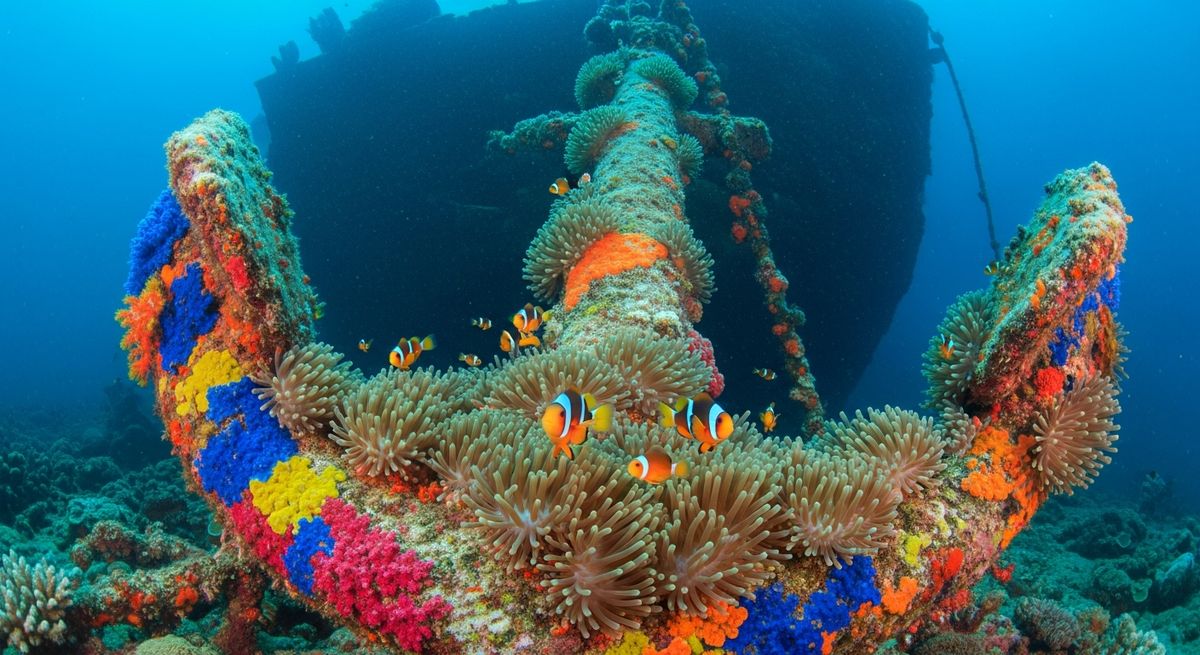
Wreck of Grumman HU-16 Albatros Aircraft
Why dive here
Wreck of Grumman HU-16 Albatros Aircraft is a wreck dive where divers can encounter dolphins, humpback whales, oceanic whitetip sharks, sea turtles and spinner dolphins. Water ranges 23-31°C, warmest July, August, September.
We love a good plane wreck, and the Albatros near Marsa Alam is certainly one of our favourites. This Grumman HU-16, a former Egyptian Air Force aircraft, went down in the 1990s, landing upright and largely intact. Dropping onto it, you can still feel the scale of the thing. The wings stretch out, the tail fin points skyward, and the cockpit, though empty, really sparks the imagination. Entry can be tricky if the chop is up, so we’d suggest going on a calm day; it makes the descent much more enjoyable. Once you’re down, the visibility is usually excellent, letting you take in the whole scene. Schools of yellowfin goatfish often dart around the fuselage, and we’ve spotted plenty of cowfish poking their heads out from under the wings. Keep an eye on the blue – we’ve had lucky encounters with Indian Ocean bottlenose dolphins cruising past, seemingly checking out the wreck themselves. This site is a brilliant choice for experienced divers who appreciate military history and the way the Red Sea quickly reclaims man-made objects.
Typical Wreck of Grumman HU-16 Albatros Aircraft Dive Profile
Illustrative profile based on site depth and type. Actual dive profiles vary - always follow your dive computer and training.
Safety Notes
Wreck site - avoid penetration without wreck diving certification. Watch for sharp metal and entanglement hazards.
Always perform a 3-minute safety stop at 5m before surfacing.
Wreck of Grumman HU-16 Albatros Aircraft Wreck History
Year Sunk
2012
Vessel Type
aircraft
Cause
scuttled
Unlike a wreck born from tragedy, the Grumman HU-16 Albatros near Marsa Alam was placed on the seabed with divers in mind. This large, twin-engine amphibious aircraft served a long and storied career, first with the U.S. military as a search and rescue plane and later with the Yugoslavian Air Force. After its decommissioning, it was purchased by a local hotel owner with the vision of creating a unique underwater attraction. In 2012, the aircraft was carefully cleaned and prepared before being scuttled just offshore.
Today, the Albatros rests on a sandy bottom at a shallow depth of around 14 meters, making it an accessible and spectacular dive for all experience levels. The wreck is perfectly intact, allowing divers to explore the cockpit, peer into the passenger cabin, and swim around the impressive 24-meter wingspan. The large fuselage and engines are already becoming a habitat for marine life, with schools of glassfish taking shelter inside and moray eels finding homes in its crevices. Its proximity to the shore and shallow depth make it an ideal second dive of the day or a fantastic site for underwater photographers looking for a subject that truly stands out from the reef.
Reviews for Wreck of Grumman HU-16 Albatros Aircraft
Conditions
Ocean conditions, forecast and tides for Wreck of Grumman HU-16 Albatros Aircraft
Wreck of Grumman HU-16 Albatros Aircraft Ocean Conditions
Monthly averages for Wreck of Grumman HU-16 Albatros Aircraft, sourced from Open-Meteo marine data + Copernicus Marine (EU) - nearest station: Open-Meteo marine grid (24.21, 35.56) (1km away)
October Averages
Sea Temperature
29°C
83°F · Range: 27.3–30°C
Current Speed
3.61 cm/s
Direction: SE (146.3°)
Chlorophyll-a
0.07 mg/m³
Very clear (oligotrophic)
Salinity
38.47 PSU
Based on 4 years of monitoring data · Data sources: Open-Meteo marine data + Copernicus Marine (EU)
Plan & book
Ways to dive Marsa Alam, from day trips to liveaboards.
Day trips & courses
via GetYourGuideGuided dives, courses and snorkel trips with instant booking.
Find dive trips in Marsa AlamPlaces to stay
via Booking.comHotels and dive resorts near Marsa Alam.
Search stays in Marsa AlamDive insurance
Most travel insurance excludes or limits scuba. Check what you need before you go.
Dive insurance explainedPartner links: we may earn a commission if you book, at no extra cost to you. How we make money
Where to Stay near Wreck of Grumman HU-16 Albatros Aircraft
Prices from Booking.com. We may earn a commission at no extra cost to you.