CEDAR PRIDE
Protected Area
محمية العقبة البحرية
Why dive here
With 60+ marine species recorded in the area - including spinner dolphins and lionfish - CEDAR PRIDE offers some of Aqaba Marine Park's richest wreck diving. Water ranges 22-29°C, warmest July, August, September.
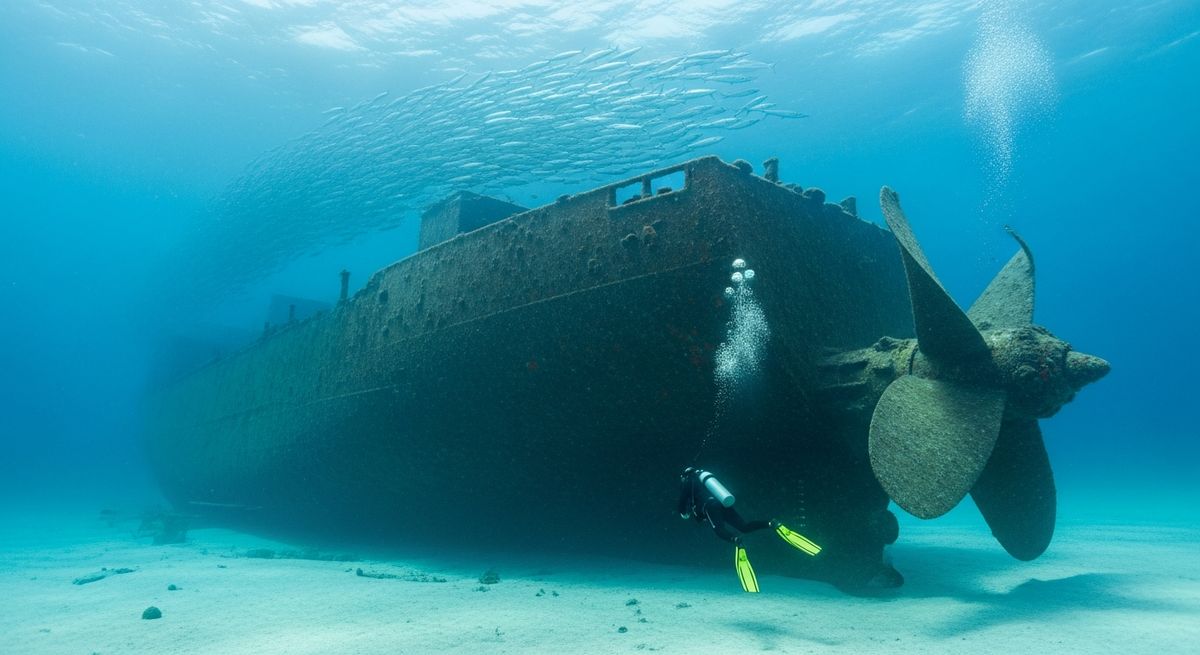
The Cedar Pride is a classic Red Sea wreck, pure and simple. We love its elegance, sitting perfectly on its port side, completely intact. You drop down onto the hull, often with clouds of silversides shimmering around you, and then you’re into the wreck itself. Our favourite part is the bow, where the anchor chain still drapes down into the sand at 27 metres. From there, you can explore the cargo holds, now open to the light, and swim through the superstructure towards the stern. The wreck has become a proper artificial reef, with soft corals growing on every available surface, and lionfish often hanging motionless in the shadows. Look for the resident moray eels peeking out from pipes and crevices. It’s a relatively easy penetration for experienced divers, but there’s plenty to see just staying on the outside. We’d suggest going in the morning before it gets too busy.
Typical CEDAR PRIDE Dive Profile
Illustrative profile based on site depth and type. Actual dive profiles vary - always follow your dive computer and training.
Safety Notes
Depth of 27m - Advanced Open Water certification recommended.
Wreck site - avoid penetration without wreck diving certification. Watch for sharp metal and entanglement hazards.
Always perform a 3-minute safety stop at 5m before surfacing.
Nearest Dive Centres to CEDAR PRIDE
Dive shops near CEDAR PRIDE
Sindbad Dive Club
Almarsa dive center
Nemo Diving Center
Aqaba Adventure Divers
Abood Freediver
Neptune
Reviews for CEDAR PRIDE
Conditions
Ocean conditions, forecast and tides for CEDAR PRIDE
CEDAR PRIDE Ocean Conditions
Monthly averages for CEDAR PRIDE, sourced from Open-Meteo marine data + Copernicus Marine (EU) - nearest station: Open-Meteo marine grid (29.42, 34.97) (0km away)
October Averages
Sea Temperature
26°C
79°F · Range: 24.7–27.9°C
Current Speed
5.1 cm/s
Direction: S (191.3°)
Salinity
39.4 PSU
Based on 4 years of monitoring data · Data sources: Open-Meteo marine data + Copernicus Marine (EU)
Plan & book
Ways to dive Aqaba Marine Park, from day trips to liveaboards.
Day trips & courses
via GetYourGuideGuided dives, courses and snorkel trips with instant booking.
Find dive trips in Aqaba Marine ParkPlaces to stay
via Booking.comHotels and dive resorts near Aqaba Marine Park.
Search stays in Aqaba Marine ParkDive insurance
Most travel insurance excludes or limits scuba. Check what you need before you go.
Dive insurance explainedPartner links: we may earn a commission if you book, at no extra cost to you. How we make money
Where to Stay near CEDAR PRIDE
Prices from Booking.com. We may earn a commission at no extra cost to you.