Diving in Aqaba Marine Park
Why dive here
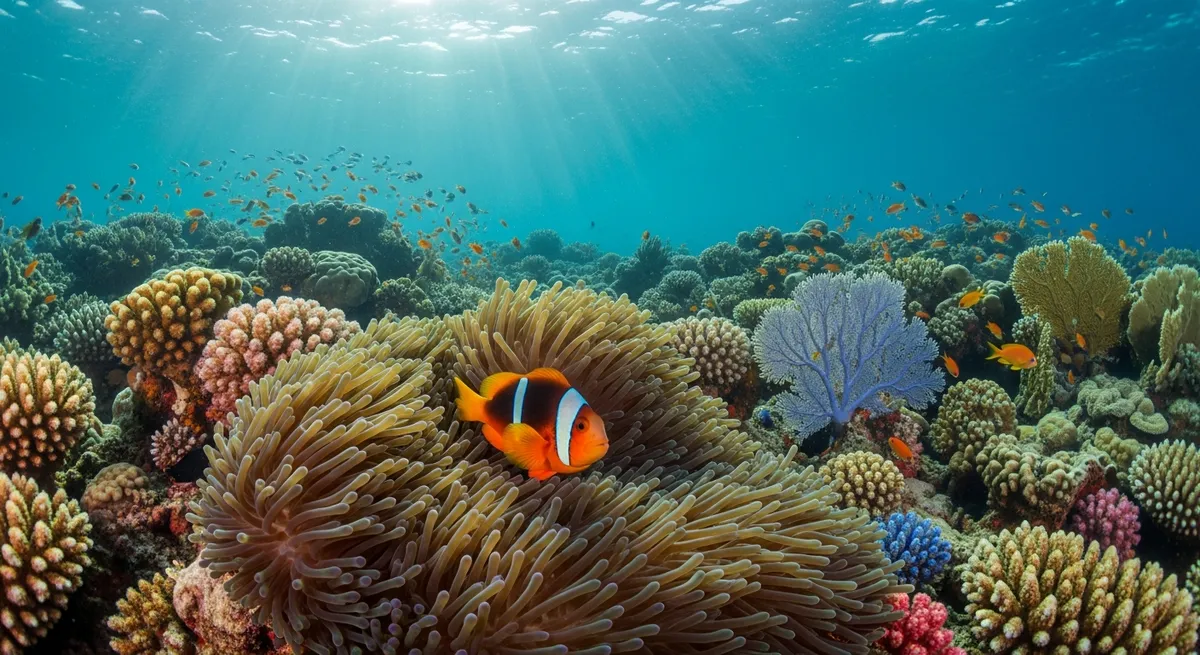
Aqaba Marine Park offers some of Jordan's richest diving, with 60+ marine species recorded in the area - including spinner dolphins and lionfish. Water ranges 22-29°C, warmest July, August, September.
Aqaba Marine Park might not have the big pelagic draws of other Red Sea spots, but we love it for its sheer quirkiness and the commitment to artificial reefs. Where else can you explore a C-130 Hercules plane, a M42 Duster tank, and a troop carrier, all deliberately sunk and now absolutely thriving with soft corals and schools of scad? The dive sites here are generally shallow, with visibility often pushing past 20 metres, making it a brilliant spot for newer divers or those who just want to chill out and explore without fighting currents. Our favourite time to dive here is early morning, beating the crowds and catching the yellowtail surgeonfish and marbled spinefoot just waking up, often grazing on the staghorn and lesser valley corals. You’ll frequently spot blacktail and crown butterflyfish flitting amongst the wreckage, and if you have a keen eye, look for the well-camouflaged Rama Rao’s scorpionfish tucked into crevices. The water temperature rarely dips below 22°C, even in winter, so it’s pretty comfortable year-round. It’s not about huge drop-offs here; it’s about the unique blend of military history and marine life reclaiming its territory.
Aqaba Marine Park Dive Site Map
Dive sites and dive centres in Aqaba Marine Park
Aqaba Marine Park Dive Sites
25 dive sites in Aqaba Marine Park
Abdallah Reef
Abdallah Reef offers a straightforward dive in Aqaba Marine Park, known for its healthy coral structures. It’s a reliable spot to see a good variety of Red Sea reef fish, like parrotfish and triggerfish, darting amongst the coral bommies. We find it’s a good choice for divers looking for an easy, relaxed exploration without strong currents, making it suitable for all experience levels. It’s a solid option for a second dive or an unhurried afternoon.
Aquarium House Reef
The Aquarium House Reef in Aqaba is a straightforward shore dive, popular for its ease of access. You'll find a gentle slope of hard corals, home to plenty of damselfish, wrasse, and the occasional lionfish tucked into a crevice. It’s a good spot for a relaxed shallow dive or for refreshing skills, though don't expect dramatic topography.
Black Rock
Black Rock offers a pleasant dive within Aqaba Marine Park, well-suited for divers seeking a relaxed exploration. The site features a rocky reef structure, home to a scattering of resident fish species. It’s a good option for a second dive or for divers who appreciate quieter spots away from the busier wrecks. We’d suggest keeping an eye out for small nudibranchs along the rocks.
Blue Coral
The Blue Coral site in Aqaba Marine Park gives divers a good look at the reef’s structure and its residents. You’ll drift past patches of the site’s namesake blue coral, interspersed with other hard and soft corals. It's a relaxed dive, suitable for those looking for an easy exploration of a typical Red Sea reef without strong currents.
Cazar reef
Cazar reef in Aqaba Marine Park is a decent, straightforward coral dive. You'll find scattered coral bommies and a range of reef fish going about their business. It’s a good option for a relaxed second dive or for divers getting comfortable in the Red Sea. Expect decent visibility on most days.
CEDAR PRIDE
The Cedar Pride is a classic Red Sea wreck, pure and simple. We love its elegance, sitting perfectly on its port side, completely intact. You drop down onto the hull, often with clouds of silversides shimmering around you, and then you’re into the wreck itself. Our favourite part is the bow, where the anchor chain still drapes down into the sand at 27 metres. From there, you can explore the cargo holds, now open to the light, and swim through the superstructure towards the stern. The wreck has become a proper artificial reef, with soft corals growing on every available surface, and lionfish often hanging motionless in the shadows. Look for the resident moray eels peeking out from pipes and crevices. It’s a relatively easy penetration for experienced divers, but there’s plenty to see just staying on the outside. We’d suggest going in the morning before it gets too busy.
Cedar Pride Shipwreck
The Cedar Pride, scuttled back in 1985, is a proper ship. It’s not some half-broken shell but a complete wreck, split into two distinct halves by a winter storm years ago. We love how the two sections create different exploration routes, almost like two separate dives. The bow sits shallower, starting around 10 meters, easily accessible for most divers. Here, schools of Yellowstriped Cardinalfish hang in the cargo holds, and we often spot Arabian Blennies peeking from crevices in the ship's superstructure. The stern section, a little deeper at 24-26 meters, is where we often find the larger resident fish, like hefty Marbled Spinefoot. Look closely at the deck plating for native oysters. There’s a wonderful contrast between the corroded steel and the thriving corals, especially the yellow scroll and staghorn colonies that have really taken hold. We’ve even seen Peacock Wrasse darting through the engine room access. To really get a feel for the scale, drop down to the sand and look up at the full profile; it’s a striking sight. The absence of strong currents generally makes for a relaxed dive, allowing ample time to explore both halves. It’s perfect for divers who appreciate a wreck with a story and plenty of nooks to investigate.
Eel Canyon
Eel Canyon is a solid choice for a multi-level dive, letting you explore shallows down to about 30 meters. It’s exactly what the name suggests, a sandy canyon carved into the reef, absolutely packed with garden eels waving from the substrate. We've often seen octopus here too, tucked into the rocky edges. It’s a great spot for newer divers, or anyone looking for a relaxed dive focused on macro life.
First Bay
First Bay in Aqaba is a reliable spot for an easy shore entry. The gentle slope down to around 15 metres makes it ideal for newer divers or those looking for a relaxed dive. We usually see pipefish tucked into the seagrass and often find scorpionfish camouflaged on the sandy patches. It's a good choice for a leisurely afternoon or a skills refresh.
First Bay North
First Bay North is a mellow entry point, an easy shore dive right in the heart of Aqaba Marine Park. We often suggest it for those getting comfortable in the water, or for an easy second dive after something deeper. The reef drops gently to about 20 meters, with plenty of table corals and brain corals in the shallows. Keep an eye out for parrotfish munching away and the occasional blue-spotted ray tucked into the sand. It’s a relaxed dive, good for spotting the smaller stuff and getting your buoyancy dialled in.
Gorgon 1
Gorgon 1 isn't Aqaba’s flashiest dive, but it's one of our favourite spots for a truly relaxed exploration. We love how the reef here just gently slopes away, making it easy to drift along and really take in the smaller details. You’ll often find us poking around the patches of staghorn and yellow scroll corals, where blennies - especially the smooth-fin and leopard varieties - are constantly darting in and out. Keep an eye out for banded cleaner shrimp setting up shop; their intricate little dance with passing fish is always captivating. The real joy of Gorgon 1 comes from its consistent, calm conditions. It’s ideal for photographers who want time to compose shots without battling current, or for newer divers building confidence. We’ve seen longtail silverbiddies schooling here, their scales catching the light, and even a rusty parrotfish crunching away at the coral, the sound surprisingly audible if you're still enough. While the larger stuff like whale sharks or dolphins are rarer visitors, the sheer density of reef fish - like rainbowfish and spottail coris - makes every dive feel productive. It's a gentle site, but full of quiet surprises if you just slow down and look.
Gorgone II III
The Gorgone II & III site in Aqaba is often a drift dive, following the mild currents along the reef wall. We've found the corals here to be fairly healthy, with plenty of resident reef fish like parrotfish and triggerfish. It’s a pretty easy dive, suitable for all experience levels looking for a relaxed exploration of a typical Red Sea reef. Keep an eye out for the gorgonian fans that give the site its name.
Aqaba Marine Park Dive Centres
7 dive shops and operators in Aqaba Marine Park
Ocean Wildlife in Aqaba Marine Park
60 species recorded in Aqaba Marine Park
Aqaba Marine Park Daylight & Sunrise/Sunset
Sunrise and sunset times for Aqaba Marine Park, calculated from coordinates
Today - Sunday 11 October
Sunrise
05:39
Sunset
17:16
Daylight
11h 36m
Golden Hour
16:44
First light (dawn) at 05:16 · Last light (dusk) at 17:40
Monthly Averages
| Month | Sunrise | Sunset | Daylight |
|---|---|---|---|
| Jan | 06:36 | 17:04 | 10h 27m |
| Feb | 06:21 | 17:30 | 11h 9m |
| Mar | 05:51 | 17:49 | 11h 58m |
| Apr | 05:15 | 18:07 | 12h 52m |
| May | 04:49 | 18:26 | 13h 37m |
| JunLongest | 04:41 | 18:42 | 14h 1m |
| Jul | 04:51 | 18:42 | 13h 51m |
| Aug | 05:09 | 18:22 | 13h 13m |
| Sep | 05:25 | 17:47 | 12h 22m |
| OctNow | 05:42 | 17:11 | 11h 29m |
| Nov | 06:05 | 16:46 | 10h 42m |
| DecShortest | 06:28 | 16:44 | 10h 16m |
Times are approximate local times based on longitude. Actual times may vary slightly depending on the exact timezone observed in Aqaba Marine Park.
Where to Stay near Aqaba Marine Park
Prices from Booking.com. We may earn a commission at no extra cost to you.
Marine Protected Areas near Aqaba Marine Park
1 protected area near Aqaba Marine Park - please respect local regulations when diving
محمية العقبة البحرية
Getting to Aqaba Marine Park
Aqaba
Eilat
Sharma
Plan & book
Ways to dive Aqaba Marine Park, from day trips to liveaboards.
Day trips & courses
via GetYourGuideGuided dives, courses and snorkel trips with instant booking.
Find dive trips in Aqaba Marine ParkPlaces to stay
via Booking.comHotels and dive resorts near Aqaba Marine Park.
Search stays in Aqaba Marine ParkDive insurance
Most travel insurance excludes or limits scuba. Check what you need before you go.
Dive insurance explainedPartner links: we may earn a commission if you book, at no extra cost to you. How we make money