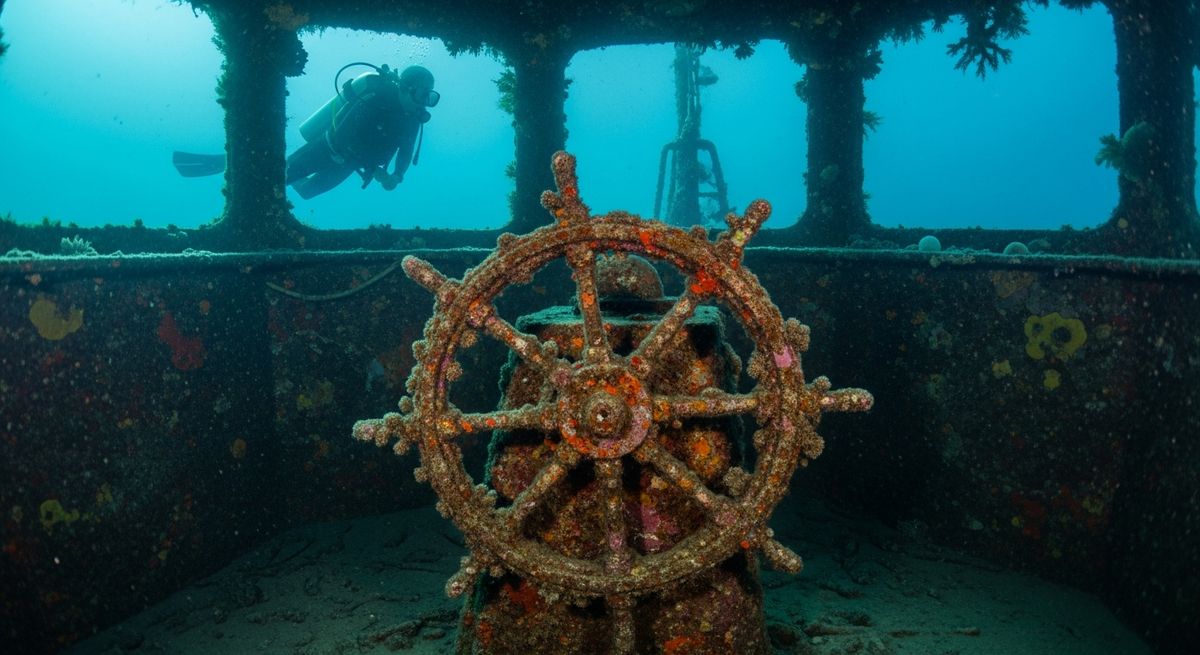
Cedar Pride Shipwreck
Protected Area
محمية العقبة البحرية
Why dive here
With 60+ marine species recorded in the area - including spinner dolphins and lionfish - Cedar Pride Shipwreck offers some of Aqaba Marine Park's richest wreck diving. Water ranges 22-29°C, warmest July, August, September.
The Cedar Pride, scuttled back in 1985, is a proper ship. It’s not some half-broken shell but a complete wreck, split into two distinct halves by a winter storm years ago. We love how the two sections create different exploration routes, almost like two separate dives. The bow sits shallower, starting around 10 meters, easily accessible for most divers. Here, schools of Yellowstriped Cardinalfish hang in the cargo holds, and we often spot Arabian Blennies peeking from crevices in the ship's superstructure. The stern section, a little deeper at 24-26 meters, is where we often find the larger resident fish, like hefty Marbled Spinefoot. Look closely at the deck plating for native oysters. There’s a wonderful contrast between the corroded steel and the thriving corals, especially the yellow scroll and staghorn colonies that have really taken hold. We’ve even seen Peacock Wrasse darting through the engine room access. To really get a feel for the scale, drop down to the sand and look up at the full profile; it’s a striking sight. The absence of strong currents generally makes for a relaxed dive, allowing ample time to explore both halves. It’s perfect for divers who appreciate a wreck with a story and plenty of nooks to investigate.
Safety Notes
Wreck site - avoid penetration without wreck diving certification. Watch for sharp metal and entanglement hazards.
Nearest Dive Centres to Cedar Pride Shipwreck
Dive shops near Cedar Pride Shipwreck
Sindbad Dive Club
Almarsa dive center
Nemo Diving Center
Aqaba Adventure Divers
Abood Freediver
Neptune
Reviews for Cedar Pride Shipwreck
Conditions
Ocean conditions, forecast and tides for Cedar Pride Shipwreck
Cedar Pride Shipwreck Ocean Conditions
Monthly averages for Cedar Pride Shipwreck, sourced from Open-Meteo marine data + Copernicus Marine (EU) - nearest station: Open-Meteo marine grid (29.42, 34.97) (0km away)
October Averages
Sea Temperature
26°C
79°F · Range: 24.7–27.9°C
Current Speed
5.1 cm/s
Direction: S (191.3°)
Salinity
39.4 PSU
Based on 4 years of monitoring data · Data sources: Open-Meteo marine data + Copernicus Marine (EU)
Plan & book
Ways to dive Aqaba Marine Park, from day trips to liveaboards.
Day trips & courses
via GetYourGuideGuided dives, courses and snorkel trips with instant booking.
Find dive trips in Aqaba Marine ParkPlaces to stay
via Booking.comHotels and dive resorts near Aqaba Marine Park.
Search stays in Aqaba Marine ParkDive insurance
Most travel insurance excludes or limits scuba. Check what you need before you go.
Dive insurance explainedPartner links: we may earn a commission if you book, at no extra cost to you. How we make money
Where to Stay near Cedar Pride Shipwreck
Prices from Booking.com. We may earn a commission at no extra cost to you.