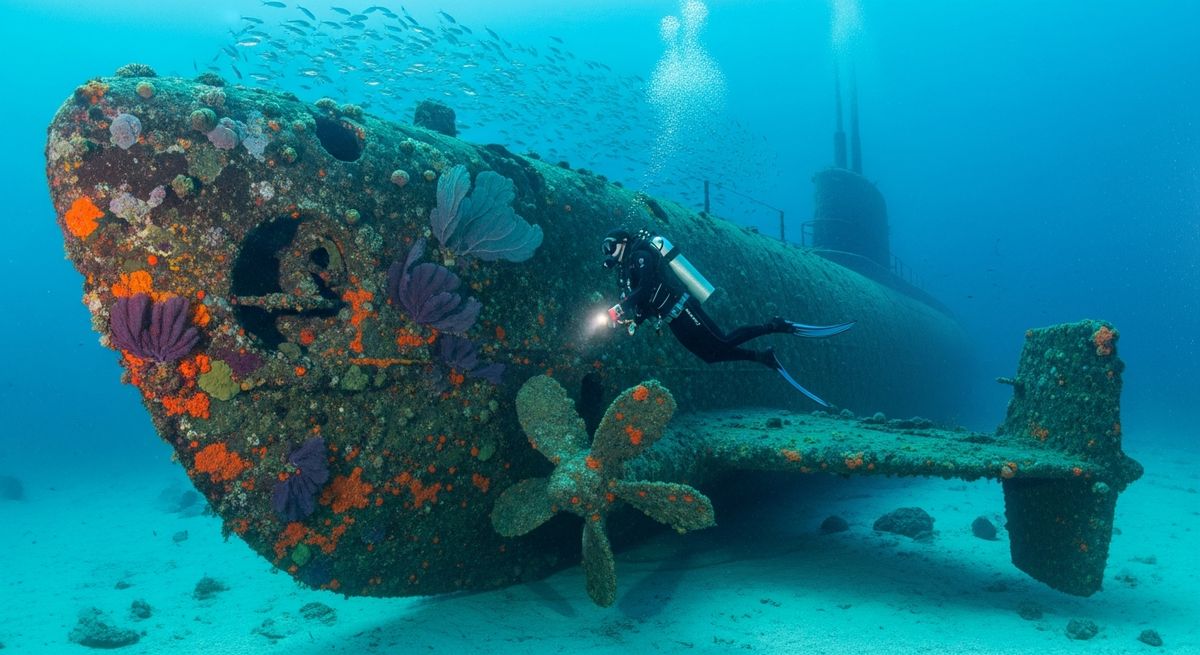
Corveta Camaquã
Protected Area
Área De Proteção Ambiental De Santa Cruz
Why dive here
With 44+ marine species recorded in the area - including sea turtles - Corveta Camaquã offers some of Fernando de Noronha's richest wreck diving. Water ranges 27-29°C, warmest March, April, May.
The Corveta Camaquã is the wreck dive in Fernando de Noronha that always pulls us back. It’s a purposeful dive, dropping down to 52 metres, so you need to be comfortable with depth and maybe think about nitrox to stretch out bottom time. The ship lies on its starboard side, largely intact, which means you get that real sense of a vessel resting on the seabed. We love swimming along the deck, past the cannons and scattered ammunition, imagining the rough seas that brought her down. Visibility here often hits 25 metres, and with the light filtering through the water, the scale of the wreck really hits you. Schools of snapper and jacks are constant companions, swirling around the superstructure. Keep an eye out for green turtles, often found munching on algae growing on the hull, seemingly unbothered by divers. We’ve also had some incredible encounters with eagle rays gliding gracefully past the bow. It’s a dive for those who appreciate history and the way the ocean reclaims human artefacts, creating new homes for marine life.
Typical Corveta Camaquã Dive Profile
Illustrative profile based on site depth and type. Actual dive profiles vary - always follow your dive computer and training.
Safety Notes
Wreck site - avoid penetration without wreck diving certification. Watch for sharp metal and entanglement hazards.
Always perform a 3-minute safety stop at 5m before surfacing.
Reviews for Corveta Camaquã
Conditions
Ocean conditions, forecast and tides for Corveta Camaquã
Corveta Camaquã Ocean Conditions
Monthly averages for Corveta Camaquã, sourced from Open-Meteo marine data + Copernicus Marine (EU) - nearest station: Open-Meteo marine grid (-3.84, -32.38) (0km away)
October Averages
Sea Temperature
27°C
81°F · Range: 26.5–27.9°C
Current Speed
29.15 cm/s
Direction: NW (329°)
Chlorophyll-a
0.035 mg/m³
Very clear (oligotrophic)
Salinity
36.39 PSU
Based on 4 years of monitoring data · Data sources: Open-Meteo marine data + Copernicus Marine (EU)
Plan & book
Ways to dive Fernando de Noronha, from day trips to liveaboards.
Day trips & courses
via GetYourGuideGuided dives, courses and snorkel trips with instant booking.
Find dive trips in Fernando de NoronhaPlaces to stay
via Booking.comHotels and dive resorts near Fernando de Noronha.
Search stays in Fernando de NoronhaDive insurance
Most travel insurance excludes or limits scuba. Check what you need before you go.
Dive insurance explainedPartner links: we may earn a commission if you book, at no extra cost to you. How we make money
Where to Stay near Corveta Camaquã
Prices from Booking.com. We may earn a commission at no extra cost to you.