Veleiro Yemanja
Protected Area
Área De Relevante Interesse Ecológico Orla Marítima
Why dive here
With 44+ marine species recorded in the area - including sea turtles - Veleiro Yemanja offers some of Fernando de Noronha's richest wreck diving. Water ranges 27-29°C, warmest March, April, May.
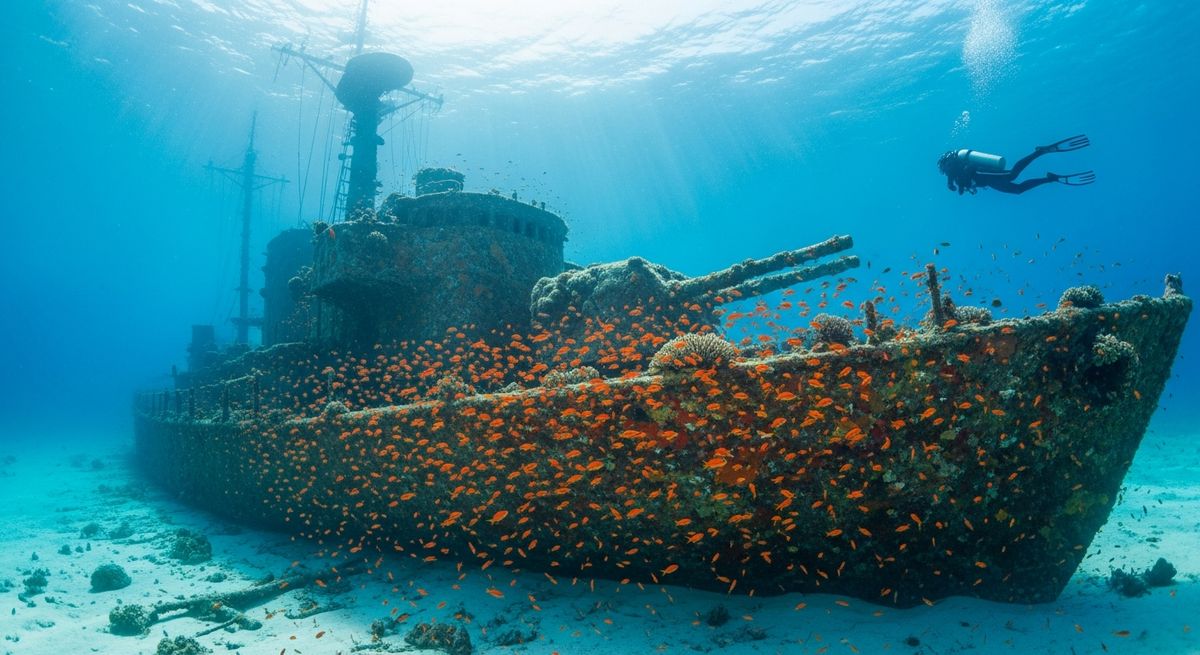
The Veleiro Yemanja wreck, scuttled deliberately in 1999, sits in front of Pina Beach, a mere 19 meters down. It’s a good introductory wreck dive, especially for those new to exploring submerged structures, though its max depth of 26 meters offers a little extra for the more experienced. We always appreciate a wreck with a bit of history, even if it's a planned sinking. You can still make out the masts, mooring cleats, and the frame of the hull, which gives it a real ghost ship feel. We love how the Yemanja has become an artificial reef, drawing in nurse sharks that often snooze under the shelter of the hull, and green turtles that glide past, seemingly unfazed by divers. Schools of Atlantic thread herring and sergeant majors swirl around the fragmented iron, so thick at times they dim the ambient light. Keep an eye out for long-snout seahorses clinging to the structure, a real treat if you can spot them. Average visibility here is around 30 meters, so you'll get a clear view of the wreck and its residents.
Safety Notes
Wreck site - avoid penetration without wreck diving certification. Watch for sharp metal and entanglement hazards.
Veleiro Yemanja Wreck History
Vessel Type
sailing ship
Cause
unknown
The Florida Keys are a graveyard of maritime history, and the "200 Wooden Shipwreck" is one of its countless anonymous residents. Without a name or a known history, this dive site evokes the romantic age of sail and the perils of navigating these treacherous, hurricane-prone waters. Was it a merchant schooner caught in a sudden squall, or a vessel that simply lost its way on the reef? The answers are likely scattered across the seabed.
Today, divers are greeted by the ghostly remains of a bygone era. Over the centuries, the ocean has reclaimed most of the wooden hull, leaving behind a trail of ballast stones, scattered timbers, and heavily encrusted metal fittings. Exploring the debris field feels like a treasure hunt, where every find tells a small part of the ship's story. The wreck is now a thriving habitat for corals, sponges, and a host of reef fish, offering a dive that is as much about marine biology as it is about maritime archaeology.
Nearest Dive Centres to Veleiro Yemanja
Dive shops near Veleiro Yemanja
View all dive centres in Fernando de NoronhaReviews for Veleiro Yemanja
Conditions
Ocean conditions, forecast and tides for Veleiro Yemanja
Veleiro Yemanja Ocean Conditions
Monthly averages for Veleiro Yemanja, sourced from Open-Meteo marine data + Copernicus Marine (EU) - nearest station: Open-Meteo marine grid (-3.84, -32.38) (0km away)
October Averages
Sea Temperature
27°C
81°F · Range: 26.5–27.9°C
Current Speed
29.15 cm/s
Direction: NW (329°)
Chlorophyll-a
0.035 mg/m³
Very clear (oligotrophic)
Salinity
36.39 PSU
Based on 4 years of monitoring data · Data sources: Open-Meteo marine data + Copernicus Marine (EU)
Plan & book
Ways to dive Fernando de Noronha, from day trips to liveaboards.
Day trips & courses
via GetYourGuideGuided dives, courses and snorkel trips with instant booking.
Find dive trips in Fernando de NoronhaPlaces to stay
via Booking.comHotels and dive resorts near Fernando de Noronha.
Search stays in Fernando de NoronhaDive insurance
Most travel insurance excludes or limits scuba. Check what you need before you go.
Dive insurance explainedPartner links: we may earn a commission if you book, at no extra cost to you. How we make money
Where to Stay near Veleiro Yemanja
Prices from Booking.com. We may earn a commission at no extra cost to you.