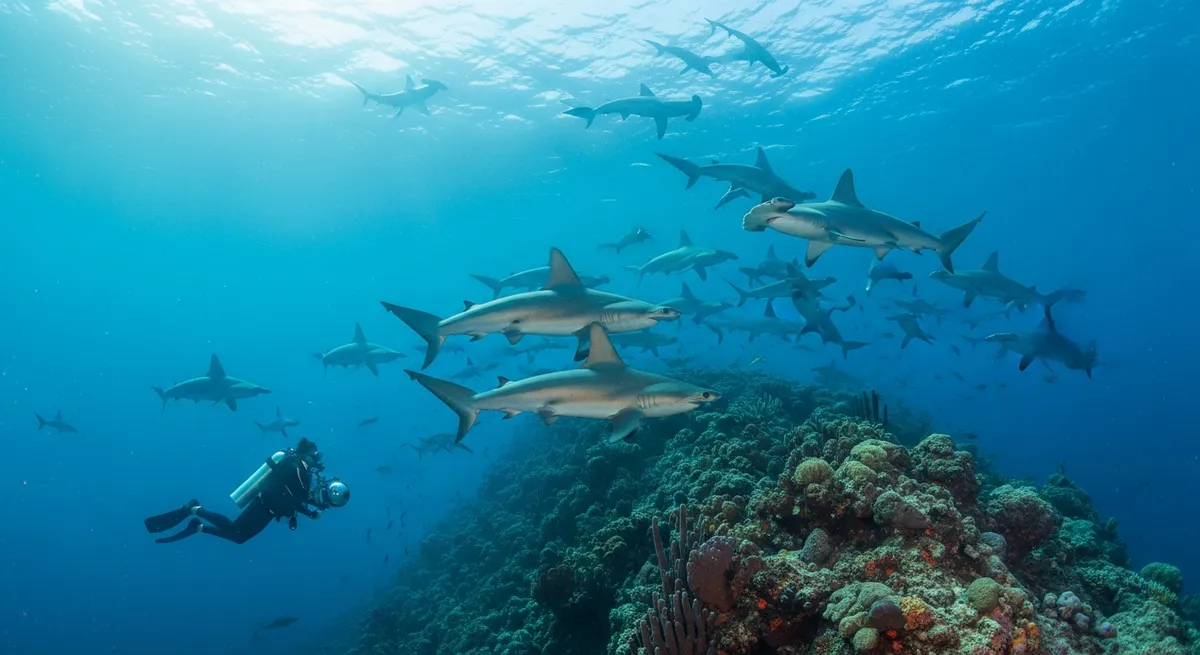
Diving in Malpelo Island
Why dive here
Malpelo Island offers some of Colombia's richest diving, with 71+ marine species recorded in the area - including barracuda and pufferfish. Water ranges 28-30°C, warmest September, October, November.
Malpelo isn't for the faint of heart, but if you’re up for a serious adventure, it’s one of the most raw, exhilarating places we've ever dived. This isolated rock, 500km off Colombia’s coast, is a UNESCO site because of what it *holds*: colossal schools of hammerheads and silky sharks. We’re talking hundreds, sometimes thousands, swirling around you. It’s an almost overwhelming sensory experience; the sheer number of sharks is incredible, a constant motion in the blue. Visibility can often hit 30 metres, letting you see the true scale of these congregations. Our favourite dives are often around the pinnacles, where the currents really bring in the big stuff. You’ll feel the surge, no doubt, but that’s what makes Malpelo so electric. Forget delicate reef fish, this is about apex predators and the vast, open ocean. Be prepared for strong currents and remote living; this isn't a luxury trip. Go during the drier months, January to May, for the best chance at calmer seas, though the sharks are always around.
Malpelo Island Dive Site Map
Dive sites and dive centres in Malpelo Island
Malpelo Island Dive Sites
166 dive sites in Malpelo Island
Alice-Agnes Rocks
Alice-Agnes Rocks is a classic Malpelo site, delivering the usual big animal action. We often find schooling hammerheads here, sometimes hundreds, along with silky sharks cruising the blue. Keep an eye out for free-swimming morays too, a common sight. This spot is definitely for experienced divers comfortable with currents and deeper dives.
Aquamarina
Aquamarina on Malpelo is a site that delivers the big pelagics, no question. We’ve had dives here where the smoothtail mobulas just kept coming, a silent, gliding squadron in the blue. It’s that exhilarating sense of being a small part of something immense. You can feel the shift in the water pressure as the shoals move around you. The trick here, as with much of Malpelo, is the current. It can pick up, so be prepared for some work, but that’s often what brings in the threshers and swordfish. We’d suggest a negative entry to get down quickly and tuck in behind some of the larger rocks. Keep an eye out for the smaller stuff too, the bluestripe pipefish are surprisingly colourful if you take a moment to look away from the horizon. This site is for divers who are comfortable in strong currents and want to see the ocean’s giants.
Aquarius
Aquarius is one of those sites where you drop in and immediately feel like you’re part of something bigger. It’s usually a drift, and a fast one, so be ready to move. We love the vertical walls here, just absolutely plastered with corals that you don’t see in a lot of other places. Keep an eye out for the smaller stuff clinging on – the Okapi Gobies are a personal favourite, incredibly camouflaged but worth the hunt. The real show, though, comes from the schooling fish. We’ve seen Black Surgeonfish in numbers that blot out the sun, and the way they move with the current is mesmerising. This site is definitely for experienced divers who are comfortable in strong currents and can keep their wits about them while everything rushes past. You’ll spend most of the dive looking out into the blue, hoping for a glimpse of something large, but don’t forget to check the cracks and crevices for Banded Jawfish and those shy Lesser Rock Shrimp. It’s a dynamic dive, full of energy, and always keeps you on your toes.
Archies Rock
Archies Rock, sitting off Malpelo Island, is a solid spot for encountering the bigger stuff. We've seen hammerheads cruise by in decent numbers here, often with a school of silky sharks mixed in. The currents can get pretty strong, so it’s best for experienced divers comfortable with drift dives, looking for pelagic action rather than macro details.
Arrecife Edinburgh
Arrecife Edinburgh is a solid dive, typical of Malpelo. We usually drop in to find ourselves among schooling hammerheads, often in impressive numbers, and the occasional silvertip shark cruising past. It's a current-swept reef, so we recommend it for experienced divers comfortable in stronger conditions, offering a good chance at pelagic encounters. Expect plenty of jacks and snappers, too.
Arthur Jackson Reef
Arthur Jackson Reef in Malpelo offers a deep-water coral experience, distinct from some of the island's more pelagic sites. We generally find a good collection of reef sharks here, often resting in crevices. It's a solid dive for those wanting to spend time observing the reef's residents rather than just the passing giants. Expect steady currents, typical for Malpelo, making it better suited for experienced divers.
Asmalera Rocks
Asmalera Rocks delivers classic Malpelo action. We often find schooling hammerheads cruising the deeper ledges and silvertips patrolling the blue, especially in the early mornings. The currents can pick up here, so it’s best for divers comfortable with drift dives and negative entries. Look for moray eels tucked into the rock crevices.
Auiapuni Reef
Auiapuni Reef offers a solid dive for those visiting Malpelo. You'll find a good spread of reef fish and some decent coral formations. It's a reliable spot for a second or third dive, especially when the conditions are a bit choppier elsewhere. We'd suggest it for divers who appreciate consistent reef activity without the strong currents found at other Malpelo sites.
Auikera
Auikera offers divers a solid reef dive off Malpelo Island. You’ll find healthy hard coral formations with schools of reef fish, typical of the area. It’s a good spot for divers looking for a more relaxed dive compared to some of Malpelo's more current-exposed sites.
Bajo Bonito
Bajo Bonito is all about the little things. While Malpelo is famous for its big pelagics, we love dropping in here for a completely different vibe, especially when the currents are running elsewhere. It’s a slow dive, one where you need to keep your eyes peeled, really getting into the nooks and crannies. We’ve spent solid chunks of time just watching the blueman darting around, their iridescent scales catching the light, or trying to spot the dwarf blenny doing its characteristic bob and weave from its sandy perch. You’ll see plenty of thin finger coral, creating intricate miniature landscapes that are home to the most interesting critters. Our favourite is looking for the spotted trunkfish, usually hanging out near the golfball coral. They are surprisingly shy, so a slow approach is key. Look closely at the sand; the sand stargazer buries itself, leaving just its eyes and mouth visible, a genuinely odd sight. This isn't a dive for ticking off sharks, it’s for the macro enthusiast, for those who find joy in the delicate dance of a grannyfish or the subtle colours of an indigo hamlet. Come here to slow down and appreciate the details.
Bajo Caribana
Bajo Caribana is classic Malpelo: a seamount that just begs for a strong current to really switch it on. We've often found ourselves hanging in the blue here, waiting for the surge to bring in the magic. What we love most about this site isn't just the sheer number of sharks, though they certainly deliver. It's the smaller, more unusual stuff that really sets Bajo Caribana apart, if you're patient enough to spot it. Look closely and you'll find Red Scorpionfish tucked into crevices, almost invisible against the rock. We've spent whole dives just trying to tick off the different gobies here – the Goldspot and White-eye are particularly charming. And those Eight-ray Finger Corals provide perfect hiding spots for things like the Lofty Triplefin. Our favourite moments usually involve a school of Hogfish cruising past, chunky and confident, or seeing a Bluespotted Searobin darting along the bottom. This site is for divers who appreciate the big pelagics but are also happy to slow down and scour every inch for the rare and unusual. It’s not always an easy dive, often with a decent push, but the rewards are always worth the effort.
Bajo del Anda
Bajo del Anda often gets overshadowed by the bigger names at Malpelo, but for us, it’s one of the island's secret weapons. We love it for its sheer density of schooling fish. You'll drop onto a sloping reef, and within minutes, you're enveloped in thick shoals of barberfish and blacktip cardinalfish, moving like a single, silver organism. It’s a sensory overload in the best way – the sound of thousands of tiny fins displacing water is surprisingly audible. Keep an eye out for the resident jewel morays and hourglass morays tucked into every crevice, their vibrant colours a nice contrast to the schooling masses. We've also had some fantastic encounters here with scalloped hammerheads cruising by in the deeper blue, often just a fleeting silhouette against the vastness. It’s not always a guaranteed show, but the potential is always there. This site is great for divers who appreciate the subtle power of a healthy ecosystem and don't mind a bit of current to get there.
Show all 166 dive sites in Malpelo Island
- Bajo del Cholo
- Bajo del Hospital
- Bajo del Junior
- Bajo del Monstruo
- Barcazas
- Barco Hundido
- Barco Hundido
- Barco Hundido
- Barnett Shoal
- Barra de Auastara
- Barra de Dákura
- Barra de Sandy Bay
- Basalt Cay
- Big Channel
- Blue Diamond
- Blue Wall
- Bodden Rocks
- Bombita
- Breakstone Rocks
- Bushukura Reefs
- Cantil de la Piscinita
- Cantil del Barco
- Cantil del Hospital
- Cantil de Los Recuerdos
- Cantil de Nirvana
- Cayman Reef
- Cayo Arena
- Cayo Bolivar
- Cayos Nasa
- Centro de Buceo Rincón del Mar - Divecenter
- Cock Rocks
- D'Artagnan
- David
- Dedos de Morgan
- Dennis Prong
- Eclipse Rocks
- Eclipse Rocks
- Edinburgh Cay
- El Acuario
- El Arco del Tropic
- El Arrecife
- El Faro
- El Freezer
- Eliza Reef
- El Mirador
- El Oasis
- El Sahara
- Elsy Bar
- Escuba
- Farrel Reef
- Fendleys Reef
- Flag Rock
- Franklin Reef
- Inner Mohegan
- John Henderson Rock
- Karibik Diving
- Kisura Cay
- La Cara del Fantasma
- La Catedral
- La Ferreteria
- La Gringa
- Lamarka Reef
- La Montanita
- La Nevera
- La Paguera
- La Pared del Águila
- La Pared del Náufrago
- La Pared del Tangon
- La Parguera
- La Piramide
- La Puerta del Cielo
- La Roca
- las Cuevas
- Las Esponjas
- Las Piedras
- Las Piedras de Carlitos
- La Torta
- Lawrance Reef
- Loggerhead Reef
- London Reef
- Los Cables
- Los Gemelos
- Los Tres Mosqueteros
- LUCKY VIRGIN
- Malpelo Island
- Martinez Reefs
- Mary Isabella Reef
- Mason Rocks
- Mid Ham Cay
- Miskitos Reef
- Muerto Cay
- Ned Thomas Cay
- Nee Reef
- Nirvana
- Northwest Reef
- Northwest Spot
- Oceano Scuba Centro de Buceo
- Outer Mohegan
- Owen Shoals
- Padi
- Palacio de la Cherna
- Palm Cay
- Playa Vaca
- Porgee Reef
- Punta Aguja
- Punta Norte
- Punta Padi
- Punta Venado
- Punta Venado
- Quita Sueño Bank
- Reggae
- Rockfish Reef
- Salichin
- Salomon
- Sam-Sam Reef
- Saul
- Sea Devil Reef
- Sealark Rocks
- Shackle Reef
- SHAWNEE
- South by East Rocks
- Southeast Rock
- South Ham Cay
- Southwest by South Rocks
- Sukra Cay
- tan
- The Witties
- Tingo Reef
- Tinkham Rock
- Torin
- Toro Cay
- Trampa Tortuga
- Trampa Tortuga
- Trilogia
- Tsiankualaia Rock
- Turtle Rock
- Ualpatara Reefs
- Uanuatkira Rock
- Uatlatara Rocks
- Uiplin Reefs
- Vagamares
- Villa Erika
- Waham Cay
- Waham Reef
- West Point
- West view
- West View
- White Reef
- Wild Life
- Witties Reef
- Zona de Buceo 1
- Zona de Buceo 1
- Zona de Buceo 2
- Zona de Buceo 2
Malpelo Island Dive Centres
28 dive shops and operators in Malpelo Island
Almacén Stella
Aquantis Dive Center
Aquarius
Aventura
Bloop Dive Center
Blue Life Dive
Capurgana Diving Center
Caribbean Pro Dive Center
Show all 28 dive centres in Malpelo Island
- Centro de Buceo de la Isla del Maíz
- Centro de Buceo Rincón del Mar - Divecenter
- Dive Little Corn
- Dolphin Dive
- Dos Tiburones Dive Shop
- El Pez León
- Karibik Diving
- Ocean Lovers Taganga
- Oceano Scuba Centro de Buceo
- Poseidon Dive Center
- Reef Shepherd
- Rincon Dive Center
- Rincón Dive Center
- San Andres Divers
- Santa marta dive
- Scuba San Andres
- Sirius
- Sonny Dive Shop
- Tayrona Dive Center
- Titanes Diving
Ocean Wildlife in Malpelo Island
71 species recorded in Malpelo Island
Malpelo Island Daylight & Sunrise/Sunset
Sunrise and sunset times for Malpelo Island, calculated from coordinates
Today - Sunday 11 October
Sunrise
06:15
Sunset
18:11
Daylight
11h 56m
Golden Hour
17:43
First light (dawn) at 05:54 · Last light (dusk) at 18:32
Monthly Averages
| Month | Sunrise | Sunset | Daylight |
|---|---|---|---|
| Jan | 06:50 | 18:21 | 11h 31m |
| Feb | 06:48 | 18:33 | 11h 45m |
| Mar | 06:34 | 18:37 | 12h 3m |
| Apr | 06:15 | 18:38 | 12h 23m |
| May | 06:03 | 18:42 | 12h 39m |
| JunLongest | 06:03 | 18:51 | 12h 48m |
| Jul | 06:10 | 18:55 | 12h 45m |
| Aug | 06:16 | 18:47 | 12h 31m |
| Sep | 06:16 | 18:28 | 12h 12m |
| OctNow | 06:16 | 18:09 | 11h 53m |
| Nov | 06:23 | 17:59 | 11h 36m |
| DecShortest | 06:38 | 18:05 | 11h 27m |
Times are approximate local times based on longitude. Actual times may vary slightly depending on the exact timezone observed in Malpelo Island.
Where to Stay near Malpelo Island
Prices from Booking.com. We may earn a commission at no extra cost to you.
Marine Protected Areas near Malpelo Island
2 protected areas near Malpelo Island - please respect local regulations when diving
Old Providence Mc Bean Lagoon
Jhonny Cay Regional Park
Getting to Malpelo Island
San Andrés
Tocumen
San José (Alajuela)
Plan & book
Ways to dive Malpelo Island, from day trips to liveaboards.
Day trips & courses
via GetYourGuideGuided dives, courses and snorkel trips with instant booking.
Find dive trips in Malpelo IslandPlaces to stay
via Booking.comHotels and dive resorts near Malpelo Island.
Search stays in Malpelo IslandDive insurance
Most travel insurance excludes or limits scuba. Check what you need before you go.
Dive insurance explainedPartner links: we may earn a commission if you book, at no extra cost to you. How we make money