ARRASTRERA DORINE
Why dive here
With 77+ marine species recorded in the area - including dolphins, hammerhead sharks, humpback whales, manta rays and mobula rays (devil rays) - ARRASTRERA DORINE offers some of Mancora & North Coast's richest wreck diving. Water ranges 18-26°C, warmest February, March, April.
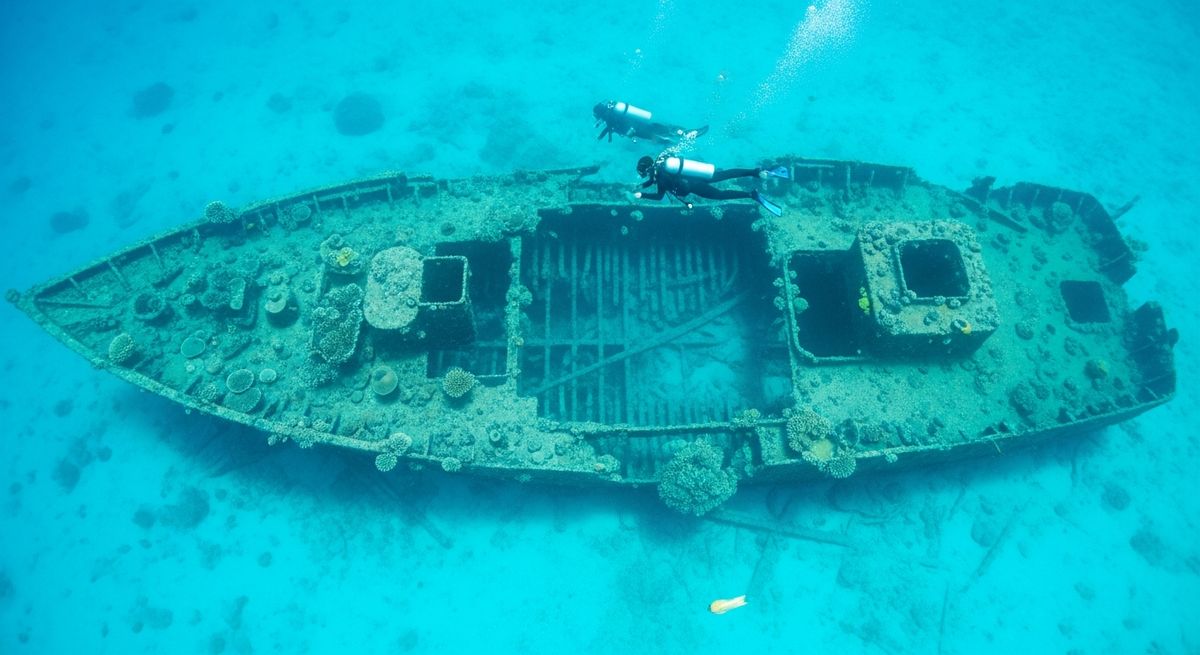
The Arrastrera Dorine is one of those wrecks we keep coming back to. Sunk back in ’89, this isn’t some sanitised, perfectly intact showpiece. No, this is a proper hulk, a working trawler that went down and has been settling into the seabed ever since. We love how the metal has softened over the decades, becoming a canvas for encrusting sponges and those deep purple gorgonians. It’s a dark dive, hitting 50 metres, so you’ll want your good lights to really pick out the details – the twisted davits, the remains of the bridge, the way the deck has buckled. Our favourite part is the engine room, if you’re comfortable with a penetration or just want to peer into the gloom. That’s where we’ve often seen big grouper lurking, sometimes a sleepy nurse shark tucked right in a corner. Out on the deck, schools of jacks swirl around the mast, and it’s common to spot giant moray eels poking their heads from every crevice. Visibility can be a bit variable here, so we’d suggest aiming for slack tide if you can, to minimise the current and maximise your bottom time admiring this old girl. It’s a site for experienced divers, no question, but utterly rewarding for those who appreciate a wreck with real character.
Typical ARRASTRERA DORINE Dive Profile
Illustrative profile based on site depth and type. Actual dive profiles vary - always follow your dive computer and training.
Safety Notes
Maximum depth 50m exceeds recreational limits (40m). Technical diving certification and equipment required.
Wreck site - avoid penetration without wreck diving certification. Watch for sharp metal and entanglement hazards.
Always perform a 3-minute safety stop at 5m before surfacing.
ARRASTRERA DORINE Wreck History
Year Sunk
1989
Vessel Type
fishing vessel
Cause
unknown
The ARRASTRERA DORINE is a deep, mysterious wreck lying off the northern coast of Peru. The vessel, whose name identifies it as a fishing trawler ('arrastrera' in Spanish), sank for unknown reasons in August 1989. With little information available about its service history or its final voyage, the DORINE holds its secrets close, waiting for well-prepared divers to visit its resting place in the Pacific depths.
At 50 meters, this is a challenging dive strictly for experienced technical divers with the proper training and equipment for deep decompression dives. Those who make the descent are rewarded with the sight of a largely intact trawler, its silhouette emerging from the deep blue. Divers can explore its decks, winches, and superstructure, all likely draped in the fishing nets that hint at its former life. The 'Dangerous Wreck' classification is due to the extreme depth and the significant entanglement risk posed by the nets. The cold, nutrient-rich waters at this depth attract unique marine life, making a visit to the ARRASTRERA DORINE a truly memorable deep-sea adventure.
Reviews for ARRASTRERA DORINE
Conditions
Ocean conditions, forecast and tides for ARRASTRERA DORINE
ARRASTRERA DORINE Ocean Conditions
Monthly averages for ARRASTRERA DORINE, sourced from Open-Meteo marine data - nearest station: Open-Meteo marine grid (-5, -81.17) (8km away)
October Averages
Sea Temperature
18°C
65°F · Range: 15.5–24°C
Air Temperature
22°C
72°F
Wind Speed
7.72 m/s
15.0 knots
Atmospheric Pressure
1012.4 hPa
Based on 4 years of monitoring data · Data sources: Open-Meteo marine data
Plan & book
Ways to dive Mancora & North Coast, from day trips to liveaboards.
Day trips & courses
via GetYourGuideGuided dives, courses and snorkel trips with instant booking.
Find dive trips in Mancora & North CoastPlaces to stay
via Booking.comHotels and dive resorts near Mancora & North Coast.
Search stays in Mancora & North CoastDive insurance
Most travel insurance excludes or limits scuba. Check what you need before you go.
Dive insurance explainedPartner links: we may earn a commission if you book, at no extra cost to you. How we make money
Where to Stay near ARRASTRERA DORINE
Prices from Booking.com. We may earn a commission at no extra cost to you.