Diving in Koh Tang & Offshore
Why dive here
Koh Tang & Offshore offers 16 dive sites in Cambodia. Water ranges 29-31°C, warmest April, May, June.
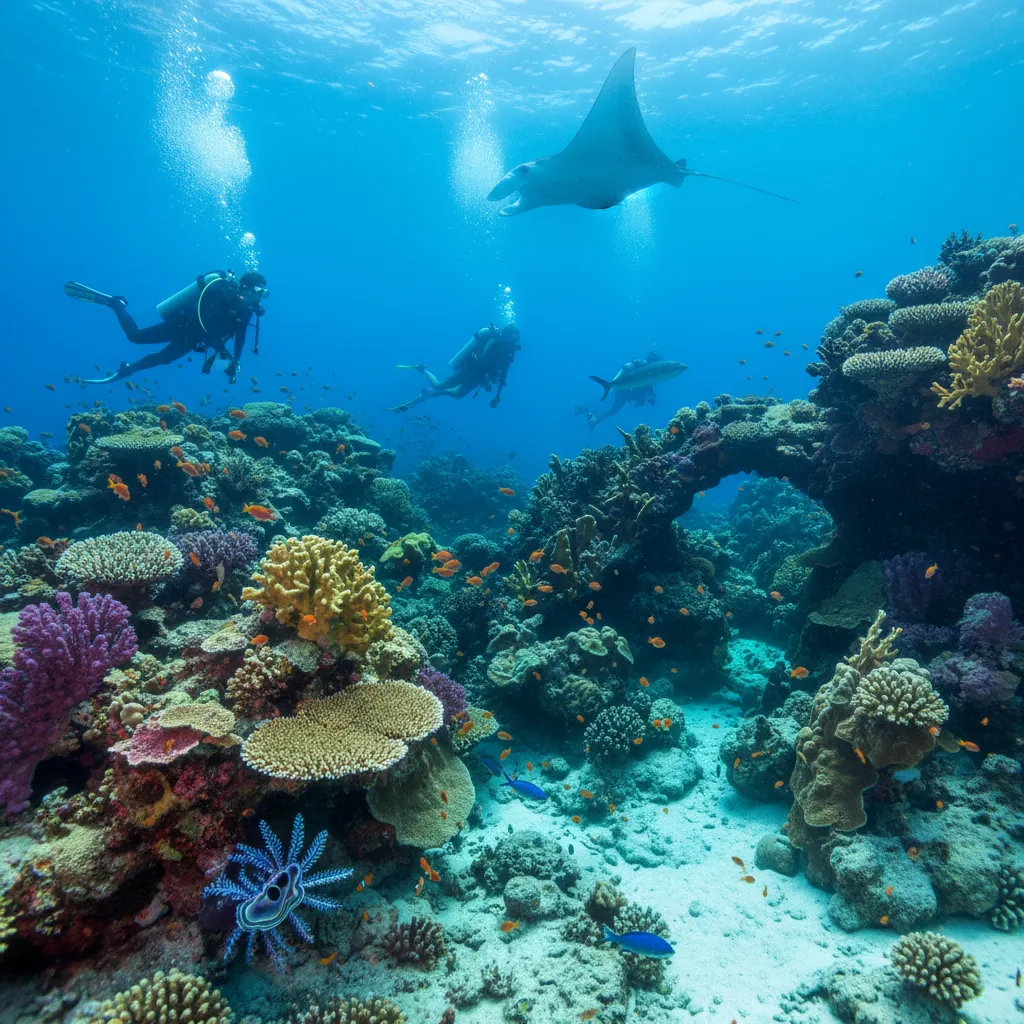
Koh Tang. Ah, Koh Tang. It’s a trek to get out here, but for our money, these offshore islands are where Cambodia’s diving truly shines. We’re talking proper visibility, often pushing 20 metres, and currents that bring in some serious pelagic action you just don't get closer to shore. The dive sites here are a mix of sloping reefs, dramatic walls, and a few wrecks that have become artificial reefs. We particularly love the feeling of being truly remote; the water just feels… wilder. Keep an eye out for the Golden Trevally cruising the deeper sections, and if you’re lucky, a flash of a Narrow-barred Spanish Mackerel darting past. One of our favourite sites has a surprisingly healthy patch of cymodocea seagrass where we’ve spotted Indonesian Bamboosharks snoozing, and once, a tiny Hedgehog Seahorse clinging on. It’s not the colourful coral gardens you might find elsewhere in Southeast Asia, but the sheer abundance of fish, those schools of Yellowstripe Scad, the occasional Crazy Fish peeking from a crevice, makes it consistently interesting. The journey involves a longer boat ride, sometimes a bit choppy, but the reward is worth it for the better conditions and the chance to see some of Cambodia’s larger marine residents.
Koh Tang & Offshore Dive Site Map
Dive sites and dive centres in Koh Tang & Offshore
Koh Tang & Offshore Dive Sites
16 dive sites in Koh Tang & Offshore
Buom Island (MPA)
Buom Island is one of those easy-going spots offshore where you can just unwind. At a maximum depth of 12 metres, it’s a perfect introductory dive or a nice place for a relaxed second tank. We often see the reef sharks cruising by, and there’s usually a decent number of fusiliers hanging out. It’s a good little taste of what the Koh Tang area offers without any strong currents to worry about.
CM 02958 TS
CM 02958 TS, a fishing vessel, isn't your postcard-perfect reef, but we genuinely love this site for its grit and the way it tells a story. Dropping onto the wreck at a comfortable 13 metres, you're immediately struck by the sheer volume of fish. It’s not just a few stragglers; we’re talking about great shoals of yellowtail snapper and fusiliers that swirl around the remains of the superstructure, often so thick they dim the light. The wreck itself is pretty broken up, classified as dangerous in some parts, which means we’d suggest keeping a respectful distance from any obviously unstable sections. But there's still plenty to explore around the edges. Look closely into the shadowy spaces, and you'll often spot moray eels peering out, or the occasional blue-spotted stingray resting on the sand nearby. It’s a site that really shows you how quickly nature reclaims things. We’ve had some of our best photography sessions here, especially late morning when the sun angle catches the fish just right. This is a great spot for divers who appreciate the character of an artificial reef and enjoy watching active marine behaviour.
CM 2548 TS
CM 2548 TS is a different beast entirely. We’re talking about a fishing vessel, yes, but its character comes from its status as a dangerous wreck. It’s sitting upright in just 10 metres of water, perfectly accessible for those who might not fancy a deep, dark penetration dive but still want a proper wreck experience. The vessel itself is relatively intact, though nature is slowly reclaiming it. We love poking around the bow, where the anchor chain still drapes dramatically. Lionfish often hang out here, almost posing for photos, and the schools of fusiliers are often so thick you have to wave them away to see where you’re going. The real joy here is the penetration opportunities for certified wreck divers. Inside, the holds are open, revealing the skeletal remains of fishing gear, now encrusted with sponges and hard corals. It’s a bit eerie, but in the best possible way. The deck, just a few metres below the surface, is often swarming with juvenile snappers and barracuda. This site is a fantastic alternative to the deeper, more challenging wrecks in the area, offering a truly immersive historical dive without the demanding depth.
CM 91793TS
We're often asked about our favourite wrecks in Southeast Asia, and CM 91793TS, out at Koh Tang, makes the list for its sheer atmospheric presence. This isn't one of those carefully prepped artificial reefs; this fishing vessel went down unexpectedly, and the tragedy of it still lingers in the silence. It’s a deep dive, down to 45 metres, making it better suited for experienced wreck divers comfortable with technical profiles. You'll descend onto a hull that looks like it just settled, listing hard to port. The structure is largely intact, with fishing nets still draped over sections, swaying with the mild current. We’ve found barracuda often patrol the bridge, and the open holds are home to schools of snapper, their silver scales glinting in your torch beam. The wreck is slowly becoming a true reef, with sponges and small corals starting to colonise the metal. Keep an eye out for nudibranchs, particularly around the bow. We love the feeling of exploring a wreck that has a genuine story, rather than just being a sunken object. It’s a somber, beautiful dive.
Condor Reef
Condor Reef is a deeper site off Koh Tang, dropping to 30 metres. We’ve found it’s a good spot for observing larger pelagics, with whale shark sightings sometimes reported. Currents can be unpredictable here, so it’s best suited for advanced divers comfortable with potential drift. Expect a largely coral landscape with plenty of reef fish.
DN 1060
DN 1060 isn't your typical wreck dive, and that’s precisely why we love it. This isn't some deep, dark behemoth, but a shallow barge, sitting upright at a comfortable 7 metres. It’s perfect for a longer bottom time, allowing you to really soak it all in. We’ve found the light here fantastic, especially in the late morning, filtering through the water and illuminating the wreck’s skeletal remains. The barge itself is slowly breaking apart, but the structure still holds enough together to make it interesting to navigate. Expect to find nooks and crannies absolutely crammed with life. Our favourite spot is usually around the bow, where we’ve often seen schools of fusiliers swirling, so thick they almost obscure the wreck entirely. Look closely among the metal beams and you’ll spot smaller treasures – nudibranchs inching along, cleaner shrimp waving from crevices, and the occasional lionfish hovering with those dramatic fins. It’s a gentle dive, suited to anyone who enjoys exploring a site without the pressure of depth or strong currents.
Finger Nail (Marine Park)
Finger Nail sits in the protected waters around Koh Tang, making for a mellow dive that's perfect for newer divers or anyone looking for an easy hour underwater. The max depth of 13m means plenty of bottom time to drift along, looking for the smaller stuff. We usually spot schools of small reef fish like damselfish flitting through the hard corals, and often a few nudibranchs if you slow down and look closely. It’s not a site for big pelagics, but it delivers a relaxing dip in a quiet corner of the park.
Gầm Ghì West
Gầm Ghì West is a pretty straightforward dive, a nice easy spot for those getting comfortable with their buoyancy or just looking for a relaxed swim. It's relatively shallow, capping out at 14 metres, which means plenty of light filters through. You’ll drift over a mix of sand and scattered coral patches, often spotting the usual suspects: maybe a few parrotfish munching away, some anemonefish peeking out, and we’ve often seen small schools of fusiliers here. The currents are generally mild, making it a good choice if you're keen to take your time and just enjoy being in the water.
KG 09299
KG 09299, a barge sunk in 2011, isn't your typical pretty reef dive, and we love it for that. This site is pure wreck diving at 29 meters, and for those of us who enjoy exploring history rather than just pretty fish, it’s a compelling spot. The barge itself is largely intact, a hulking metal skeleton on the seabed, offering plenty of nooks and crannies to peer into. We've spent dives here just circumnavigating the structure, imagining its working life before it went down. Visibility can be a bit variable, but on a good day, the light filtering down onto the wreck gives it an almost ethereal feel. What really makes this place tick are the residents: we've seen plenty of large groupers lurking in the shadows, and schools of snapper often hang above the deck, shimmering like a silver curtain. It’s a great dive for someone comfortable with depth and who appreciates a more rugged, industrial kind of beauty. Our pick for a second dive of the day, after a shallower reef.
Kim Quy island
Kim Quy island, tucked into the Koh Tang area, is a pretty chill spot, especially if you’re just starting out or fancy a relaxed afternoon dive. The max depth of 12 meters means we spend a good chunk of bottom time just poking around. You'll often find a surprising amount of smaller stuff here: nudibranchs, little shrimps tucked into anemones, and plenty of reef fish flitting between the rocks. It’s a gentle introduction to Cambodian diving, no big thrills, but always a pleasant way to spend an hour underwater.
Koh Tang North
Koh Tang North gives you a solid wall dive dropping to about 25 metres. We often spot big groupers and schools of snapper here, along with some interesting macro life if you look closely. It's a site that suits intermediate divers comfortable with a bit of depth. The wall offers decent shelter from any strong surface chop.
North Pinapple Point/Hon Thom Bac
North Pineapple Point, or Hon Thom Bac as some call it, offers a relaxed dive, ideal for beginners or those just wanting a chilled-out afternoon in the water. It’s pretty shallow, topping out at 12 metres, so you get plenty of bottom time to drift around. We often spot schooling fusiliers here, along with the occasional cuttlefish lurking among the rocks. It’s not the most dramatic reef out there, but for a gentle introduction to Koh Tang, or a refresher, it absolutely fits the bill.
Show all 16 dive sites in Koh Tang & Offshore
Koh Tang & Offshore Dive Centres
4 dive shops and operators in Koh Tang & Offshore
Ocean Wildlife in Koh Tang & Offshore
20 species recorded in Koh Tang & Offshore
Koh Tang & Offshore Daylight & Sunrise/Sunset
Sunrise and sunset times for Koh Tang & Offshore, calculated from coordinates
Today - Sunday 11 October
Sunrise
05:53
Sunset
17:50
Daylight
11h 57m
Golden Hour
17:22
First light (dawn) at 05:32 · Last light (dusk) at 18:11
Monthly Averages
| Month | Sunrise | Sunset | Daylight |
|---|---|---|---|
| Jan | 06:26 | 18:02 | 11h 37m |
| Feb | 06:25 | 18:14 | 11h 49m |
| Mar | 06:12 | 18:16 | 12h 4m |
| Apr | 05:55 | 18:15 | 12h 20m |
| May | 05:44 | 18:18 | 12h 34m |
| JunLongest | 05:45 | 18:26 | 12h 42m |
| Jul | 05:51 | 18:30 | 12h 39m |
| Aug | 05:56 | 18:23 | 12h 27m |
| Sep | 05:55 | 18:06 | 12h 11m |
| OctNow | 05:53 | 17:48 | 11h 55m |
| Nov | 05:59 | 17:40 | 11h 41m |
| DecShortest | 06:13 | 17:47 | 11h 33m |
Times are approximate local times based on longitude. Actual times may vary slightly depending on the exact timezone observed in Koh Tang & Offshore.
Where to Stay near Koh Tang & Offshore
Prices from Booking.com. We may earn a commission at no extra cost to you.
Marine Protected Areas near Koh Tang & Offshore
2 protected areas near Koh Tang & Offshore - please respect local regulations when diving
ឧទ្យានជាតិ សមុទ្រកោះរុង
ឧទ្យានជាតិ ព្រះសីហនុ (រាម)
Getting to Koh Tang & Offshore
Phu Quoc Island
Preah Sihanouk
Ta Noun
Plan & book
Ways to dive Koh Tang & Offshore, from day trips to liveaboards.
Day trips & courses
via GetYourGuideGuided dives, courses and snorkel trips with instant booking.
Find dive trips in Koh Tang & OffshorePlaces to stay
via Booking.comHotels and dive resorts near Koh Tang & Offshore.
Search stays in Koh Tang & OffshoreDive insurance
Most travel insurance excludes or limits scuba. Check what you need before you go.
Dive insurance explainedPartner links: we may earn a commission if you book, at no extra cost to you. How we make money