Triton Bay
Protected Area
KK Kaimana
Why dive here
With 84+ marine species recorded in the area - including whale sharks and mantis shrimp - Triton Bay offers some of Cenderawasih Bay's richest reef diving. Water ranges 27-31°C, warmest January, March, December.
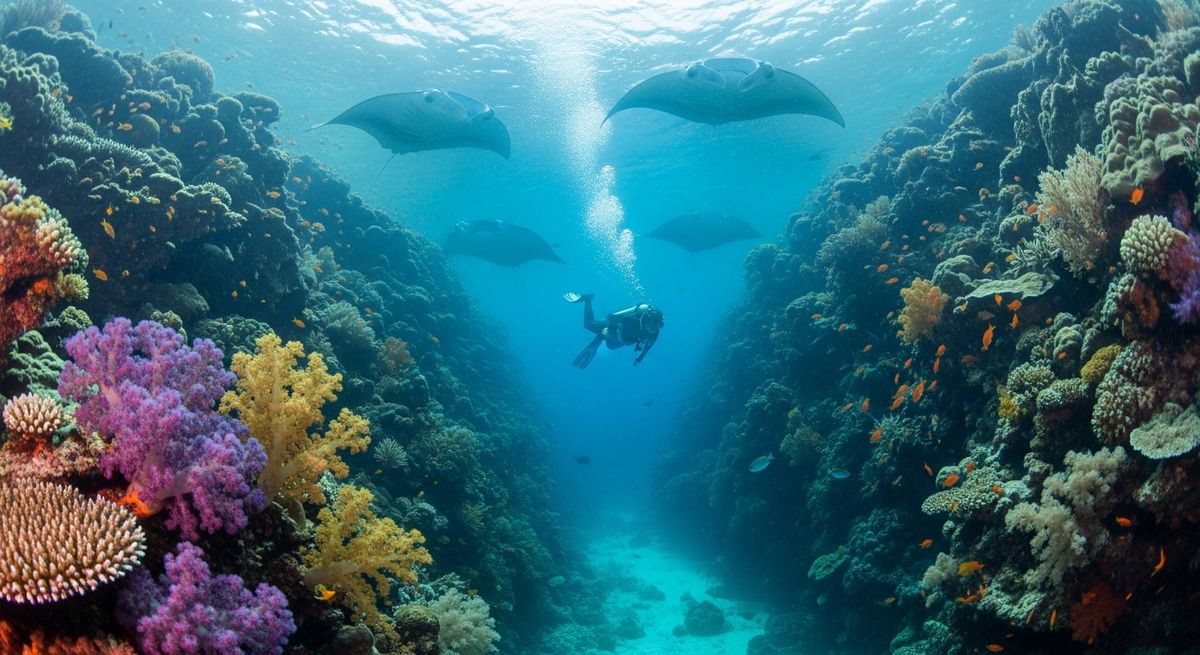
Triton Bay in Cenderawasih often gets tagged onto liveaboard itineraries for Raja Ampat or the Banda Sea, but it’s a worthy destination all on its own. The soft coral coverage is really something special, almost overwhelming in places, and you’ll swim past forests of black coral reaching into the blue. We’ve seen big schools of fusiliers here, epaulette sharks shuffling along the bottom, and even had a few pilot whale encounters. If you’re lucky, a whale shark might cruise by. The topside scenery with its sheer cliffs and ancient cave paintings is a bonus, making it feel a bit more remote and special.
Reviews for Triton Bay
Conditions
Ocean conditions, forecast and tides for Triton Bay
Triton Bay Ocean Conditions
Monthly averages for Triton Bay, sourced from Open-Meteo marine data + Copernicus Marine (EU) - nearest station: Open-Meteo marine grid (-3.8, 134.2) (18km away)
October Averages
Sea Temperature
29°C
84°F · Range: 26.8–30.6°C
Current Speed
10.63 cm/s
Direction: NE (48.8°)
Salinity
32.81 PSU
Based on 4 years of monitoring data · Data sources: Open-Meteo marine data + Copernicus Marine (EU)
Plan & book
Ways to dive Cenderawasih Bay, from day trips to liveaboards.
Day trips & courses
via GetYourGuideGuided dives, courses and snorkel trips with instant booking.
Find dive trips in Cenderawasih BayPlaces to stay
via Booking.comHotels and dive resorts near Cenderawasih Bay.
Search stays in Cenderawasih BayDive insurance
Most travel insurance excludes or limits scuba. Check what you need before you go.
Dive insurance explainedPartner links: we may earn a commission if you book, at no extra cost to you. How we make money
Where to Stay near Triton Bay
Prices from Booking.com. We may earn a commission at no extra cost to you.