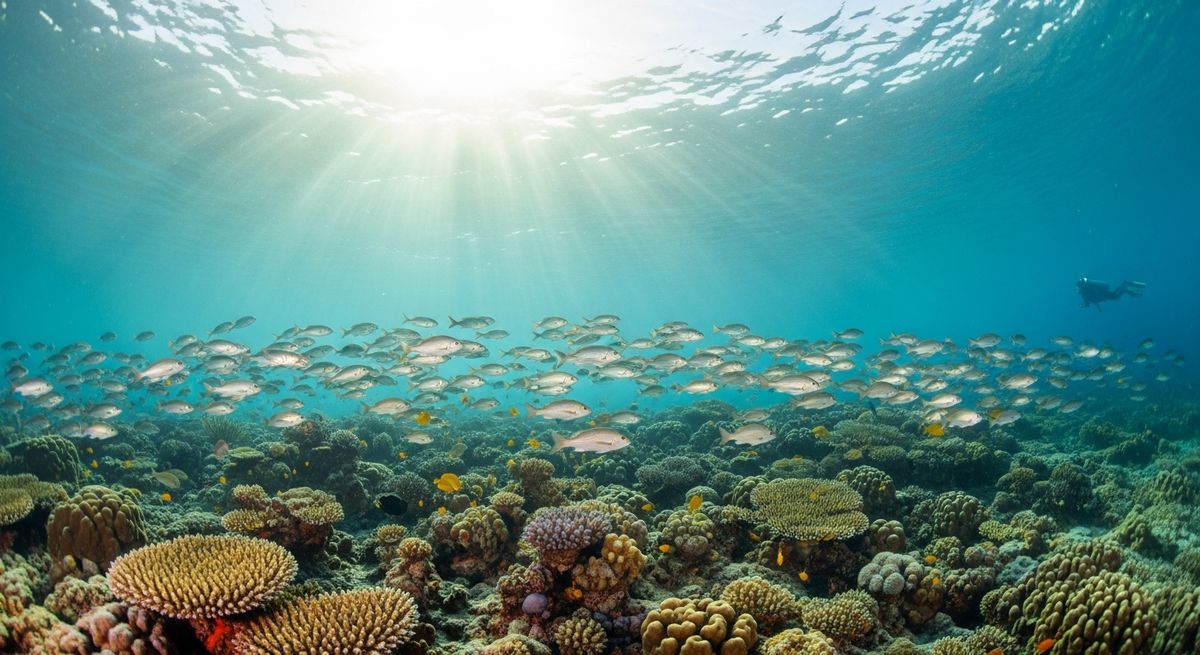
Triton Bay Diving: West Papua, New Guinea Island
Protected Area
KK Kaimana
Why dive here
With 84+ marine species recorded in the area - including whale sharks and mantis shrimp - Triton Bay Diving: West Papua, New Guinea Island offers some of Cenderawasih Bay's richest reef diving. Water ranges 27-31°C, warmest January, March, December.
Triton Bay, tucked into West Papua, offers a dive experience that feels genuinely remote. We've often found ourselves drifting along walls that just drop into the blue, keeping an eye out for larger pelagics. It’s an advanced playground for sure, with currents that can pick up, but that’s often when the schooling fish really put on a show. If you’re willing to go a bit off-grid for the chance to spot whale sharks, turtles, and some surprisingly good macro, this corner of Cenderawasih Bay is well worth the journey.
Typical Triton Bay Diving: West Papua, New Guinea Island Dive Profile
Illustrative profile based on site depth and type. Actual dive profiles vary - always follow your dive computer and training.
Reviews for Triton Bay Diving: West Papua, New Guinea Island
Conditions
Ocean conditions, forecast and tides for Triton Bay Diving: West Papua, New Guinea Island
Triton Bay Diving: West Papua, New Guinea Island Ocean Conditions
Monthly averages for Triton Bay Diving: West Papua, New Guinea Island, sourced from Open-Meteo marine data + Copernicus Marine (EU) - nearest station: Open-Meteo marine grid (-3.8, 134.2) (18km away)
October Averages
Sea Temperature
29°C
84°F · Range: 26.8–30.6°C
Current Speed
10.63 cm/s
Direction: NE (48.8°)
Salinity
32.81 PSU
Based on 4 years of monitoring data · Data sources: Open-Meteo marine data + Copernicus Marine (EU)
Plan & book
Ways to dive Cenderawasih Bay, from day trips to liveaboards.
Day trips & courses
via GetYourGuideGuided dives, courses and snorkel trips with instant booking.
Find dive trips in Cenderawasih BayPlaces to stay
via Booking.comHotels and dive resorts near Cenderawasih Bay.
Search stays in Cenderawasih BayDive insurance
Most travel insurance excludes or limits scuba. Check what you need before you go.
Dive insurance explainedPartner links: we may earn a commission if you book, at no extra cost to you. How we make money
Where to Stay near Triton Bay Diving: West Papua, New Guinea Island
Prices from Booking.com. We may earn a commission at no extra cost to you.