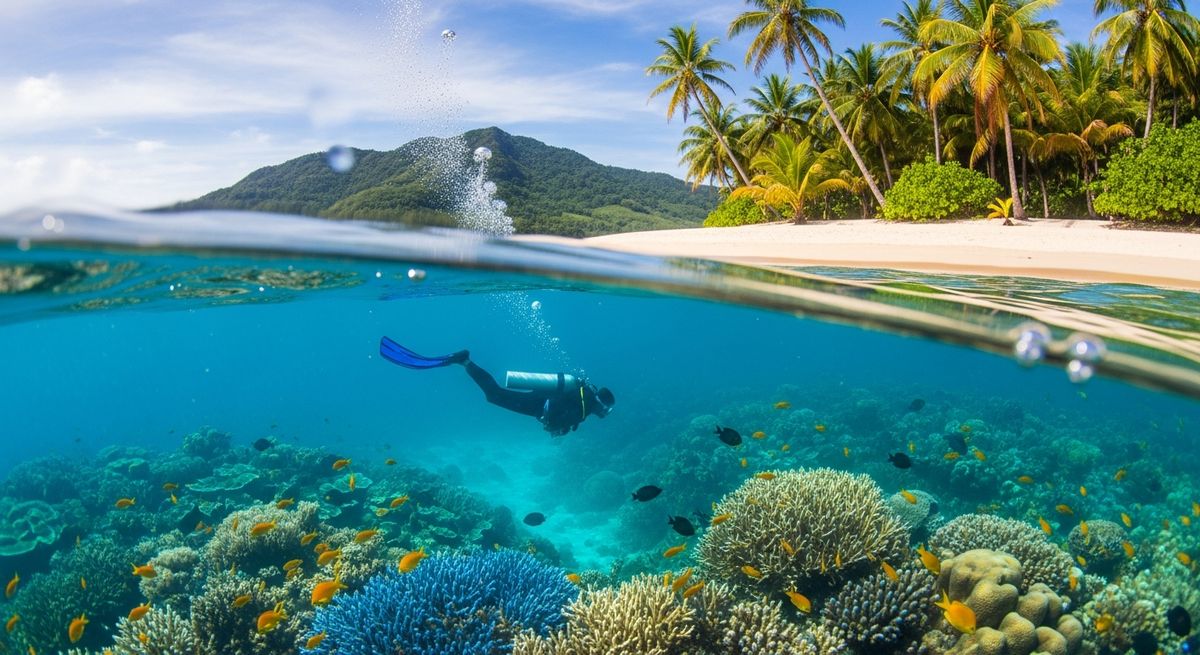
Castle Rock Komodo
Protected Area
Komodo
Why dive here
With 203+ marine species recorded in the area - including manta rays, mobula rays (devil rays), pygmy seahorses, sea turtles and sperm whales - Castle Rock Komodo offers some of Komodo's richest reef diving. Water ranges 28-30°C, warmest April, May, November.
Castle Rock, for us, is one of Komodo’s essential dives. You’re dropping into open water here, so be ready for that initial blue. We like to get down quickly and tuck ourselves into the lee of the pinnacle, out of the main push. From there, you just watch. The current funnels around the rock, bringing with it a consistent parade of pelagics. We’ve seen grey reef sharks patrolling the edges and, on a good day, blacktips and whitetips making quick passes through the fusilier schools that gather so thick they almost blot out the light. Giant trevallies and bluefin trevallies smash through them too. It’s a proper action dive, definitely not for the uninitiated, but if you’re comfortable with current and fancy some adrenaline, this is our pick.
Typical Castle Rock Komodo Dive Profile
Illustrative profile based on site depth and type. Actual dive profiles vary - always follow your dive computer and training.
Nearest Dive Centres to Castle Rock Komodo
Dive shops near Castle Rock Komodo
Neptune Scuba Diving Komodo
Batara Baruna
Komodo Aggressor
Signature Scuba Flores
Scuba Junkie Komodo
Aqura Dive Center
Reviews for Castle Rock Komodo
Conditions
Ocean conditions, forecast and tides for Castle Rock Komodo
Castle Rock Komodo Ocean Conditions
Monthly averages for Castle Rock Komodo, sourced from Open-Meteo marine data + Copernicus Marine (EU) - nearest station: Open-Meteo marine grid (-8.39, 119.8) (79km away)
October Averages
Sea Temperature
30°C
85°F · Range: 28.1–30.9°C
Current Speed
4.24 cm/s
Direction: NW (315°)
Chlorophyll-a
0.175 mg/m³
Clear water
Salinity
34.03 PSU
Based on 4 years of monitoring data · Data sources: Open-Meteo marine data + Copernicus Marine (EU)
Plan & book
Ways to dive Komodo, from day trips to liveaboards.
Day trips & courses
via GetYourGuideGuided dives, courses and snorkel trips with instant booking.
Find dive trips in KomodoPlaces to stay
via Booking.comHotels and dive resorts near Komodo.
Search stays in KomodoDive insurance
Most travel insurance excludes or limits scuba. Check what you need before you go.
Dive insurance explainedPartner links: we may earn a commission if you book, at no extra cost to you. How we make money
Where to Stay near Castle Rock Komodo
Prices from Booking.com. We may earn a commission at no extra cost to you.