HMS Sturdy
Why dive here
With 203+ marine species recorded in the area - including manta rays, mobula rays (devil rays), pygmy seahorses, sea turtles and sperm whales - HMS Sturdy offers some of Komodo's richest wreck diving. Water ranges 28-30°C, warmest April, May, November.
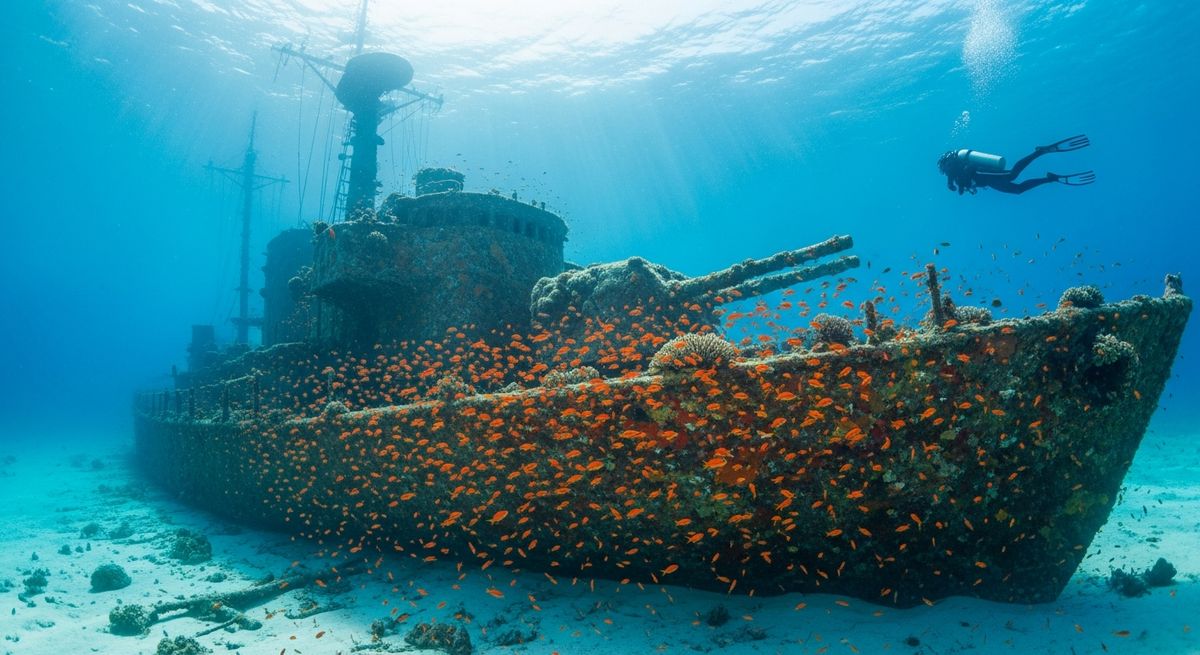
The HMS Sturdy is just… different for Komodo. Most of our favourite dives here are all about the ripping currents and the schools of pelagics that come with them, but Sturdy offers a slower, more contemplative dive. It’s an S-class submarine, sunk in 1943, and she lies mostly intact on her port side. You can still make out the conning tower and the torpedo tubes, all draped in soft corals – a vivid purple and orange against the dark steel. We love drifting along her deck, spotting the resident lionfish tucked into crevices and the curious batfish circling the bow. It’s a genuinely evocative dive, a moment of quiet history in an otherwise frantic dive region. Visibility can vary, but we find the best dives here are typically early morning, before the day boats crowd the area, when the light filters down softly onto the wreck. It suits divers who appreciate history and don't mind a slightly deeper profile.
Safety Notes
Wreck site - avoid penetration without wreck diving certification. Watch for sharp metal and entanglement hazards.
Reviews for HMS Sturdy
Conditions
Ocean conditions, forecast and tides for HMS Sturdy
HMS Sturdy Ocean Conditions
Monthly averages for HMS Sturdy, sourced from Open-Meteo marine data + Copernicus Marine (EU) - nearest station: Open-Meteo marine grid (-8.39, 119.8) (79km away)
October Averages
Sea Temperature
30°C
85°F · Range: 28.1–30.9°C
Current Speed
4.24 cm/s
Direction: NW (315°)
Chlorophyll-a
0.175 mg/m³
Clear water
Salinity
34.03 PSU
Based on 4 years of monitoring data · Data sources: Open-Meteo marine data + Copernicus Marine (EU)
Plan & book
Ways to dive Komodo, from day trips to liveaboards.
Day trips & courses
via GetYourGuideGuided dives, courses and snorkel trips with instant booking.
Find dive trips in KomodoPlaces to stay
via Booking.comHotels and dive resorts near Komodo.
Search stays in KomodoDive insurance
Most travel insurance excludes or limits scuba. Check what you need before you go.
Dive insurance explainedPartner links: we may earn a commission if you book, at no extra cost to you. How we make money
Where to Stay near HMS Sturdy
Prices from Booking.com. We may earn a commission at no extra cost to you.