Plataran
Protected Area
Komodo
Why dive here
With 203+ marine species recorded in the area - including manta rays, mobula rays (devil rays), pygmy seahorses, sea turtles and sperm whales - Plataran offers some of Komodo's richest wreck diving. Water ranges 28-30°C, warmest April, May, November.
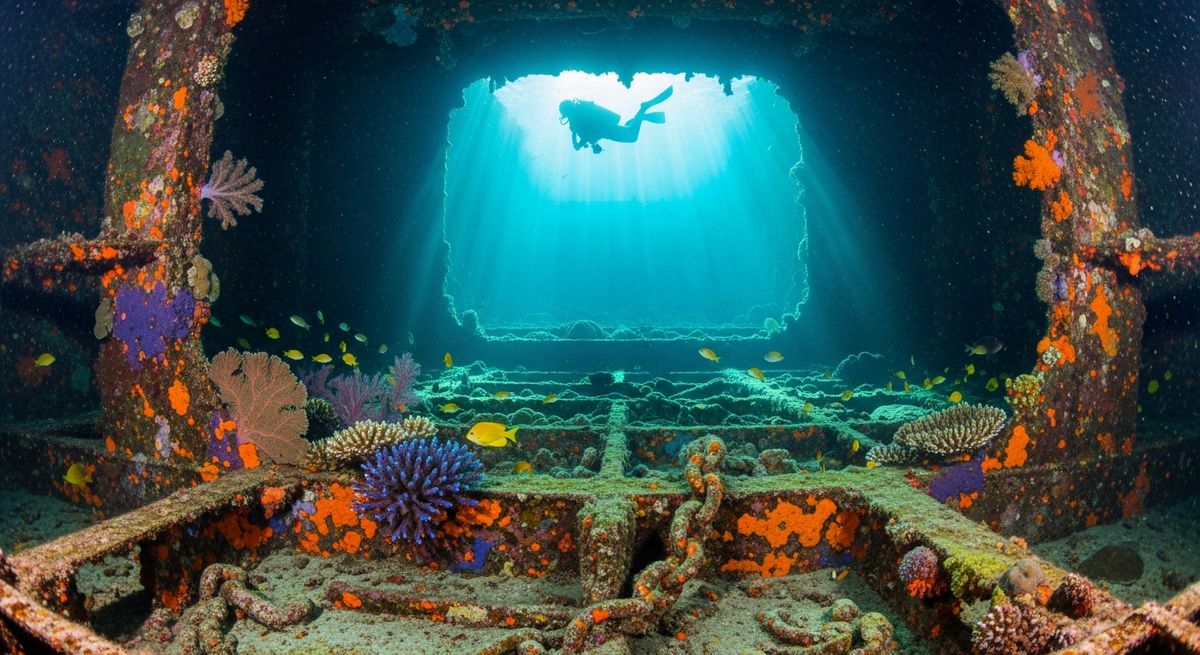
Plataran isn’t your typical Komodo drift dive, and that’s precisely why we love it. This is a shallow exploration, just 4m max, of a historic motor vessel. No need for a strong current here, just good buoyancy and a curious mind. We’ve spent hours poking around this wreck, watching how the light plays on the barnacled hull. The site suits divers who appreciate history and the slow discovery of macro life rather than high-speed action. You’ll find a surprising amount of life making a home on the wreck. Look closely and you’ll spot nudibranchs, often some vibrant chromodoris or flabellinas, clinging to the encrusted metal. We’ve seen small schools of cardinalfish darting in and out of the darker sections, and often a few lionfish lurking under overhangs. It’s a great spot for photographers, especially those who love capturing the intricate details of a wreck slowly being reclaimed by the sea. Our tip: go slow, take your time, and don’t be afraid to hover and really observe. It’s not about covering distance, it’s about discovery.
Typical Plataran Dive Profile
Illustrative profile based on site depth and type. Actual dive profiles vary - always follow your dive computer and training.
Safety Notes
Wreck site - avoid penetration without wreck diving certification. Watch for sharp metal and entanglement hazards.
Nearest Dive Centres to Plataran
Dive shops near Plataran
Ta'a Dive Resort
CNDive
Somer Dive
Dive Komodo
Dragon Dive Komodo Dive
Manta Dive Komodo
Reviews for Plataran
Conditions
Ocean conditions, forecast and tides for Plataran
Plataran Ocean Conditions
Monthly averages for Plataran, sourced from Open-Meteo marine data + Copernicus Marine (EU) - nearest station: Open-Meteo marine grid (-8.39, 119.8) (79km away)
October Averages
Sea Temperature
30°C
85°F · Range: 28.1–30.9°C
Current Speed
4.24 cm/s
Direction: NW (315°)
Chlorophyll-a
0.175 mg/m³
Clear water
Salinity
34.03 PSU
Based on 4 years of monitoring data · Data sources: Open-Meteo marine data + Copernicus Marine (EU)
Plan & book
Ways to dive Komodo, from day trips to liveaboards.
Day trips & courses
via GetYourGuideGuided dives, courses and snorkel trips with instant booking.
Find dive trips in KomodoPlaces to stay
via Booking.comHotels and dive resorts near Komodo.
Search stays in KomodoDive insurance
Most travel insurance excludes or limits scuba. Check what you need before you go.
Dive insurance explainedPartner links: we may earn a commission if you book, at no extra cost to you. How we make money
Where to Stay near Plataran
Prices from Booking.com. We may earn a commission at no extra cost to you.