Shark Point, Selayar
Protected Area
KK di Perairan di Wilayah Pasi Gusung
Why dive here
With 203+ marine species recorded in the area - including manta rays, mobula rays (devil rays), pygmy seahorses, sea turtles and sperm whales - Shark Point, Selayar offers some of Komodo's richest reef diving. Water ranges 28-30°C, warmest April, May, November.
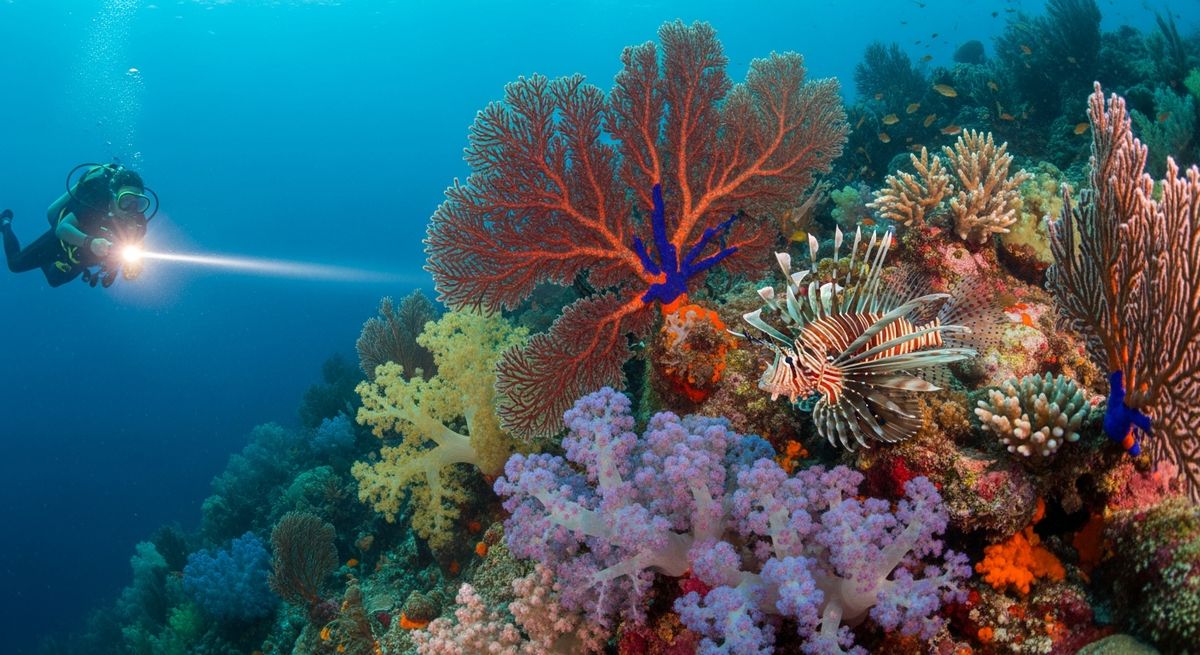
Shark Point in Selayar, a quick boat ride from Pattumbukan Harbour, gives you that true Komodo drift feel, but with a bit more of a wild card. We love a site where you really earn your sightings, and here, you might be finning hard against the current for a bit before you hit the sweet spot. It's a slope of sand and reef that drops to around 27 meters, loaded with impressive sea fans and soft corals – the kind that truly glow when the sun hits them right. Our favourite moments here are always spent scanning the blue for those bigger pelagics. White tip and black tip reef sharks are regulars, but we've had awesome encounters with eagle rays gliding by, and the sheer scale of the schooling jacks can be mesmerizing. Keep an eye out for Napoleon wrasse, too, they’re often cruising the reef edge. This site suits divers who are comfortable with current and ready to work for their dive; it’s not a sit-back-and-watch kind of place, it’s an active exploration.
Nearest Dive Centres to Shark Point, Selayar
Dive shops near Shark Point, Selayar
View all dive centres in KomodoReviews for Shark Point, Selayar
Conditions
Ocean conditions, forecast and tides for Shark Point, Selayar
Shark Point, Selayar Ocean Conditions
Monthly averages for Shark Point, Selayar, sourced from Open-Meteo marine data + Copernicus Marine (EU) - nearest station: Open-Meteo marine grid (-8.39, 119.8) (79km away)
October Averages
Sea Temperature
30°C
85°F · Range: 28.1–30.9°C
Current Speed
4.24 cm/s
Direction: NW (315°)
Chlorophyll-a
0.175 mg/m³
Clear water
Salinity
34.03 PSU
Based on 4 years of monitoring data · Data sources: Open-Meteo marine data + Copernicus Marine (EU)
Plan & book
Ways to dive Komodo, from day trips to liveaboards.
Day trips & courses
via GetYourGuideGuided dives, courses and snorkel trips with instant booking.
Find dive trips in KomodoPlaces to stay
via Booking.comHotels and dive resorts near Komodo.
Search stays in KomodoDive insurance
Most travel insurance excludes or limits scuba. Check what you need before you go.
Dive insurance explainedPartner links: we may earn a commission if you book, at no extra cost to you. How we make money
Where to Stay near Shark Point, Selayar
Prices from Booking.com. We may earn a commission at no extra cost to you.